
Almost every page about Nipissing University gets its size wrong. One widely read listing says the university offers 37 undergraduate and 6 graduate programs. Another quotes an application fee of CAD 130 to 156. Published acceptance rates range from 60 per cent to 78 per cent depending on which site you land on, and none of them are official.
Here is the accurate picture. Nipissing offers 179 programs open to international applicants, the application fee is CAD 150 flat, and 111 of those 179 programs are dual degrees that award two full credentials from one extended course of study. That dual degree structure is the reason to consider this university, and it is the thing almost nobody explains.
There is also a trap inside the postgraduate catalogue that can cost a married applicant their spouse’s right to work in Canada. This guide covers that in full.
About Nipissing University
Nipissing received its charter as an independent university in 1992. Before that it operated as Nipissing University College, founded in 1967 as an affiliate of another Ontario university, and the institution’s deeper roots run back to teacher training in North Bay in the early twentieth century. That teaching lineage still shapes what the university is best known for today.
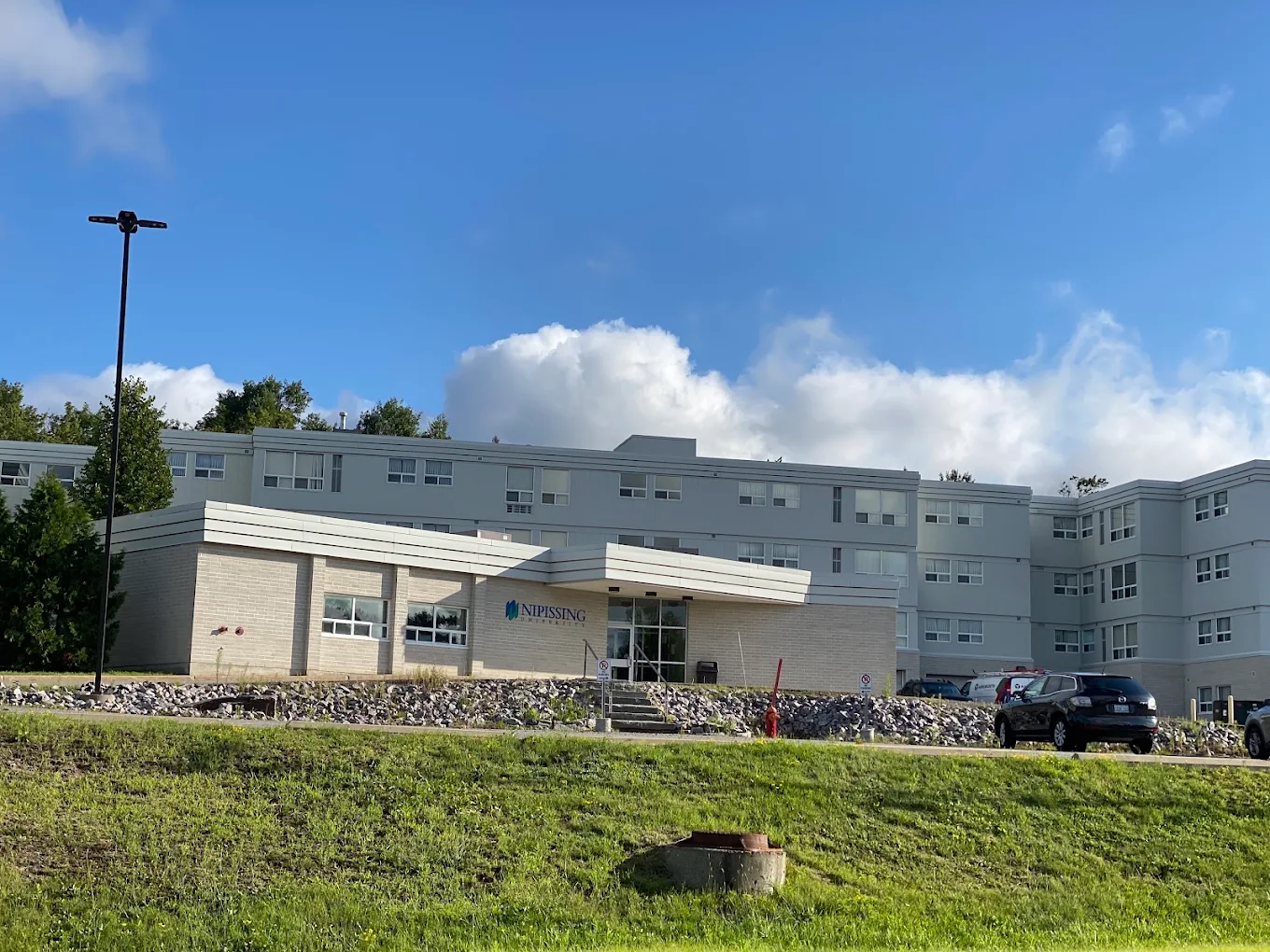
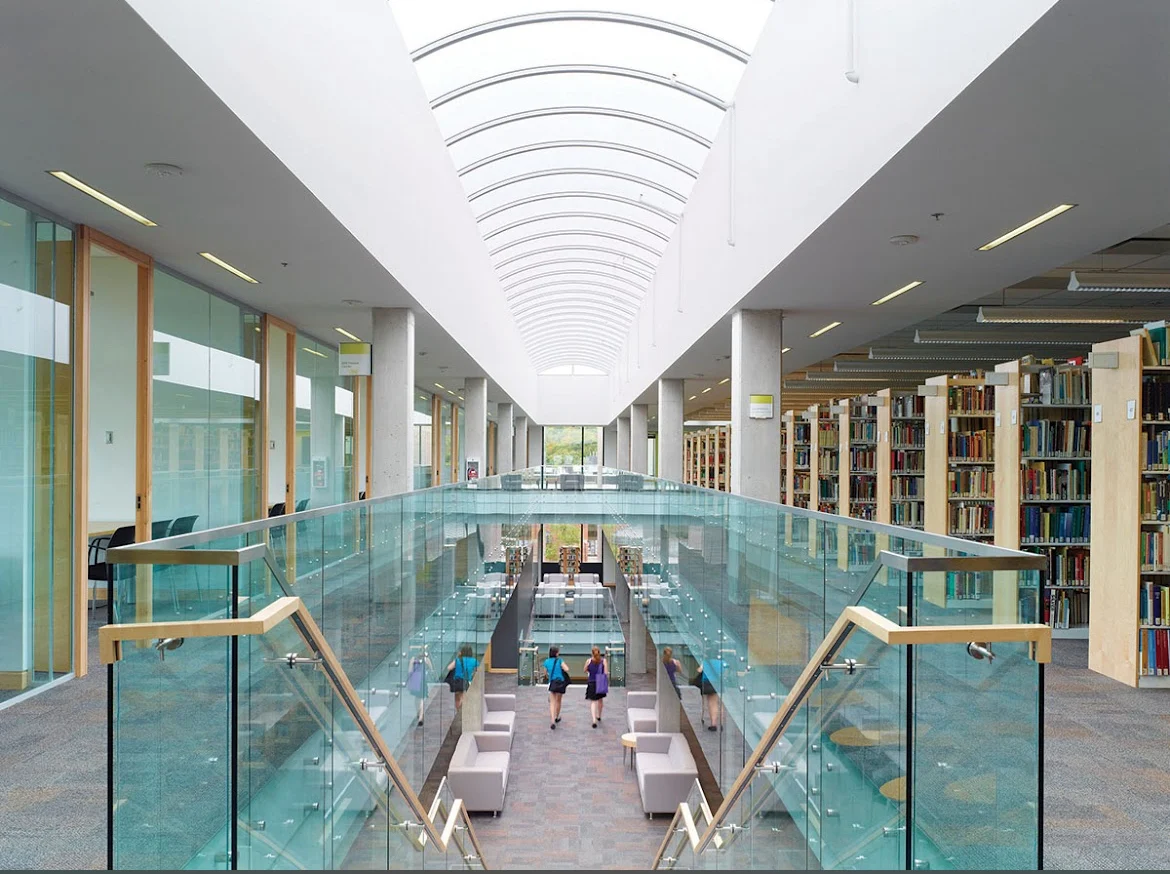
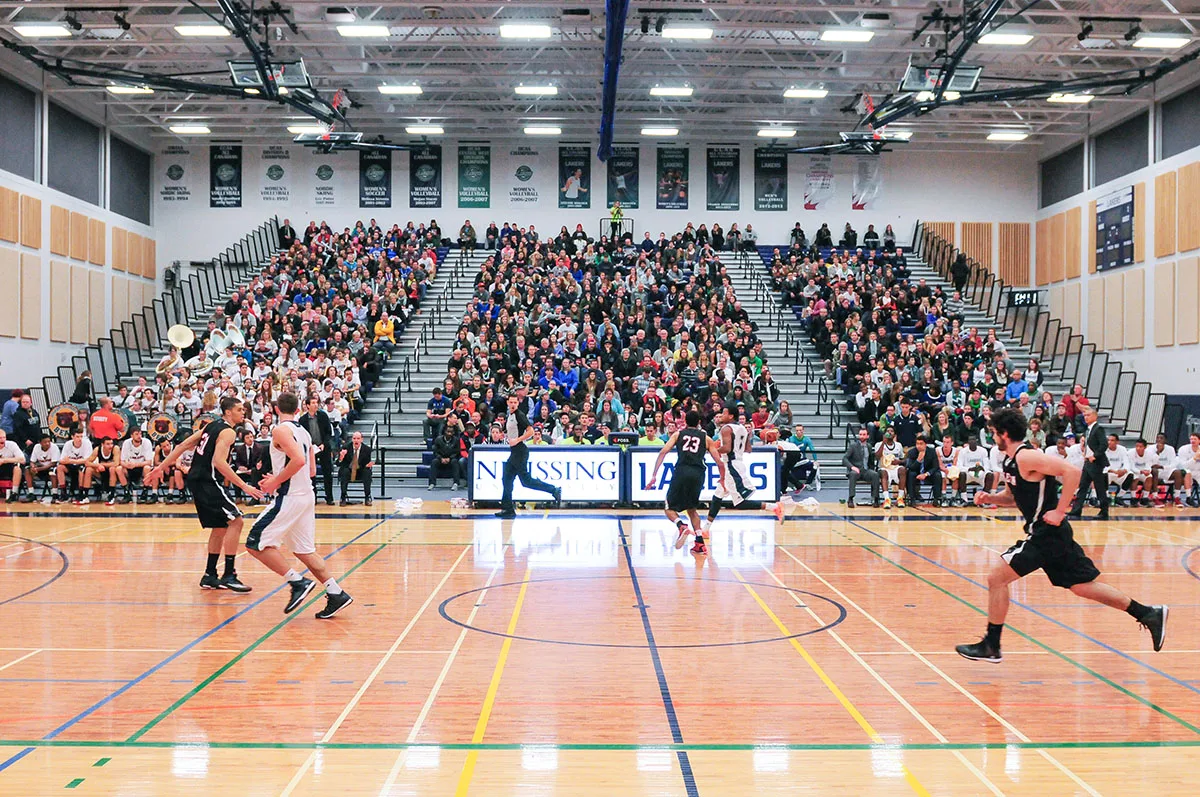
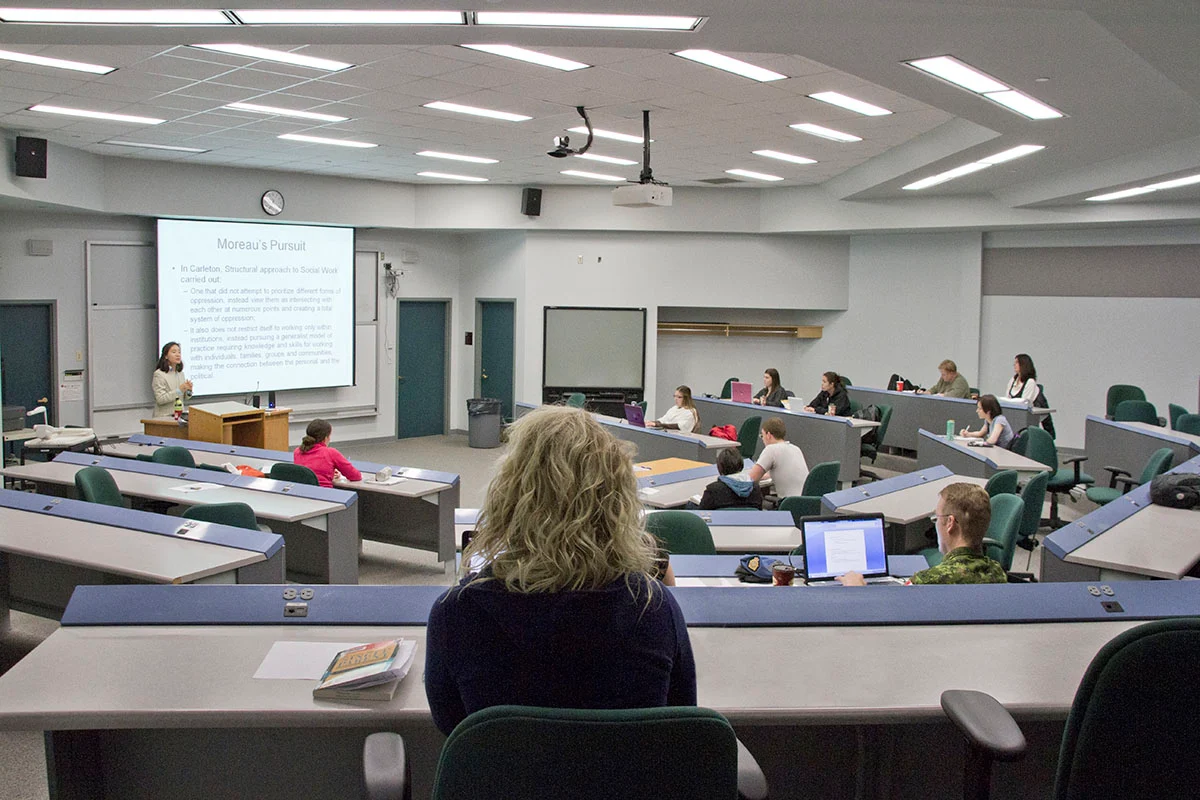
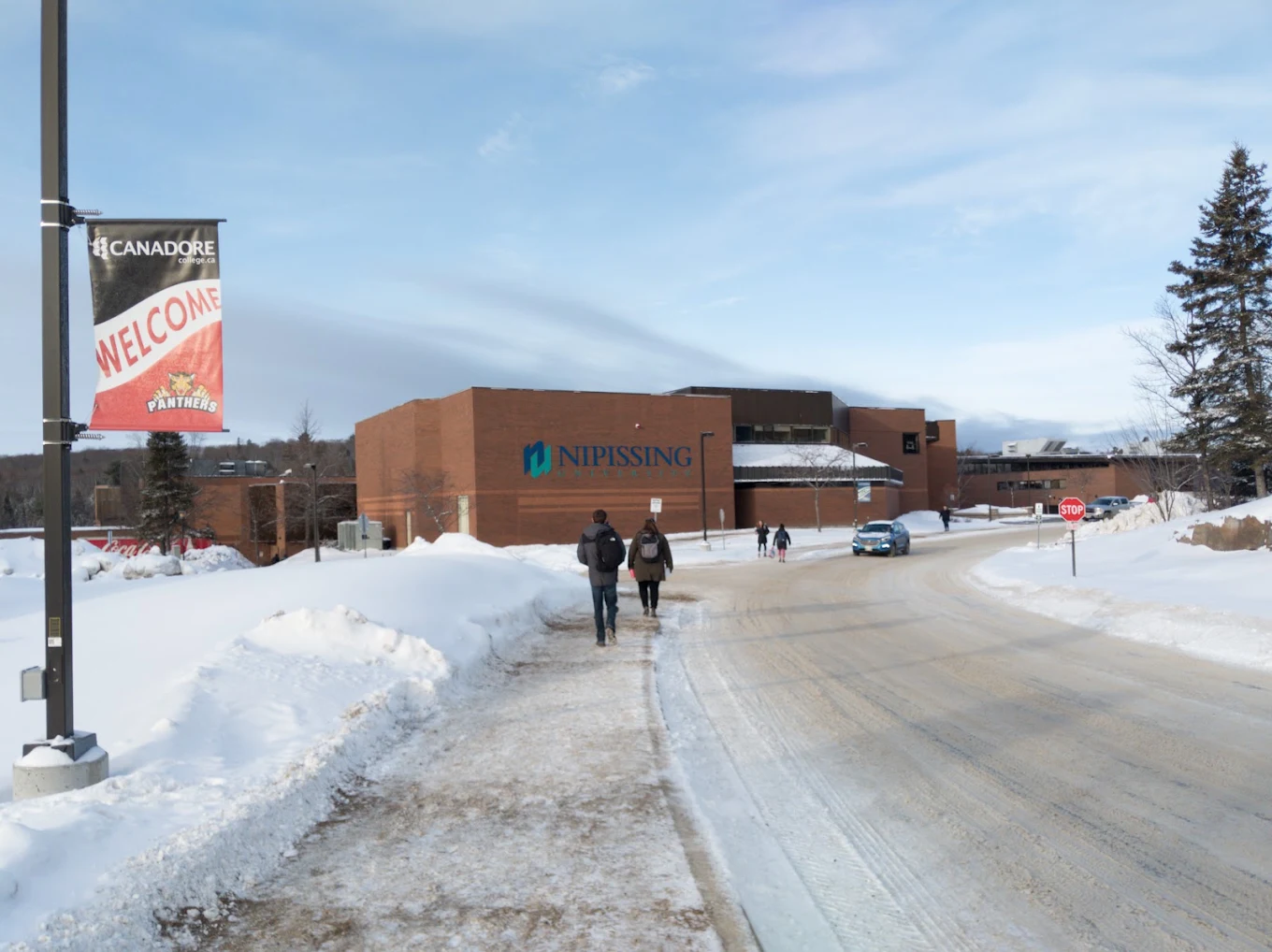
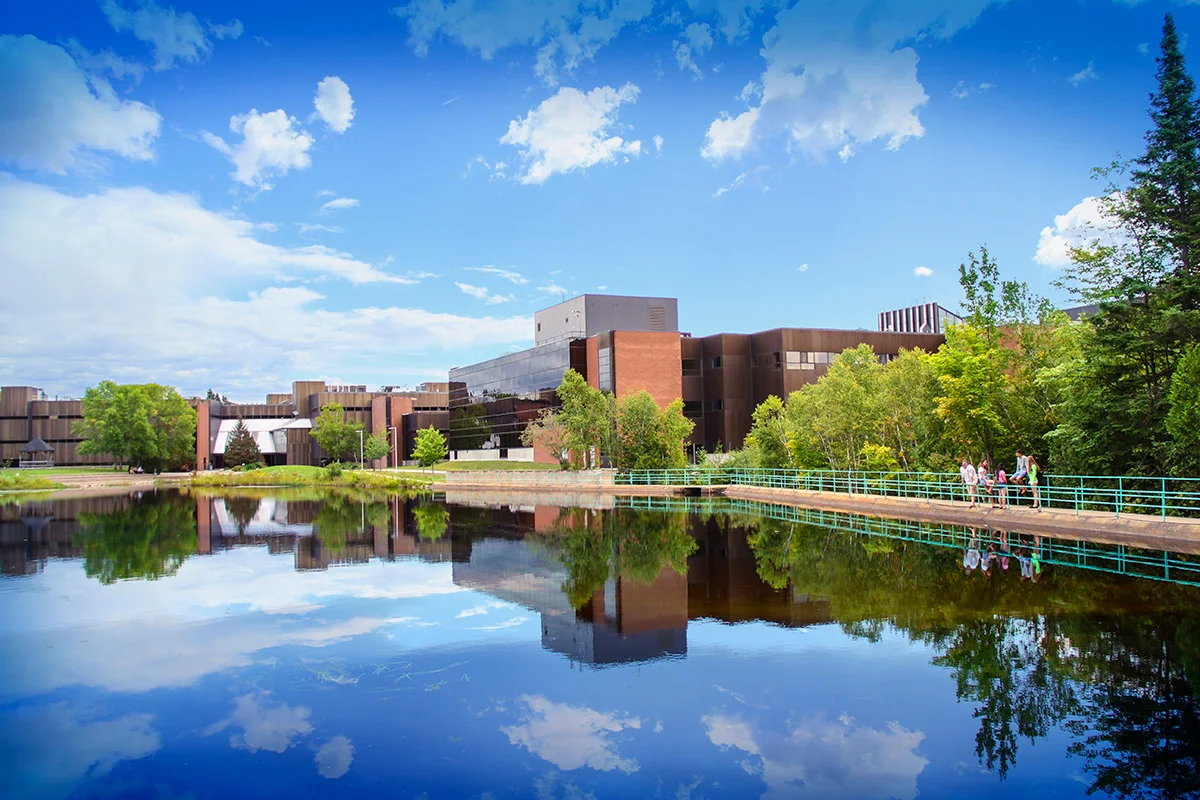
The main campus sits on a hillside above Lake Nipissing in North Bay, a city of roughly 50,000 people about three and a half hours north of Toronto. There is a second, smaller site in Bracebridge. Total enrolment sits in the region of 5,000 to 6,000 students, which puts Nipissing firmly in the small university category and produces the class sizes that its students consistently rate highest.
Academically the institution is organised around three areas: the Faculty of Arts and Science, the Faculty of Applied and Professional Studies, and the Schulich School of Education. Graduate degree granting authority came in 2001, which is why the postgraduate catalogue is small and research focused rather than broad and professional.
| Institution | Nipissing University (NU) |
|---|---|
| Type | Public university |
| Chartered | 1992, roots to 1967 and earlier |
| Location | 100 College Drive, North Bay, Ontario |
| Second site | Bracebridge |
| Programs for international students | 179 |
| Dual degree combinations | 111 |
| Undergraduate tuition | Mostly CAD 21,000 per year |
| Postgraduate tuition | CAD 16,800 to CAD 28,560 per year |
| Application fee | CAD 150 |
| Intakes | September, January and May |
| Standard English | IELTS 6.5, Duolingo not accepted |
The dual degree structure explained
This is the single most important section on the page, because it is what makes Nipissing different and because no other guide sets it out properly.
A dual degree at Nipissing is one extended program that awards two complete credentials. It is not a degree with a minor, and it is not a double major. The student graduates holding two separate degrees, and in several combinations a college diploma as well.
The structure is built from 37 subject halves combined with five partner halves:
- Bachelor of Education, Primary/Junior for kindergarten through grade six
- Bachelor of Education, Junior/Intermediate for grades four through ten
- Bachelor of Education, Intermediate/Senior for grades seven through twelve
- Bachelor of Commerce, the full business degree
- College Diploma in Social Service Worker, a practical front line credential
Those pair with subjects spanning computer science, mathematics, psychology, biology, geography, history, English, philosophy, political science, sociology, criminal justice across five streams, child and family studies, Indigenous studies, gender equality and social justice, fine arts, physical and health education and more.
Why this matters practically. A student who takes a standard arts degree and later wants to teach must complete a separate education degree afterwards, adding time and cost. A Nipissing dual degree graduate finishes with both already in hand. Similarly, a mathematics graduate with a Bachelor of Commerce attached can walk into either an analyst role or a finance role, because the pairing employers describe as hardest to find is exactly a specialist who can also read a balance sheet.
The cost of that advantage is time. Most dual degrees run five or six years, and 74 of them are six year structures including 19 weeks of practicum. That is a serious commitment, and it must be budgeted as a whole rather than year by year. Apply Study Visa models the full duration cost before any application is submitted, because a student who runs out of funds in year five has a much bigger problem than one who chose a shorter program at the start.
Teacher education: the Schulich School
Teacher education is what Nipissing is genuinely known for, and the Schulich School of Education is among the larger education faculties in Ontario.
Four standalone education degrees are offered alongside the dual degree routes: Primary/Junior, Junior/Intermediate, Intermediate/Senior, and a Primary/Junior route with a French as a Second Language specialisation.
Three points matter for international applicants, and they are rarely stated plainly:
- Certification is granted by the provincial regulator, not the university. The degree makes you eligible to apply; it does not by itself allow you to teach.
- Secondary teaching is hired by teachable subject. If you intend the Intermediate/Senior route, your undergraduate coursework determines which subjects you can teach. Mathematics, sciences and computing are documented shortage areas, while several humanities subjects are heavily oversubscribed. Check your transcript against the subject credit requirements before applying, not after.
- French as a Second Language is the strongest employment position in Canadian teaching. School boards across the country recruit qualified French teachers continuously. For a candidate with genuine French proficiency, that route is among the most employable teaching qualifications available anywhere in Canada.
Programs at a glance
| Program group | Count | Notes |
|---|---|---|
| Dual degree combinations | 111 | Two credentials from one program, mostly five or six years |
| Single bachelor degrees | 48 | Arts, science, commerce, education, nursing, social work, fine arts |
| Master degrees | 10 | Research focused, in thesis and major research paper versions |
| Post-baccalaureate diplomas | 8 | Non degree, see the work permit section |
| Post-baccalaureate certificates | 2 | Non degree, see the work permit section |
Worth singling out from the single degrees: Bachelor of Science in Nursing, where northern and rural placements give a broader clinical scope than most urban programs allow; Bachelor of Science in Data Science, one of the few undergraduate subjects where Canadian demand still outruns supply; and the Bachelor of Social Work, which is split across two listings covering years one and two and then the professional years three and four, with a separate competitive application between them.
The master degrees cover environmental studies, environmental sciences, sociology with applied social research, history, mathematics and kinesiology. They are small, supervisor led and research focused, so applicants should identify a supervisor and align a proposal before applying rather than after.
Tuition fees
| Program group | Annual tuition (CAD) |
|---|---|
| Most undergraduate and dual degree programs | 21,000 |
| Selected undergraduate routes | 19,325 and 23,000 |
| Higher cost undergraduate routes | 25,500 and 34,272 |
| Most master degrees | 16,800 |
| Master of Arts in History | 18,900 |
| Master of Science in Kinesiology | 23,100 |
| Master of Arts in Sociology, Applied Social Research (thesis) | 28,560 |
| Post-baccalaureate diplomas and certificates | 21,000 to 23,000 |
| Application fee | 150 |
Two observations that change how you should read that table. First, the master degrees are cheaper than the undergraduate ones, which is unusual in Canada and makes Nipissing genuinely competitive for research minded postgraduate applicants. Several master routes cost CAD 16,800 against CAD 21,000 for a bachelor degree.
Second, the application fee of CAD 150 is the highest of any institution we process, and it is non refundable. That is not a reason to avoid Nipissing, but it is a reason to make sure the application is right first time, which is where a counsellor review pays for itself.
Admission requirements
- Undergraduate and dual degrees: completed Grade 12 or equivalent, with requirements ranging from 60 to 80 per cent depending on the program.
- Post-baccalaureate diplomas and certificates: a completed bachelor degree, generally at 70 per cent.
- Master degrees: a four year bachelor degree, generally at 70 to 75 per cent, with a research fit assessment for thesis routes.
- Degree completion and transfer routes: some programs require a recognised college diploma or advanced diploma rather than Grade 12, and eligibility for the college partnership commerce routes is restricted to graduates of the named partner colleges.
- Application fee: CAD 150, non refundable.
The academic bar is genuinely accessible at the lower end, and Nipissing is a realistic option for students who narrowly miss requirements at larger Ontario universities. It should still be chosen on fit rather than on accessibility, because a six year dual degree is a long time to spend on a program you did not really want.
English requirements and the Duolingo problem
| Test | Requirement |
|---|---|
| IELTS Academic | 6.5 overall with no band below 6.0 for most programs; some require 6.5 in every band; a small number require 7.0 with no band below 6.5 |
| TOEFL iBT | 83 total with speaking at 22, rising to 93 total on higher requirement programs |
| PTE Academic | 58 overall with no component below 56, rising to 63 overall with no component below 60 |
| Duolingo | Not accepted for any program |
| Waiver | No English proficiency exam waiver is offered |
The Duolingo point catches people out constantly. Many Canadian institutions accept it, Nipissing does not, and there is no medium of instruction waiver either. If you have already taken Duolingo you will need to sit IELTS, TOEFL or PTE before you can apply here. Build that into your timeline from the beginning rather than discovering it at submission.
Cost of living in North Bay
| Expense | Monthly (approx. CAD) |
|---|---|
| Shared accommodation | 600 to 950 |
| Groceries | 300 to 400 |
| Transport | 60 to 100 |
| Utilities, phone, personal | 200 to 300 |
| Realistic total | 1,160 to 1,750 |
An annual living budget of roughly CAD 14,000 to 21,000 is realistic, well below the CAD 25,000 or more the same lifestyle costs in Toronto. Across a six year dual degree that difference is very large, and it is the main financial argument for studying in Northern Ontario.
North Bay is a small city with a modest South Asian community, a limited part time job market and real winters. Students who want the scale and diaspora networks of the Greater Toronto Area should be honest with themselves about that before committing to five or six years here.
Intakes and deadlines
Nipissing runs September, January and May intakes. Some guides state only two, which is out of date. That said, availability is uneven: many programs, including most of the master degrees and several dual degrees, are September entry only, while others carry all three windows.
Undergraduate applications for Ontario universities are generally submitted through the provincial application centre rather than directly, which adds a step and a separate fee to the process.
Apply six to nine months ahead. With a CAD 150 non refundable fee, a provincial application system, an English test that cannot be Duolingo, and the deposit to attestation letter to study permit chain, this is not a process to start late.
Post study work: which programs qualify
Nipissing is a public university, and that produces a clean split.
The 169 degree programs
Every bachelor degree, every dual degree and all ten master degrees are degree level credentials. Degrees are exempt from the field of study restrictions that apply to non degree credentials, which means there is no CIP code to look up and no risk of your program being removed from an eligibility list part way through your studies. For a five or six year commitment, that stability is worth a great deal.
The 10 non degree programs
The eight post-baccalaureate diplomas and two post-baccalaureate certificates are not degrees. They cover business administration, human resource management, marketing, international business, finance, applied artificial intelligence and machine learning, environment and sustainability, health and social impact, and general management.
These are credible programs with real content. But as non degree credentials their post study work standing is not automatic and is governed by field of study rules rather than the degree exemption. Anyone whose plan depends on working in Canada afterwards should have that position confirmed in writing before paying a deposit. Apply Study Visa does that check as standard.
Every work permit decision rests with Canadian immigration authorities, and no university or consultancy can guarantee an outcome.
The thesis trap: spouse work permits
If you are married and considering a master degree here, read this twice. It is the most expensive mistake available at this university.
Nipissing offers four master subjects in two different lengths: a two year thesis version and a one year major research paper version. The one year route is cheaper and faster, which makes it look like the obvious choice.
It is not, if you are bringing a partner. Spousal open work permits require a master program of sixteen months or longer. The one year routes fall below that threshold.
| Program | Length | Spouse eligible |
|---|---|---|
| Master of Environmental Studies (Thesis) | 2 years | Yes |
| Master of Environmental Studies (Major Research Paper) | 1 year | No |
| Master of Environmental Sciences (Thesis) | 2 years | Yes |
| Master of Environmental Sciences (Major Research Paper) | 1 year | No |
| Master of Science in Mathematics (Thesis) | 2 years | Yes |
| Master of Science in Mathematics (Major Research Paper) | 1 year | No |
| Master of Arts in Sociology, Applied Social Research (Thesis) | 2 years | Yes |
| Master of Arts in Sociology, Applied Social Research (Major Research Paper) | 1 year | No |
| Master of Science in Kinesiology (Thesis) | 2 years | Yes |
| Master of Arts in History | 1 year | No |
Five programs out of 179 carry spouse eligibility, and all five are thesis routes. A married applicant who saves a year of tuition by choosing the research paper version loses their partner’s right to work in Canada for the whole period, which in almost every case costs far more than the tuition saved.
Two further conditions apply: a spousal application can be refused if the student is in their final academic term, so apply early in the program, and processing takes months, so build it into the family timeline.
The honest part
Four things we tell every applicant before they commit.
The dual degrees are long. Five or six years, with 74 of them running six years including 19 weeks of practicum. Two credentials for one extended program is genuine value, but only if the funding, the visa timeline and the personal commitment stretch that far.
North Bay is small. Roughly 50,000 people, a limited part time job market and a modest South Asian community. Do not build a budget that depends on student earnings, and do not expect a city.
Winters are serious. Northern Ontario gets heavy snow and sustained cold. Budget CAD 300 to 500 for proper clothing before you arrive.
Teacher certification is a separate step. An education degree here makes you eligible to apply to the provincial regulator. It is not itself a licence to teach, and international graduates should confirm their certification and work eligibility pathway before enrolling rather than after graduating.
None of this makes Nipissing a poor choice. It makes it a considered one.
How to apply
- Decide single or dual. This is the first and biggest question here, because it changes the length, the cost and the credentials you finish with.
- Check the credential type. Degree or post-baccalaureate diploma determines your post study work position.
- If you are married, check the program length against the sixteen month spouse permit threshold before anything else.
- Book IELTS, TOEFL or PTE. Duolingo will not be accepted and there is no waiver.
- Confirm the academic percentage for your specific program, which ranges from 60 to 80 per cent.
- Apply and pay the CAD 150 fee, through the provincial application centre where required.
- Accept the offer and pay the deposit, which triggers your provincial attestation letter.
- Apply for your study permit, and file the spousal work permit application early if you are on an eligible thesis master route.
Verdict
Nipissing University is a small public university with one genuinely distinctive product, and the recommendation follows from that.
It works if the dual degree structure fits your plan, particularly if you want to teach and would otherwise need a separate education degree afterwards, or if you want a specialist subject with a commerce degree attached. It works for research minded postgraduate applicants, since the master degrees cost less than the undergraduate ones. And it works for students who want small classes, low living costs and a quiet environment.
It does not work if you need a large part time job market, if you want a big city, if you only have Duolingo, or if you are married and about to choose a one year master degree without understanding what that does to your partner’s work rights.
The mistake we see most often is applicants treating the dual degree as a longer version of a normal degree. It is not. It is two qualifications, and it should be chosen deliberately by someone who wants both.
Frequently asked questions
How many programs does Nipissing University offer international students?
There are 179 programs, made up of 111 dual degree combinations, 48 single bachelor degrees, 10 master degrees, 8 post-baccalaureate diplomas and 2 post-baccalaureate certificates. Sites quoting figures in the thirties are counting subject areas rather than programs.
What is a dual degree at Nipissing University?
One extended program that awards two complete credentials, most often an academic subject degree paired with a Bachelor of Education stream or a Bachelor of Commerce. Some combinations add a college diploma as well. It is not a double major or a minor.
How much are Nipissing University fees for international students?
Most undergraduate and dual degree programs cost CAD 21,000 per year, with some at CAD 19,325, CAD 23,000, CAD 25,500 and CAD 34,272. Most master degrees are CAD 16,800. The application fee is CAD 150 and is non refundable.
What is the Nipissing University acceptance rate?
The university does not publish one. Third party estimates range from 60 to 78 per cent, which tells you they are guesses. What decides your outcome is meeting the stated academic percentage and English requirement for your specific program with complete documents.
What IELTS score does Nipissing University require?
Most programs need IELTS 6.5 overall with no band below 6.0. Some require 6.5 in every band and a small number require 7.0 with no band below 6.5. TOEFL and PTE are accepted at published equivalents. Duolingo is not accepted and there is no waiver.
Does Nipissing University accept Duolingo?
No. Duolingo is not accepted for any program at this university, and no medium of instruction waiver is available either. Applicants must present IELTS, TOEFL or PTE.
Do Nipissing University programs qualify for a post graduation work permit?
The 169 degree programs do, and they are exempt from field of study restrictions so no CIP code check applies. The 8 post-baccalaureate diplomas and 2 certificates are non degree credentials and do not carry the same automatic standing.
Can my spouse work while I study at Nipissing University?
Only on the two year thesis master degrees. Five of the 179 programs qualify. The one year major research paper versions fall below the sixteen month threshold that governs spousal open work permit eligibility.
When was Nipissing University founded?
It received its charter as an independent university in 1992, having operated as Nipissing University College from 1967, with roots in North Bay teacher training earlier in the twentieth century.
How long is a dual degree at Nipissing University?
Most run five or six years, and 74 of the combinations are six year structures including 19 weeks of practicum. Fund and plan for the full duration rather than year by year.
Is North Bay a good place for Indian students?
It is safe, affordable and welcoming, with small classes and a genuine northern setting. It is a city of roughly 50,000 with a modest South Asian community, a limited part time job market and severe winters, so it suits students who want value and quiet rather than scale.
How do I apply to Nipissing University?
The simplest route is through the Apply Study Visa portal. We check the credential type and its work permit consequences, confirm the program length against the spouse permit threshold where relevant, and our certified counsellors review and submit your file for free before guiding you through the deposit, the attestation letter, your GIC and your study permit.
Does Apply Study Visa charge for Nipissing University applications?
No. Application review and submission through Apply Study Visa is free, including the credential and program length checks that decide your work permit and spouse permit position, with the same team supporting your visa, GIC and travel afterwards.
Quick facts
| Type | Public University |
|---|---|
| Location | North Bay, Ontario, Canada |
| Chartered | 1992 |
| Rating | 4.2 out of 5 |
| Application fee | C$150 |
| Undergraduate tuition | Mostly C$21,000 per year |
| Postgraduate tuition | C$16,800 to C$28,560 per year |
| Cost of living per year | Around C$14,000 to C$21,000 |
| Programs | 179, including 111 dual degrees |
| Intakes | September, January, May |