
Olds College is not a general college that happens to teach some agriculture. It is an agricultural institution that has done almost nothing else since 1913, and its 24 programs cover farming, horticulture, animal sciences, land management and the equipment trades that support them. There is no computing diploma, no hospitality program and no generic health care route.
That focus is the entire proposition. If you want agriculture, this is one of the strongest places in Canada to study it, and the campus Smart Farm is research infrastructure that very few institutions anywhere can match. If you do not want agriculture, nothing on this page will be relevant to you.
There is also one rule at this college that decides your work permit outcome more than anything else, and most guides skip it entirely. It is covered in full below.
About Olds College
Olds College was established in 1913 as Olds Agricultural College, which makes it one of the oldest agricultural institutions in Western Canada. It became Olds College of Agriculture and Technology in 2022, a renaming that reflected where the institution had already moved: agricultural technology, data and automation rather than farming alone.
It is an Alberta public post-secondary institution and a designated learning institution. Enrolment sits around 2,000 full time equivalent students, which makes this one of the smallest institutions covered on this site and produces class sizes and instructor access that larger colleges cannot offer.
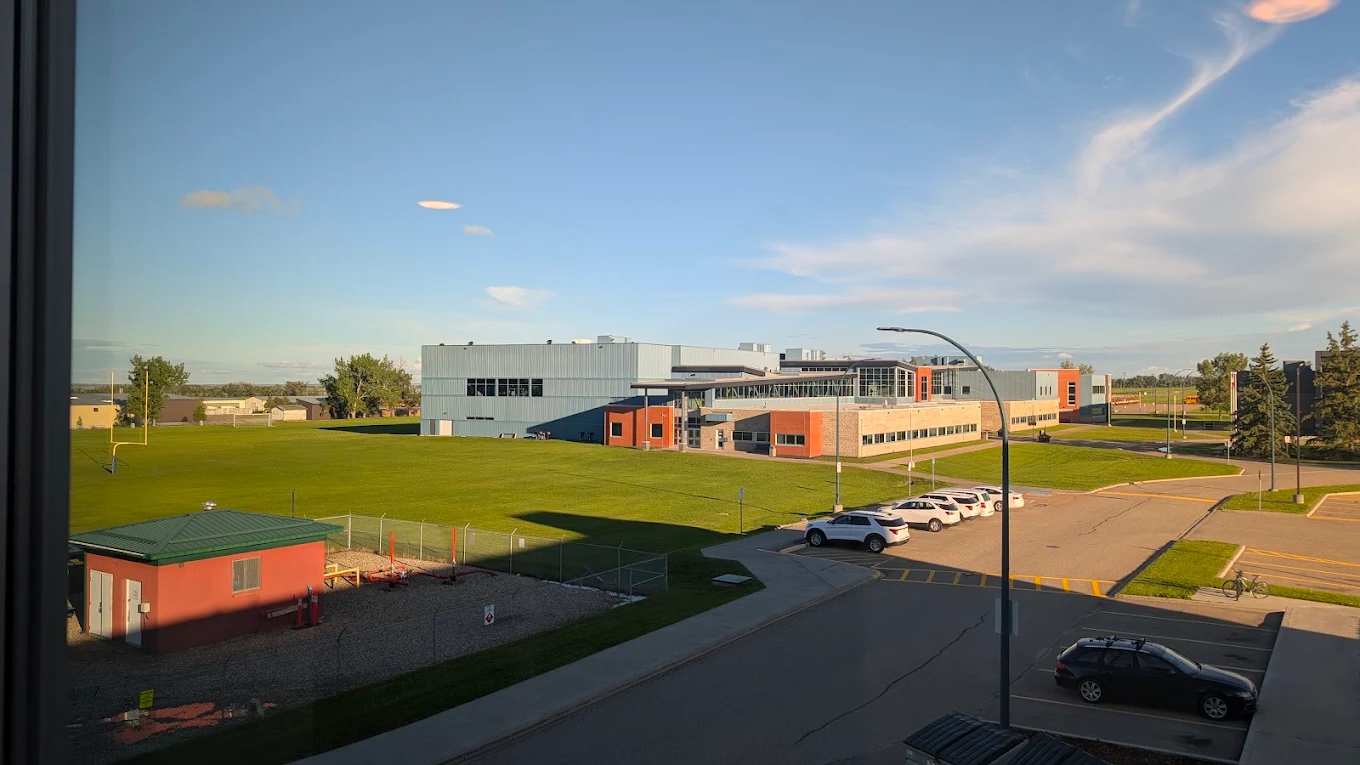
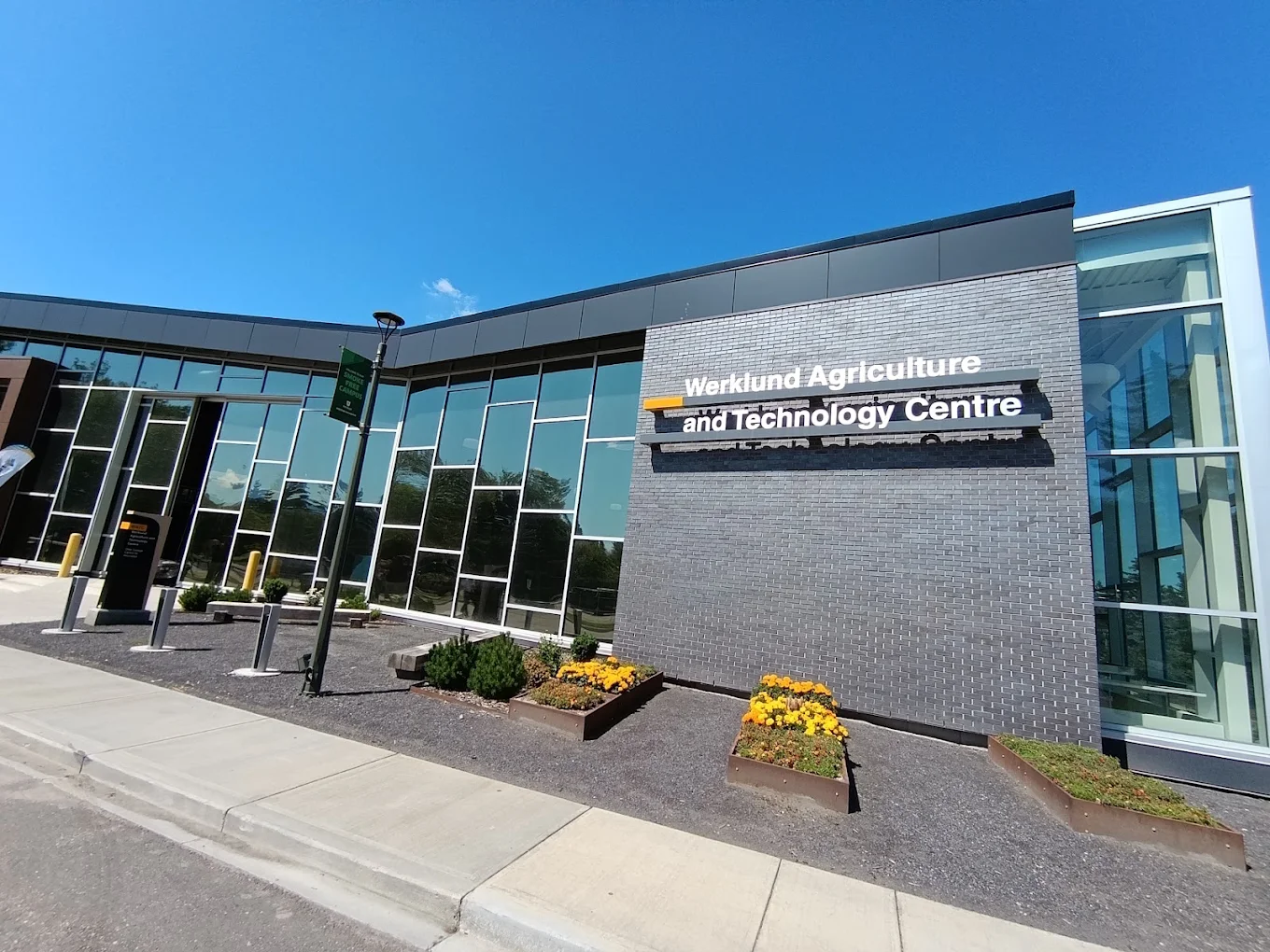
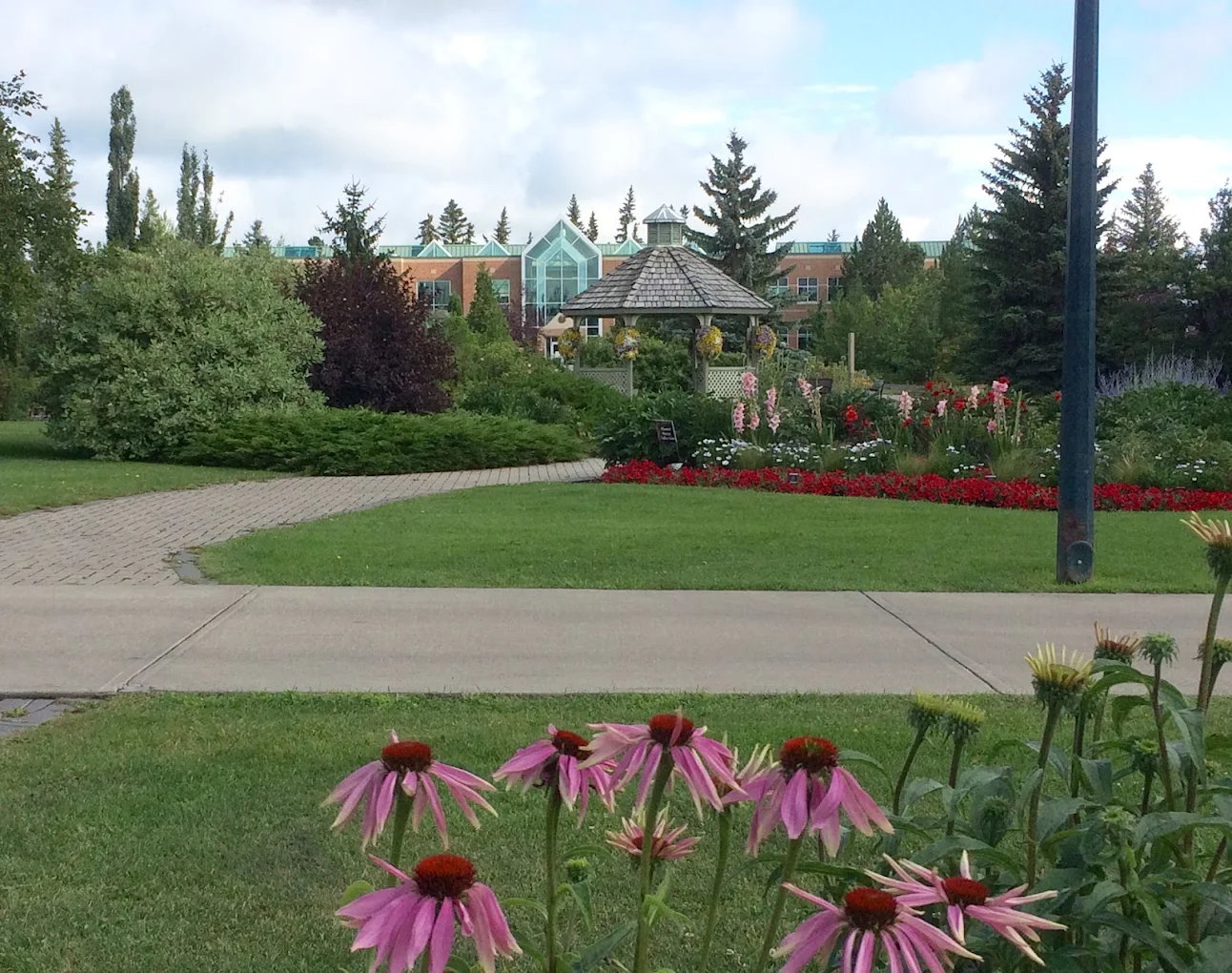
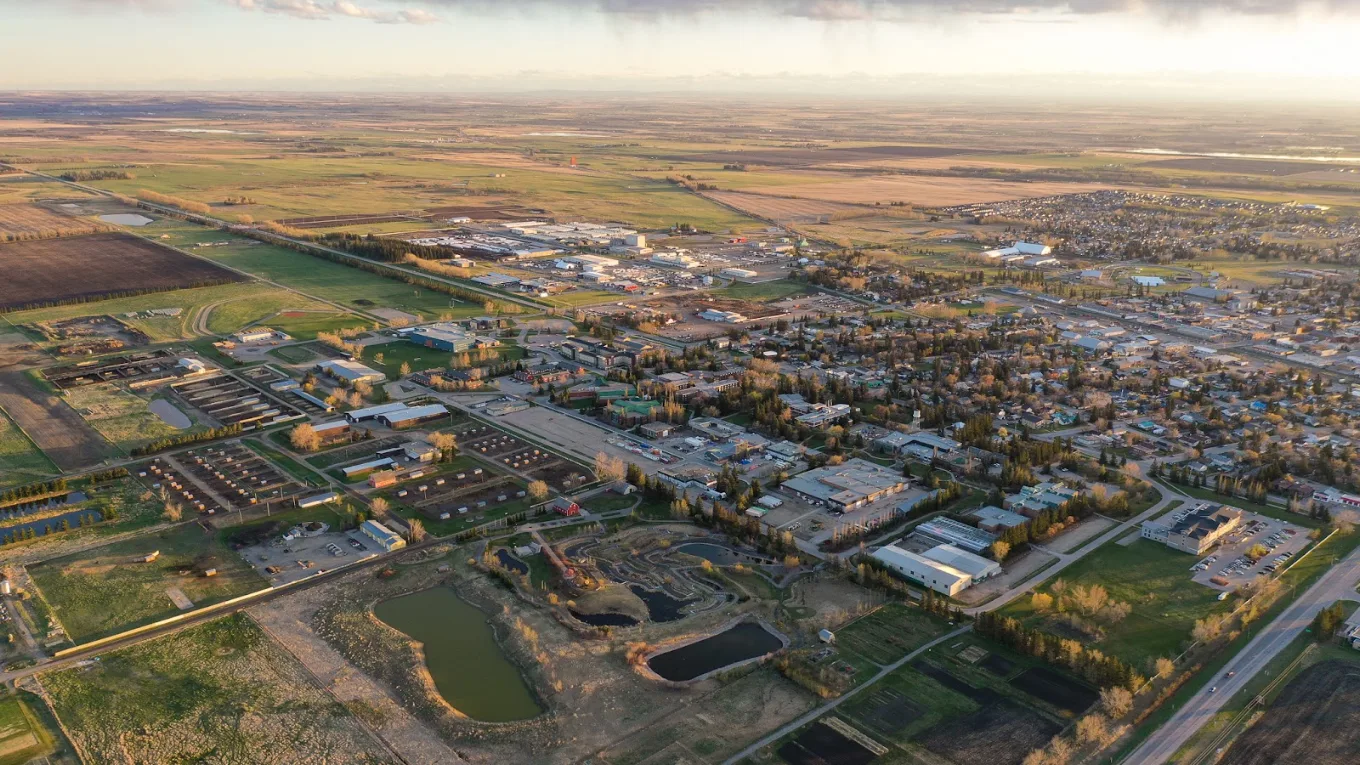
Teaching is organised through three schools: the School of Life Sciences, the School of Trades and Skills, and the Werklund School of Agriculture Technology. The campus sits on farmland in the town of Olds in central Alberta, roughly midway between Calgary and Red Deer, and includes working greenhouses, botanic gardens, constructed wetlands, equine facilities, a retail meat store and the Smart Farm.
| Institution | Olds College of Agriculture and Technology |
|---|---|
| Type | Alberta public college |
| Established | 1913 |
| Location | 4500 50 Street, Olds, Alberta |
| Enrolment | Around 2,000 full time equivalent |
| Programs for international students | 24 |
| Bachelor degrees | 4 |
| Tuition | CAD 15,737 to CAD 23,925 per year |
| Application fee | CAD 160 |
| Tuition deposit | CAD 5,000 |
| English | IELTS 6.0 with no band below 6.0 |
| Intakes | September, with January, May and November on selected programs |
The Smart Farm and why it matters
The Smart Farm is the single strongest reason to consider this college, and it is genuinely difficult to find an equivalent anywhere.
It is a working, commercial scale research farm on campus, not a demonstration plot. Precision guidance systems, variable rate application, sensor networks, autonomous machinery and agricultural data platforms are run there under real production conditions, with real crops and real economic consequences. Research projects span crop production, livestock, controlled environment agriculture and environmental stewardship.
For a student, that changes what training means. Precision agriculture taught in a classroom is a set of concepts. Precision agriculture taught on a farm running the equipment commercially is a set of skills, and the difference is visible immediately at interview with an equipment dealer, an agronomy firm or a large operation.
It is also why this small Alberta college is watched internationally by agricultural technology companies, and why the Werklund School of Agriculture Technology exists as a distinct school rather than a department.
Programs and what Olds is known for
Twenty four programs, all land based. They group into six areas.
- Agriculture: Agricultural Management in AgriCommerce and Production majors, Precision Agriculture Techgronomy, the Bachelor of Applied Science in Agribusiness and the Bachelor of Digital Agriculture.
- Horticulture and turf: Horticulture Technologist, Turfgrass Management, the Bachelor of Applied Science in Horticulture and the Bachelor of Applied Science in Golf Course Management.
- Animal sciences: Veterinary Technology, Veterinary Medical Receptionist, Equine Care and Management and Equine Reproduction Technician.
- Trades: Farrier Science, and the Agricultural and Heavy Equipment certificate with its two diploma specialisations.
- Environment: Environmental Science and Technology.
- Business: Business Management certificate and diploma routes, Sports Management, and post-diploma certificates in Agricultural Business and Supply Chain Management.
Four programs deserve singling out.
Bachelor of Digital Agriculture is the strongest option here for most international applicants. It is a full four year degree, so it carries automatic work permit standing without any CIP check, it runs on the Smart Farm, and it sits in a field where global demand outruns the supply of trained graduates.
Precision Agriculture Techgronomy is the two year version of the same idea, joining agronomy to guidance systems, drones, remote sensing and field data analysis.
Farrier Science and Equine Reproduction Technician are specialisms taught at almost no other institution in the world. Alberta’s horse population makes them viable here, and graduates enter markets with very few formally trained competitors.
Golf Course Management at degree level exists because superintendent roles combine agronomy, irrigation, environmental management, budgets and staff leadership, and no general turf or business qualification covers that combination.
Tuition fees
| Program | Annual tuition (CAD) |
|---|---|
| Business Management, General Management diploma | 15,737 |
| Business Management certificate | 16,497 |
| Bachelor of Applied Science in Agribusiness and in Horticulture | 16,900 |
| Post-Diploma Certificates in Horticulture and Agricultural Business, Equine Reproduction | 17,100 |
| Bachelor of Applied Science in Golf Course Management | 17,169 |
| Veterinary Medical Receptionist, Farrier Science, Sports Management | 17,170 |
| Horticulture Technologist, Turfgrass Management | 17,300 |
| Agricultural Management, Environmental Science, Equipment routes, Digital Agriculture, Equine Care | 17,500 |
| Precision Agriculture Techgronomy | 18,000 |
| Post-Diploma Certificate in Supply Chain Management | 19,700 |
| Veterinary Technology | 23,925 |
| Application fee | 160 |
| Tuition deposit to reserve a seat | 5,000 |
Two points on cost. First, the spread is narrow: most programs sit between CAD 17,000 and CAD 17,500, which makes budgeting simple and means you can choose on fit rather than price. Second, the CAD 5,000 tuition deposit is substantial and must be paid to reserve your seat and trigger your provincial attestation letter. Plan that cash flow before you apply, not after the offer arrives.
Notably, the four bachelor degrees are not the most expensive programs here. Three of them cost less than Precision Agriculture, and all four cost far less than Veterinary Technology.
Admission requirements
- Certificates and most diplomas: completed Grade 12 or equivalent with 50 per cent.
- Veterinary Technology: Grade 12 with 65 per cent, the highest diploma bar here.
- Bachelor of Digital Agriculture: Grade 12 with 65 per cent, entering at first year.
- Bachelor of Applied Science routes: a completed two year diploma with 75 per cent. These are degree completion routes, not four year entry points.
- Post-diploma certificates: a completed diploma with 53 to 63 per cent depending on the program.
- Equipment diplomas: the Agricultural and Heavy Equipment certificate must be completed first.
A 50 per cent entry bar is among the most accessible in Canada. That is a genuine opening for students who miss requirements elsewhere, and it is also exactly why the work permit section below matters so much: an easy entry route into a program that does not lead where you assumed is not a bargain.
One conflict worth knowing about: some published material lists a considerably higher entry average for Veterinary Technology than the 65 per cent recorded in the current admissions data. Apply Study Visa confirms the operative figure for your intake before your file is submitted.
English requirements and the waiver route
| Test | Requirement |
|---|---|
| IELTS Academic | 6.0 overall with no band below 6.0 |
| PTE Academic | 55 overall with no component below 55 |
| TOEFL iBT | 80 total with no section below 18 |
| Duolingo | 110 |
| Waiver | Available, see below |
Every single program uses the same English requirement, which is unusual and genuinely helpful. There is no higher bar for nursing style programs or postgraduate routes here, so one test result covers your whole shortlist.
There is also a waiver route that many students miss: applicants who have completed at least three years of academic study conducted entirely in English may be exempt from submitting a test at all. Assessment is case by case and documentation is verified, so do not assume it applies to you, but for Indian students from English medium institutions it is worth checking before booking a test. Apply Study Visa assesses your eligibility for it as part of the file review.
Cost of living in Olds
| Expense | Monthly (approx. CAD) |
|---|---|
| Shared accommodation or campus residence | 550 to 900 |
| Groceries | 300 to 400 |
| Transport | 80 to 150 |
| Utilities, phone, personal | 200 to 300 |
| Realistic total | 1,130 to 1,750 |
An annual living budget of roughly CAD 14,000 to 21,000 is realistic. Alberta also has no provincial sales tax, which quietly reduces day to day costs compared with most other provinces.
Two practical notes. On campus residence exists and should be applied for immediately after accepting an offer, because a town this small has limited rental stock. And transport costs more than the table suggests if you rely on getting to Calgary or Red Deer regularly, since there is no commuter rail and bus services are limited.
Intakes and deadlines
Most programs are September entry only. Some carry more options, and the pattern is worth knowing before you plan a timeline:
- Veterinary Technology and Veterinary Medical Receptionist: September, January and May, the widest choice here.
- Turfgrass Management: January entry, which is unusual and suits students who miss the autumn cycle.
- The three Bachelor of Applied Science degrees: November entry, which is unusual enough that it needs deliberate visa planning.
- Equine Care and Management: September plus a January option in the 2028 cycle.
- Sports Management and Equine Reproduction: intakes recorded from the 2027 cycle onward rather than immediately.
Applications are processed in roughly three to six weeks for a complete file, and the college recommends applying at least four to six months before the start date. With a CAD 5,000 deposit and a study permit to obtain, six months ahead is the sensible minimum.
The CIP code rule that decides everything
Read this before you choose a program. At this college it matters more than the fee, the subject or the intake.
Since November 2024, graduates of non degree programs can only obtain a post graduation work permit if their program’s CIP code appears on the eligible field of study list. Degree graduates are exempt from that requirement entirely.
At Olds that produces a clean split:
| Credential | Count | Position |
|---|---|---|
| Bachelor degrees | 4 | Exempt from the field of study rule, no CIP check needed |
| Diplomas, certificates and post-diploma certificates | 20 | CIP code must appear on the eligible list |
The good news for this college specifically. Agriculture, horticulture, animal science and equipment trades sit in the labour shortage categories the eligible list was designed around, which puts most of the Olds catalogue in a far stronger position than a typical college offering business or generic management diplomas.
The caution. Business and management programs at college level are the single category most affected by these restrictions. That directly concerns the Business Management certificate and diploma, Sports Management, and the Supply Chain Management post-diploma certificate. Do not assume those carry the same standing as the agriculture programs.
Olds publishes a CIP code on every program page precisely so applicants can check. Apply Study Visa does that check for your specific program and intake, in writing, before any deposit is paid. Every work permit decision rests with Canadian immigration authorities and no college or consultancy can guarantee an outcome.
Spouse work permits
Short and important: no program at Olds College carries spousal open work permit eligibility.
Spousal open work permits are limited to master programs of sixteen months or longer and to doctoral programs. Olds offers certificates, diplomas and bachelor degrees only, with no postgraduate degrees at all.
If you are married and your financial plan assumed a second income in Canada, that assumption does not hold here. It is better to know that before the deposit than after arrival, and Apply Study Visa raises it with every married applicant as a matter of course.
The honest part: a town of 9,000
Olds is a town of roughly 9,000 people. That is not a small city, it is a genuinely small town, and it shapes everything about student life here.
- The part time job market is very limited. There is work in agriculture, retail and services, but nothing like the volume of a city. Do not build a budget that depends on student earnings.
- The South Asian community is small. Calgary is roughly an hour away and Red Deer closer, but day to day you are in rural Alberta.
- Transport matters. Without a car, getting anywhere outside town is difficult. Many students eventually buy one, which is a cost worth anticipating.
- Winters are cold and long. Central Alberta gets serious winter. Budget CAD 300 to 500 for proper clothing before arrival.
- Much of the work is outdoors and physical. Agriculture, horticulture, equine and equipment programs involve early starts, weather and animals. Students who romanticise farm life without having done it sometimes struggle.
Against that: the college is safe, the classes are small, the instructors know your name, housing is affordable and available, and the training is genuinely excellent in its field. It is a specific trade, and it is a good one for the right student.
How to apply
- Check the credential type first. Degree or diploma decides your work permit position before anything else does.
- Check the CIP code for any non degree program against the eligible field of study list.
- Confirm the academic bar, which is 50 per cent for most programs, 65 for Veterinary Technology and Digital Agriculture, and 75 for the degree completion routes.
- Check whether the English waiver applies to you before booking a test, if you studied entirely in English for three years or more.
- Apply and pay the CAD 160 application fee. Allow three to six weeks for a complete file.
- Pay the CAD 5,000 tuition deposit to reserve your seat and trigger your provincial attestation letter.
- Apply for your study permit with the attestation letter, offer and proof of funds.
- Apply for campus residence immediately, because rental stock in a town this size is limited.
Verdict
Olds College is a specialist institution, and the recommendation is correspondingly narrow.
It works if you genuinely want agriculture, horticulture, animal science or the equipment trades, particularly if you come from a farming background and intend to return to or build an operation. It works for students who want a low, predictable fee and an accessible entry bar. And it works exceptionally well for anyone targeting agricultural technology, because the Smart Farm and the Bachelor of Digital Agriculture together are a combination almost nowhere else offers.
It does not work if you need a city, if you need part time income to fund your studies, if you are married and counting on a spouse working, or if you are picking a business diploma here as a general route into Canada.
The best single choice on offer, for most international applicants, is the Bachelor of Digital Agriculture. It is a degree, so the work permit question disappears. It is priced at CAD 17,500, below several diplomas. And it sits at the intersection of agriculture and data, which is where this college is genuinely world class.
Frequently asked questions
Is Olds College a public college?
Yes. It is an Alberta public post-secondary institution established in 1913 and a designated learning institution, specialising in agriculture, horticulture, land management, animal sciences and related trades.
How much are Olds College fees for international students?
Tuition runs from CAD 15,737 to CAD 23,925 per year, with most programs between CAD 17,000 and CAD 17,500. Veterinary Technology is the highest. The application fee is CAD 160 and a CAD 5,000 tuition deposit reserves your seat.
What IELTS score does Olds College require?
IELTS 6.0 overall with no band below 6.0, and the same requirement applies to every program. PTE 55, TOEFL iBT 80 and Duolingo 110 are also accepted.
Can I study at Olds College without IELTS?
Possibly. Applicants who have completed at least three years of academic study conducted entirely in English may be exempt from the test requirement. Assessment is case by case and documents are verified, so confirm your eligibility before deciding not to book a test.
Are Olds College programs eligible for a post graduation work permit?
The four bachelor degrees are exempt from the field of study requirement. The twenty certificates and diplomas depend on their CIP code appearing on the eligible list, and Olds publishes that code on each program page. Agriculture and trades sit in favourable categories, while college level business programs face the tightest restrictions.
What is the Olds College Smart Farm?
A working commercial scale research farm on campus where precision agriculture technology, sensors, autonomous equipment and data systems run under real production conditions. Students train on the systems industry is actually deploying.
Can my spouse work while I study at Olds College?
No. Spousal open work permits require a master program of sixteen months or longer or a doctoral program, and Olds offers no postgraduate degrees. Married applicants should plan on a single income.
What is the Olds College acceptance rate?
The college does not publish one. Entry depends on meeting the stated academic percentage, which is 50 per cent for most programs, and on seat availability in a small institution where several programs have limited intakes.
Does Olds College have on campus housing?
Yes, and you should apply for it immediately after accepting an offer. Olds is a town of roughly 9,000 people with limited rental stock, so campus residence is the most reliable option.
What are the intakes at Olds College?
Most programs are September entry only. Veterinary Technology and Veterinary Medical Receptionist offer September, January and May. Turfgrass Management runs a January entry, and the three Bachelor of Applied Science degrees run November entries.
Is Olds College good for Indian students?
It suits students who genuinely want agriculture, horticulture, animal science or equipment trades, especially those from farming backgrounds. It is not suitable for students who need a city, a large part time job market or a general route into Canada.
How do I apply to Olds College?
The simplest route is through the Apply Study Visa portal. We check the credential type and the CIP code position for your specific program, assess whether the English waiver applies to you, and our certified counsellors review and submit your file for free before guiding you through the CAD 5,000 deposit, the attestation letter, your GIC and your study permit.
Does Apply Study Visa charge for Olds College applications?
No. Application review and submission through Apply Study Visa is free, including the work permit and CIP verification that decides whether your chosen program leads where you expect, with the same team supporting your visa, GIC and travel afterwards.
Quick facts
| Type | Public College |
|---|---|
| Location | Olds, Alberta, Canada |
| Established | 1913 |
| Rating | 4.3 out of 5 |
| Application fee | C$160 |
| Tuition deposit | C$5,000 |
| Tuition | C$15,737 to C$23,925 per year |
| Cost of living per year | Around C$14,000 to C$21,000 |
| Programs | 24, including 4 bachelor degrees |
| English | IELTS 6.0, no band below 6.0 |