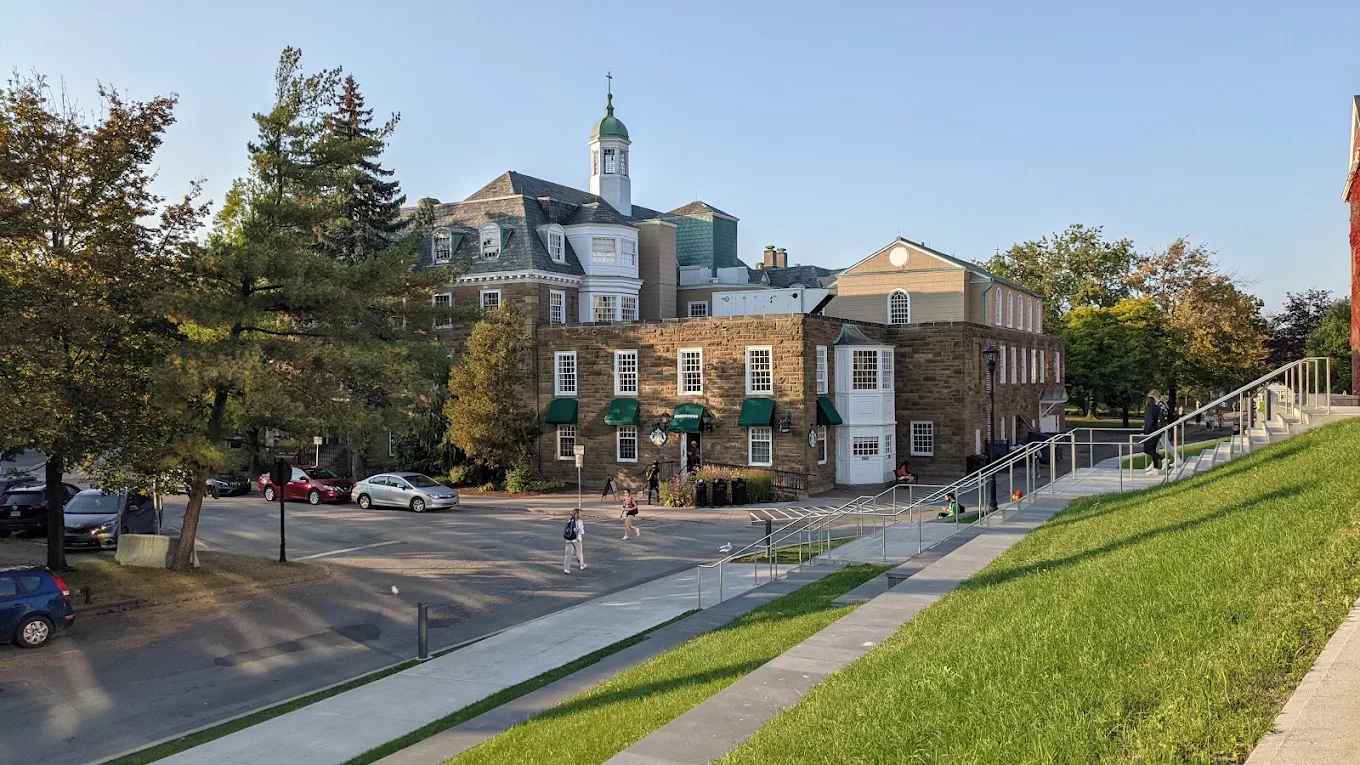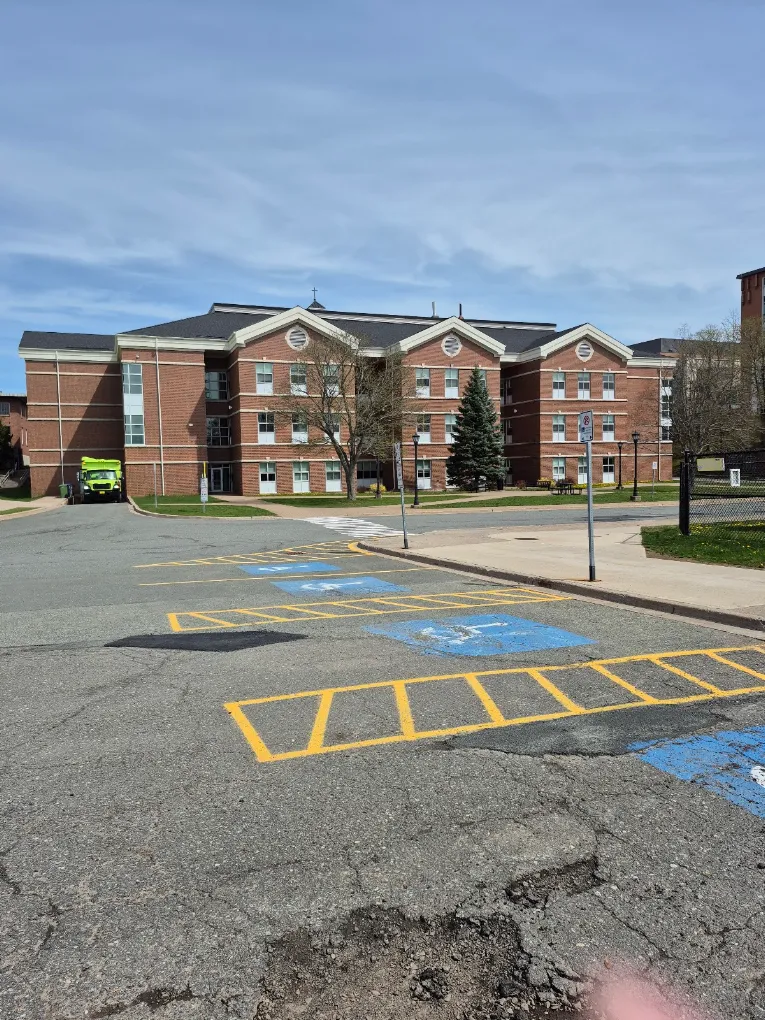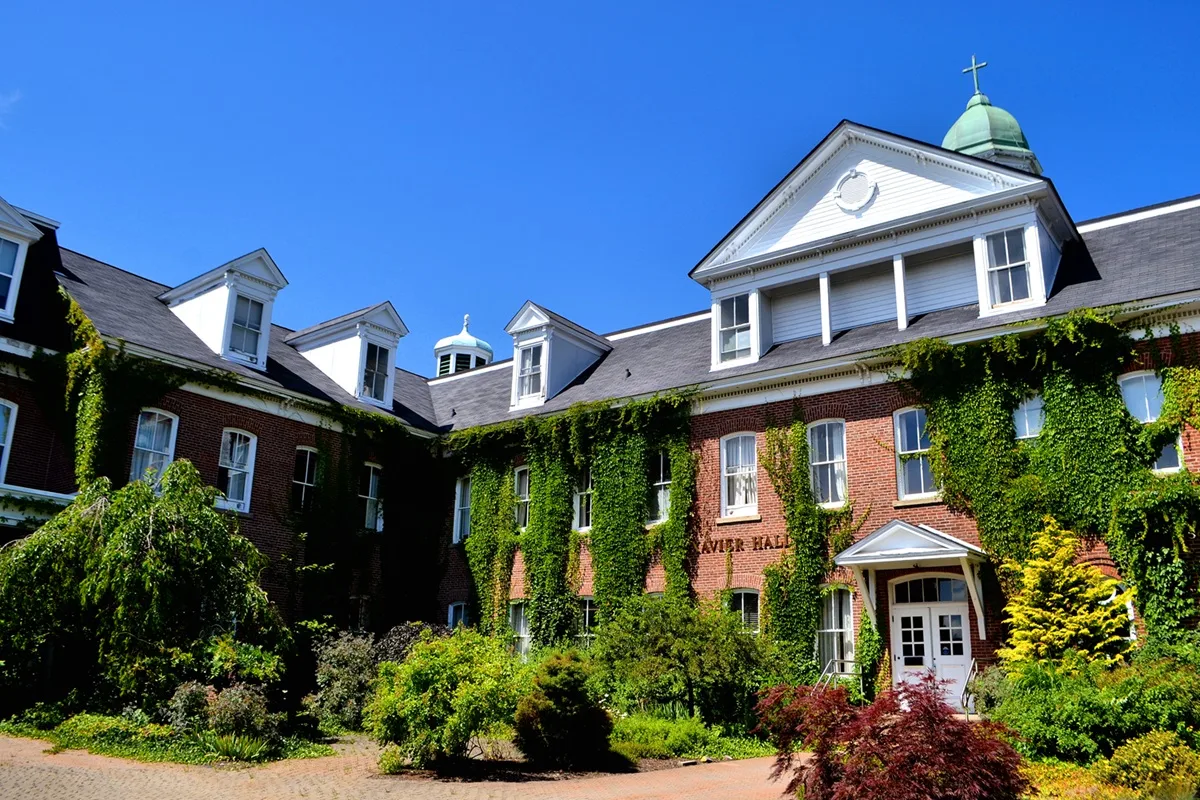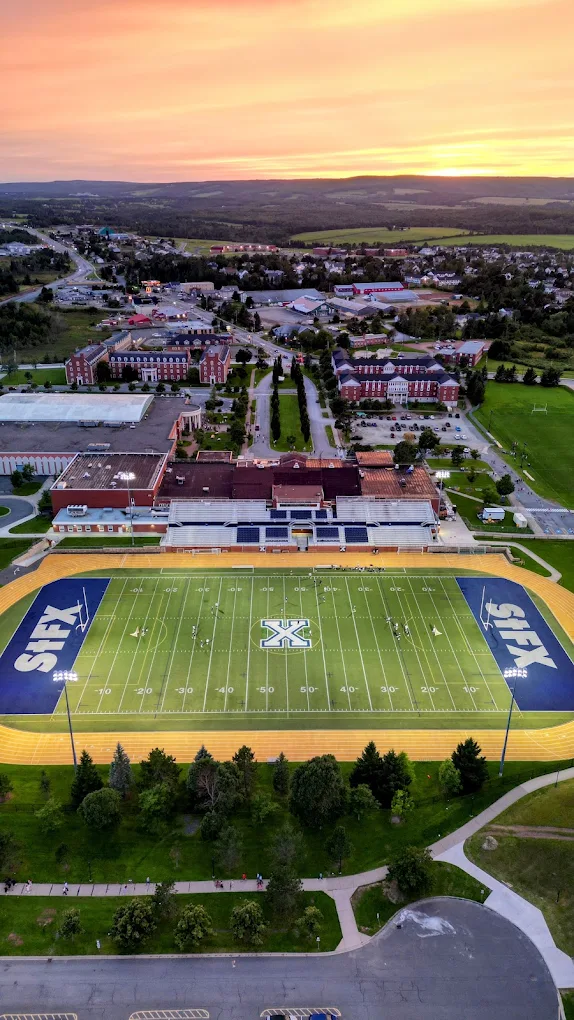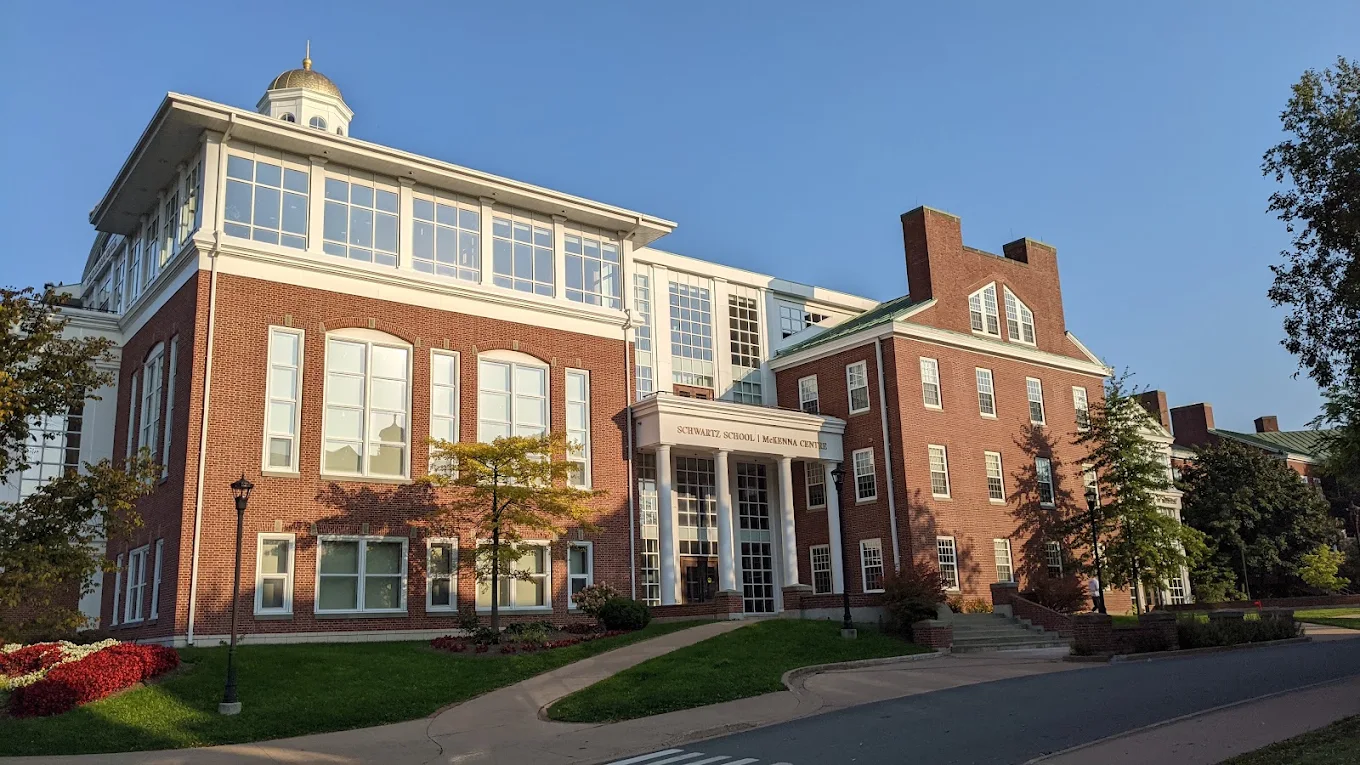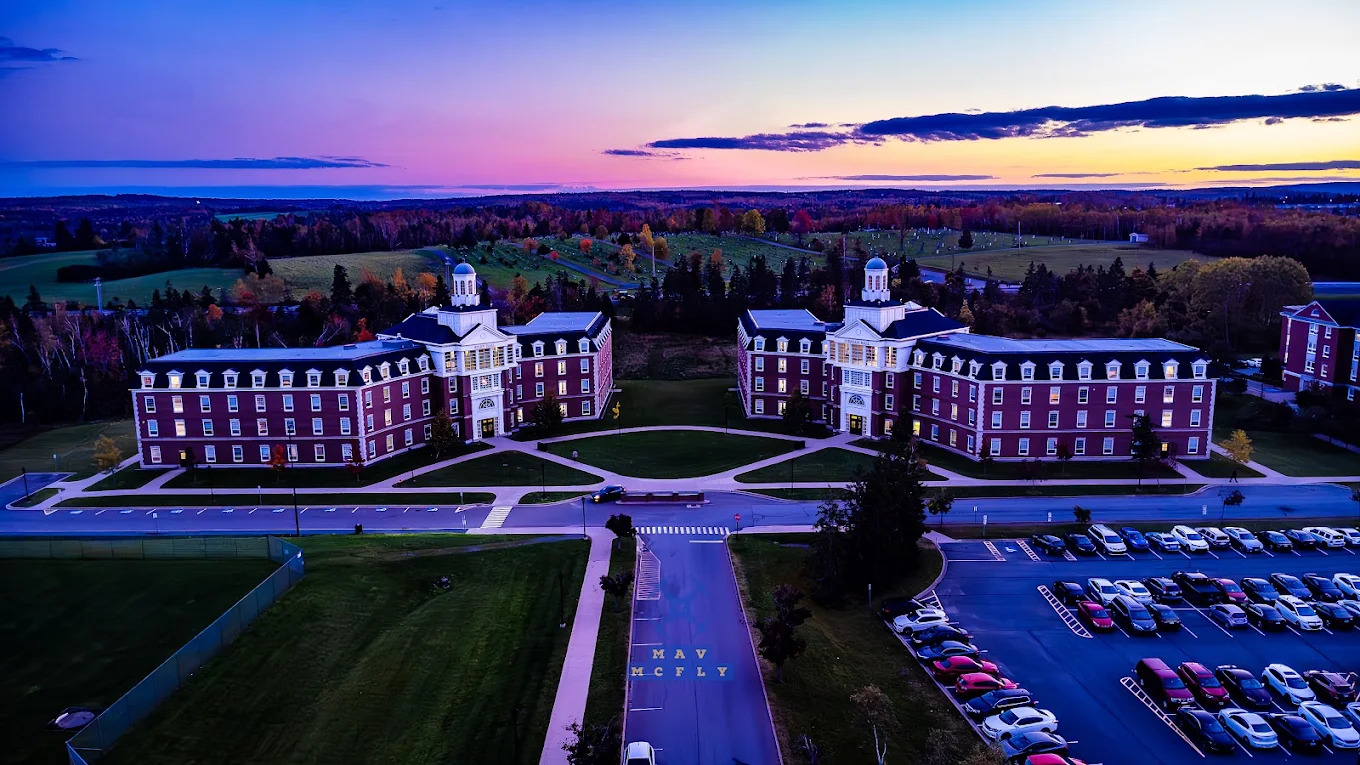

St. Francis Xavier University, known everywhere as StFX, is a public undergraduate university in Antigonish, Nova Scotia. It was founded in 1853 as Arichat College, moved to Antigonish in 1855, and received university status on 7 May 1866. It has around 5,000 students, of whom roughly 4,300 are undergraduates, on a single rural campus about two hours by road from Halifax Stanfield International Airport.
Its reputation rests on something specific and measurable. In the Maclean’s 2026 rankings, StFX placed first in Canada for reputation among primarily undergraduate universities, and fourth overall in that category of twenty, rising six places in a single year. Ninety two percent of first year students reported being satisfied or very satisfied with their education in the 2025 Canadian University Consortium survey.
For Indian applicants the picture is straightforward in one respect and complicated in another. Thirty programmes are currently open to international students, from a thirteen week English course at CAD 4,500 to a post baccalaureate diploma at CAD 22,646. The complication is that five of those thirty are diplomas rather than degrees, and in Canada that single distinction decides whether your post study work permit is guaranteed or conditional. Section 10 explains it properly, and it is the most important thing on this page.
🎓 Quick Fact: StFX is not on Cape Breton Island, it was not founded by the Jesuits, and it does not publish an acceptance rate. All three claims appear on pages currently ranking for this search. Section 3 sets out what the sources actually say.
Key Facts at a Glance
| Detail | Information |
|---|---|
| Full Name | St. Francis Xavier University (StFX) |
| Type | Public undergraduate liberal arts university, Roman Catholic heritage |
| Founded | 1853 as Arichat College; moved to Antigonish 1855; university status 1866 |
| Location | Antigonish, Nova Scotia, on the mainland, not Cape Breton. Roughly 2 hours from Halifax airport |
| Students | Around 5,000, of whom roughly 4,300 are undergraduates |
| Maclean’s 2026 | #1 in Canada for reputation, primarily undergraduate category; #4 overall of 20 |
| Affiliation | Maple League of Universities |
| Programmes open to international students | 30: 18 bachelor degrees, 6 master degrees, 4 post baccalaureate diplomas, 1 university diploma, 1 English course |
| International tuition | CAD 4,500 to 22,646 a year depending on programme |
| Application fee | CAD 100, waived on the English course |
| Tuition deposit | CAD 1,000 initial deposit |
| Standard English requirement | IELTS 6.5 with no band below 6.0, PTE 60, or TOEFL iBT 90 |
| Post study work | PGWP up to 3 years on 29 of the 30. See Section 10 for the diploma exception |
| Official Website | www.stfx.ca |
2. The Maclean’s Ranking, Read Properly
StFX is genuinely ranked number one in Canada for something, and it is worth understanding exactly what, because the claim gets stretched.
| Measure | Position | What it means |
|---|---|---|
| Maclean’s 2026, reputation | #1 in Canada | Best reputation of all primarily undergraduate universities, as judged in the reputational survey |
| Maclean’s 2026, overall | #4 of 20 | Within the primarily undergraduate category, up six places in one year |
| Student satisfaction | 92% | First year students satisfied or very satisfied, 2025 consortium survey |
| Global research tables | Low or unranked | Expected. It is a small undergraduate teaching university, not a research heavyweight |
3. What Other Pages Get Wrong
We compared the pages currently ranking for this search against the university’s own published information and against our own programme by programme record of all 30 international programmes. These are the errors in circulation.
| Claim you will see | The actual position |
|---|---|
| “Located on the St. Francis Xavier Peninsula in Cape Breton Island” | Antigonish is on the mainland of Nova Scotia. There is no St. Francis Xavier Peninsula. This one is simply invented |
| “Founded by the Society of Jesus” | Founded in 1853 as a Roman Catholic diocesan college at Arichat. The Jesuits did not found it |
| “Established 1855” or “established 1866” | 1853 is the founding. 1855 is the move to Antigonish, 1866 is when university status was granted |
| “Acceptance rate 75 percent” or “71 percent” | The university does not publish one. Those figures are third party estimates, and they disagree with each other by four points |
| “Application fee CAD 40” | CAD 100 on all 29 academic programmes. Nil only on the English course |
| “Tuition is about eight thousand” | That is the domestic rate. International tuition runs CAD 19,300 to 22,646 for degrees |
| “Motto: Gaudia Certa Caritas” | The motto is Quaecumque Sunt Vera, whatsoever things are true |
4. The 30 Programmes Open to International Students
| Type | Count | Tuition a year | PGWP |
|---|---|---|---|
| Four year bachelor degrees | 16 | CAD 19,300 to 19,876 | Guaranteed by the degree exemption |
| Bachelor of Education, elementary and secondary | 2 | CAD 19,300 | Guaranteed |
| Master degrees (1 course based, 5 thesis) | 6 | CAD 6,567 to 19,876 | Guaranteed |
| Post baccalaureate diplomas | 4 | CAD 21,657 to 22,646 | Conditional. See Section 10 |
| University Diploma in Engineering | 1 | CAD 19,300 | Conditional |
| English for Academic Purposes, 13 weeks | 1 | CAD 4,500 total | None. Ever |
The Routes Indian Applicants Ask About
Master of Applied Computer Science
Two years at CAD 19,876 with an optional eight month co-op. Course based rather than thesis based, so it suits industry rather than doctoral ambitions. September entry only.
Thesis master degrees
Five of them: Biology, Chemistry, Computer Science, Earth Science and Celtic Studies, at CAD 12,380 to 12,752. Cheaper than the undergraduate rate, and they need a supervisor before you apply.
Bachelor of Science in Nursing
The lowest academic bar at 65 percent, but clinical placement capacity for international students is the real constraint rather than the mark.
Bachelor of Business Administration
Four years at CAD 19,876 through the Gerald Schwartz School of Business, with September and January entry and specialisation from later years.
Aquatic Resources and Climate
Genuine institutional specialisms, taught on the Atlantic coast where the fieldwork actually happens. Available in both arts and science streams.
General Entry, arts or science
Enter without declaring a major and choose after first year. A real advantage of the Canadian system over the British one, where you commit at application.
5. Tuition and the Real Cost of a Year
| Programme | Tuition a year |
|---|---|
| English for Academic Purposes, 13 weeks | CAD 4,500 total |
| Thesis master degrees | CAD 6,567 to 12,752 |
| Most bachelor degrees | CAD 19,300 |
| Business, Health, Applied Computer Science | CAD 19,876 |
| Post baccalaureate diplomas | CAD 21,657 |
| Post baccalaureate diploma in Artificial Intelligence | CAD 22,646, the highest here |
Worked First Year Cost, Bachelor Degree
| Item | Amount (CAD) | Note |
|---|---|---|
| Base tuition | 19,300 | Most bachelor degrees |
| Ancillary and student fees | confirm in writing | Billed separately from tuition |
| Application fee | 100 | One off, non refundable |
| Tuition deposit | 1,000 | Counts toward tuition, but confirm refundability |
| Proof of funds for the study permit | approx 22,895 | Set by the Canadian government and revised regularly |
| Study permit and biometrics | approx 235 | Government fees, confirm current amounts |
| Realistic first year outlay | approx 43,000 to 45,000 | Roughly INR 27 to 29 lakh |
Antigonish is a small town, and living costs there are materially lower than Toronto or Vancouver. That is one of the genuine financial arguments for StFX. The proof of funds figure above is a government minimum you must demonstrate, not a forecast of what you will spend.
6. Admission Requirements for Indian Applicants
| Level | Requirement |
|---|---|
| Bachelor degrees | Class 12 at 70 percent with no individual mark below 65 percent |
| Bachelor of Science in Nursing | Class 12 at 65 percent with the required science subjects |
| Thesis master degrees | A three year bachelor degree at 70 percent, plus a supervisor willing to take your project |
| Master of Applied Computer Science | Recorded as a four year degree, but the cross check source states a three year BTech or BE is also considered. Have the transcript assessed rather than self excluding |
| Post baccalaureate diplomas | A four year bachelor degree at 70 percent |
| Bachelor of Education | A completed bachelor degree containing the teachable subject. This is a second degree, not a school leaver route |
💡 Apply Study Visa insight: the thesis master degrees explicitly accept a three year Indian bachelor degree. That is unusual and useful, because many Canadian graduate programmes insist on four years. The catch is different: a thesis master needs a supervisor to accept your research project before admission, so the real work is approaching the department with a proposal, not filling in the form.
7. English Language Requirements
| Test | 29 academic programmes | English for Academic Purposes |
|---|---|---|
| IELTS Academic | 6.5 overall, no band below 6.0 | 5.5 overall, no band below 5.0 |
| PTE Academic | 60 overall, no component below 50 | Not accepted |
| TOEFL iBT | 90 total, at least 20 in every section | Not accepted |
| Duolingo English Test | Recorded as not accepted, but see the caution below | Not accepted |
There is also an English test waiver recorded for undergraduate applicants who scored 80 percent or above in English in Class 12. Waivers are decided case by case, so get it confirmed on your offer letter rather than assuming it.
8. Scholarships: What Is Actually On Offer
StFX awards more than two million dollars a year in merit based scholarships and financial aid, mostly to undergraduates. For international applicants the figure that matters is an entrance scholarship of up to CAD 5,000.
Region specific awards and the James A. Martin Awards for Indigenous students also exist, but neither applies to Indian applicants. No entrance scholarship is recorded for the master degrees, the post baccalaureate diplomas or the English course. Budget the full tuition for all ten of those.
9. How to Apply: Step by Step
Decide degree or diploma first
Before anything else, settle whether you are applying for a degree or one of the five diploma routes. That single choice determines whether your post study work permit is guaranteed or conditional, and it is far easier to decide now than to discover later.
For a thesis master, find a supervisor
The four thesis master degrees are not standard applications. Email the department with a research proposal and secure a supervisor who will take your project. Without that, the application goes nowhere regardless of your marks.
Book IELTS, or confirm the waiver
IELTS 6.5 with no band below 6.0 is the safe default. PTE and TOEFL are accepted on academic programmes. Do not book Duolingo without written confirmation, given the contradiction in Section 7.
Apply and pay the CAD 100 fee
Applications open well ahead of the intake. September deadlines cluster around 30 May and January deadlines around 30 September, with some programmes marked as rolling or as soon as possible. Apply early: places and, more importantly, residence spaces fill.
Read the offer, then pay the CAD 1,000 deposit
Check the fee schedule including ancillary fees, any scholarship, and whether the deposit is refundable. The deposit triggers the letter of acceptance, which you need for everything that follows.
Get the Provincial Attestation Letter
Canada now requires a Provincial Attestation Letter with almost every study permit application, including master level and language courses. The university issues it alongside the letter of acceptance. Without it the application is returned.
Show your funds and apply for the study permit
You must demonstrate tuition plus living costs at the current government threshold. Submit the study permit application online, then give biometrics. Apply as early as your documents allow, because processing times vary considerably.
Arrange residence and plan the arrival
Nearly ninety percent of first year students live on campus, which is unusual and genuinely useful in a small town. Antigonish is about two hours from Halifax airport, so plan the onward journey rather than assuming a taxi.
10. The PGWP Trap: Degrees Versus Diplomas
This is the most important section on the page, and it is the one almost no competing article explains.
StFX is a designated learning institution, so its programmes can lead to a Post-Graduation Work Permit of up to three years. But Canadian rules treat degrees and non degree credentials differently.
| Credential | Field of study test | Rows here |
|---|---|---|
| Bachelor and master degrees | Exempt. The subject does not matter | 24 programmes |
| Diplomas, including post baccalaureate | Applies. The programme must sit in an eligible field of study at the time you apply | 5 programmes |
| Language training | No PGWP at all | 1 programme |
Dependants: Five Programmes, and Only Five
A spouse can apply for an open work permit only where the student is on a master programme of 16 months or longer or a doctorate. At StFX that means exactly five routes: the Master of Applied Computer Science and the four two year thesis masters in Biology, Chemistry, Computer Science and Earth Science.
The Master of Arts in Celtic Studies narrowly misses, because our governing source records it as a one year programme. A second source records it as 24 months. If you are planning a family move around that degree, confirm the exact length in writing, because 12 months and 24 months produce opposite answers.
No bachelor degree, no diploma and no language course at StFX supports a spousal open work permit.
🛂 Need help with the Canadian study permit? The team at ApplyStudyVisa.com handles the full sequence from transcript assessment and offer to the Provincial Attestation Letter, funds documentation, biometrics and permit decision. Contact our Ludhiana office for a free assessment of your profile.
11. Who StFX Suits, and Who It Does Not
It suits you if
- You want small classes and close teaching rather than a large city campus. This is what the Maclean’s reputation ranking is actually measuring.
- You hold a three year Indian bachelor degree and want a research master, which many Canadian universities will not consider.
- You want lower living costs than Toronto, Vancouver or Montreal, in a town where nearly ninety percent of first years live on campus.
- You want climate, environmental or aquatic science taught somewhere the fieldwork actually happens.
- You are undecided on a major and want the general entry route that lets you choose after first year.
- You want a degree rather than a diploma, which removes the field of study risk from your work permit plan entirely.
It does not suit you if
- You need a globally ranked research university. StFX is a small teaching institution and the world tables reflect that.
- You want city life. Antigonish is a small rural town two hours from the nearest major airport, and that is the whole point of it.
- You are bringing a spouse and are not on one of the five qualifying master degrees.
- You are choosing a diploma primarily to get a work permit. That is the riskiest way to use this catalogue.
- You expect the CAD 5,000 scholarship at a 70 percent average. You will not get it.
- You want a huge choice of subjects. Thirty programmes is a modest catalogue, and several popular majors are not currently open to international applicants.
12. Frequently Asked Questions (FAQs)
Q: What is the acceptance rate at St. Francis Xavier University?
The university does not publish one. Figures of 71 and 75 percent circulate online, but they come from third party estimates and disagree with each other. Admission is assessed against the published entry requirements for each programme.
Q: Is StFX really ranked number one in Canada?
Yes, for reputation among primarily undergraduate universities in the Maclean’s 2026 rankings. It also placed fourth overall in that category of twenty. It is not ranked first among all Canadian universities, and it does not rank highly in global research tables.
Q: How much is tuition at StFX for international students?
Between CAD 4,500 and 22,646 depending on the programme. Most bachelor degrees are CAD 19,300, business and health are CAD 19,876, post baccalaureate diplomas are CAD 21,657 to 22,646, and thesis master degrees are notably cheaper at CAD 6,567 to 12,752. These are base tuition figures and ancillary fees are billed separately.
Q: Is a three year Indian degree accepted for a master at StFX?
Yes for the four thesis master degrees, which record a three year bachelor degree at 70 percent as the requirement. The Master of Applied Computer Science is recorded as requiring four years, though a second source states a three year BTech or BE is also considered, so have your transcript assessed rather than assuming you are excluded.
Q: Does StFX accept Duolingo?
Our sources conflict. The governing admissions data records Duolingo as not accepted, while a second source records 115 overall with no sub score below 100. Confirm in writing before booking, and use IELTS 6.5 if you want certainty.
Q: How long is the post study work permit after StFX?
Up to three years. Bachelor and master degrees are exempt from the field of study requirement. The four post baccalaureate diplomas and the University Diploma in Engineering are not exempt, so their eligibility must be confirmed for your intake. The English course carries no work permit rights at all.
Q: Can my spouse work in Canada while I study at StFX?
Only on five programmes: the Master of Applied Computer Science and the four two year thesis masters. A spousal open work permit requires a master programme of 16 months or longer. No bachelor degree or diploma at StFX qualifies.
Q: Do I need a Provincial Attestation Letter?
Yes. Canada requires a Provincial Attestation Letter with almost every study permit application, including master level programmes and language courses. StFX issues it alongside the letter of acceptance, and the study permit application will be returned without it.
Q: Where exactly is StFX?
Antigonish, on the mainland of Nova Scotia, about two hours by road from Halifax Stanfield International Airport. It is not on Cape Breton Island, despite what some pages claim. The Nova Scotia coastline is roughly fifteen minutes away.
Q: How do I apply to StFX through Apply Study Visa?
Send us your Class 12 marksheet or degree transcripts and your IELTS score if you have one. We check your profile against the published requirements for the specific programme, confirm the fee schedule, deposit and any scholarship in writing before you pay, and manage the application, the letter of acceptance, the Provincial Attestation Letter and the study permit as one process from our Ludhiana office.
Q: Does Apply Study Visa charge students a fee for this service?
No. Our counselling, application handling and permit filing for this university are free to the student. We are paid by the institutions we work with, which is exactly why we will tell you plainly when a programme does not suit your case rather than pushing the application through.
✅ Verify before you commit. Five items here move and should be reconfirmed in writing at application stage rather than taken from any page, including this one: the full fee schedule including ancillary fees, the Duolingo position, PGWP eligibility if you are applying for one of the five diploma routes, the duration of the Celtic Studies master if dependants matter to you, and the Canadian proof of funds threshold and permit fees, all set by the government and revised regularly. Programme level details on this page were compiled from the university’s current international programme data covering all 30 routes, checked in August 2026.