
Capilano University — CapU for short — is one of the smartest-value universities in Metro Vancouver. It is a fully public teaching university on Vancouver's beautiful North Shore, famous for its animation and film school, its small classes, and international tuition that the university itself advertises as about 30% lower than BC's big research universities. For students planning work permits and PR, CapU offers something almost no other institution does: an official page listing every international program with its CIP code, PGWP-eligibility flag and live seat status. This guide explains everything in simple language — campuses, programs, fees in CAD, IELTS and the special CLOA option, PGWP rules for degrees vs diplomas, intakes, on-campus housing, and the BC PNP pathway to PR.
What this guide covers
- About Capilano University
- Campuses: North Vancouver, Squamish & Sunshine Coast
- University or college? Public status & recognition
- What CapU is famous for
- Programs for international students
- Admission requirements
- English / IELTS requirements & the CLOA option
- Tuition fees for international students
- Cost of living in North Vancouver
- Scholarships & awards
- Intakes & deadlines
- PGWP eligibility (the honest answer)
- Work while studying, BC PNP & the PR pathway
- Careers & industry connections
- Student life & on-campus housing
- How to apply
- Is Capilano University good?
- FAQs
About Capilano University
Capilano University began in 1968 as Capilano College and became a full public university in 2008. It is named after Chief Joe Capilano, a respected leader of the Squamish Nation — a reminder of whose land the beautiful North Shore campus sits on. Today CapU teaches around 10,900 students, including roughly 3,800 international students from 93 countries, across 100+ programs: bachelor's degrees, diplomas, certificates and post-baccalaureate (post-degree) diplomas.
Here is the simple way to understand CapU: it is a teaching university, not a research university. That means professors are hired to teach, classes average around 25 students, and nobody sits in a 400-seat lecture hall. You get university degrees and a university name on your resume, with college-style attention and college-adjacent pricing. For Indian students comparing UBC-level fees against college diplomas, CapU sits exactly in the sweet spot between them.
| University name | Capilano University (CapU) |
|---|---|
| Type | Public teaching university (Province of British Columbia) |
| Founded | 1968 (university status 2008) |
| Main campus | 2055 Purcell Way, North Vancouver, BC V7J 3H5 |
| Other locations | CapU Lonsdale (city-centre North Van), Squamish campus (with housing), Sunshine Coast (Sechelt) |
| DLI number | O19280078102 |
| Students | ~10,900 total; ~3,800 international from 93 countries |
| Average class size | ~25 students |
| Intakes | September (Fall), January (Spring), May (Summer) |
| Application fee | CAD $135 |
Campuses: North Vancouver, Squamish and the Sunshine Coast
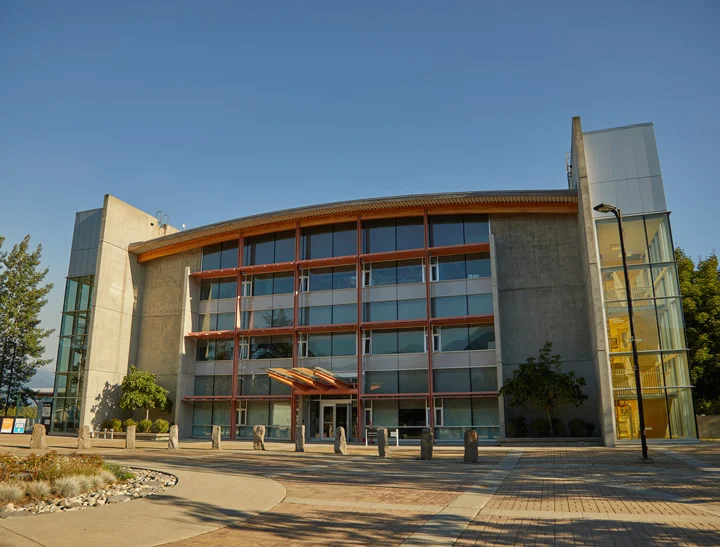
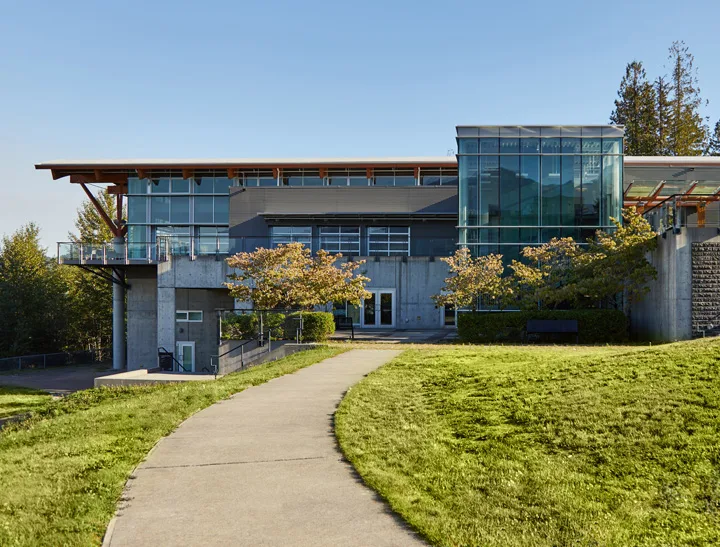
- North Vancouver (main campus) — a forested campus on Purcell Way, about 30 minutes from downtown Vancouver by transit. This is where most programs run, including the famous Bosa Centre for Film and Animation. North Vancouver itself is safe, scenic and family-friendly — mountains on one side, the harbour on the other.
- CapU Lonsdale — a city-centre teaching space in the Lower Lonsdale district, minutes from the SeaBus to downtown Vancouver, used for selected professional programs.
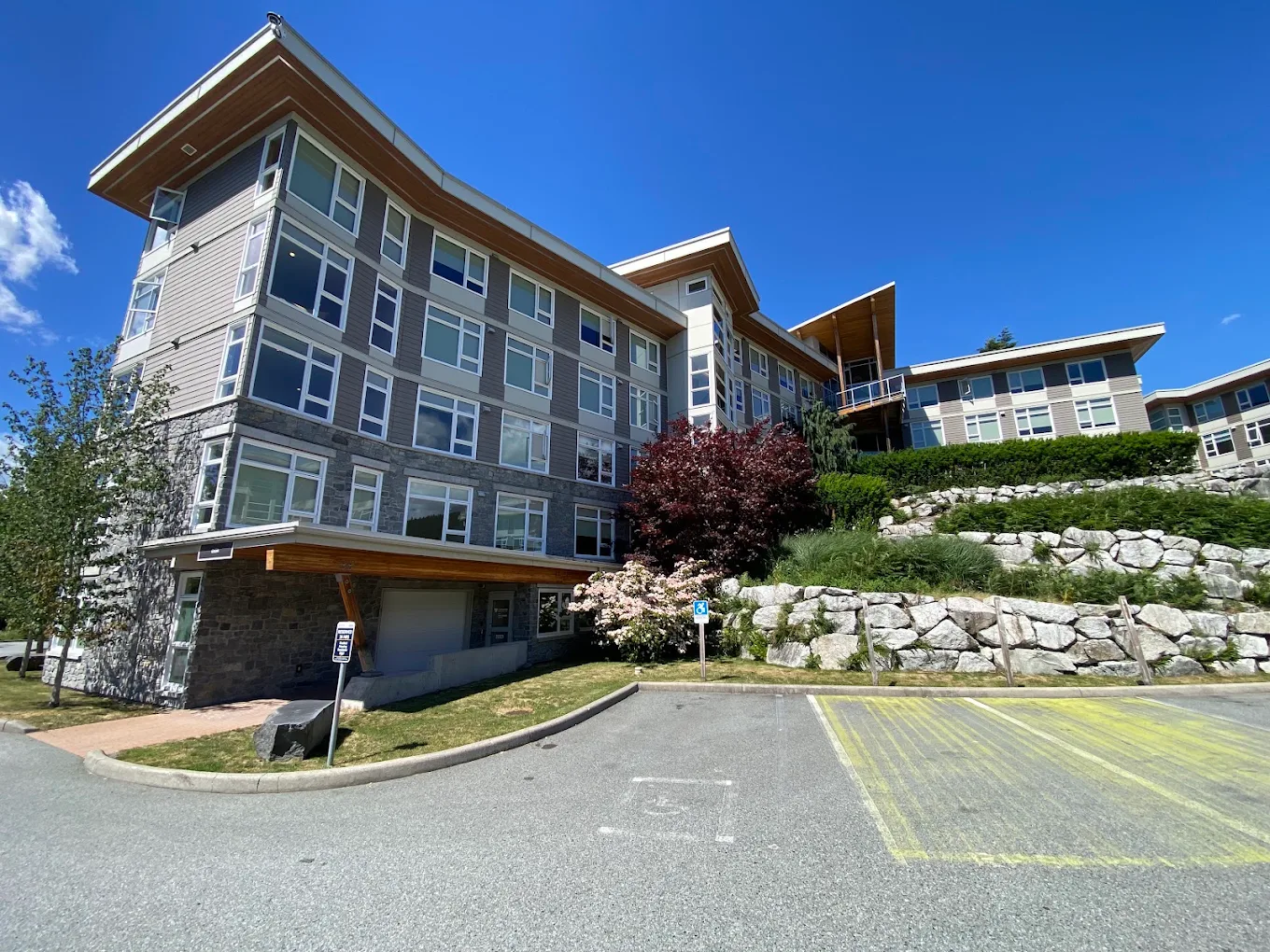
- Squamish campus — one hour north, in the outdoor-sports capital of Canada, home to tourism and outdoor recreation programs — with its own student housing, which is rare and valuable.
- Sunshine Coast (Sechelt) — a small coastal campus serving regional programs.
For most international students, the practical choice is the North Vancouver campus — big-city access with small-town safety, and a genuinely stunning place to spend two to four years.
Is Capilano a university or a college? Public status and recognition
Let's answer the most-searched confusion directly: Capilano is a real, fully public university. It was a college until 2008, which is why older articles and some agents still call it "Capilano College" — but it has held provincial university status for nearly two decades, grants recognised bachelor's degrees, and is a Designated Learning Institution with DLI number O19280078102.
Why does the university label matter so much after 2024? Because under Canada's current PGWP rules, bachelor's degree graduates are exempt from the field-of-study restrictions that now limit college diploma graduates. A CapU degree is therefore not just a nicer credential — it is a structurally safer immigration pathway than a college diploma in the same subject. (Diplomas and certificates at CapU still follow the field rules — we cover this honestly in the PGWP section.)
Two BC practicalities: your study permit application needs a Provincial Attestation Letter (PAL), which CapU arranges as part of admission, and international seats operate under Canada's allocation caps — so program availability genuinely changes by intake, which is exactly why CapU publishes its live availability page.
What is CapU famous for?
- Animation, film and VFX — the Bosa Centre. CapU's 2D/3D animation, visual effects and motion picture programs are among the most respected in Western Canada, feeding Vancouver's massive film and animation industry — one of the largest production hubs in North America. For creative students, this is CapU's crown jewel.
- The School of Business. The Bachelor of Business Administration and the North American Business (NABU) pathways are CapU's biggest draw for Indian students — practical, co-op-friendly business education at teaching-university prices.
- Tourism and Outdoor Recreation. Taught where the industry lives — between Vancouver, Whistler and Squamish — with the Squamish campus placing students inside Canada's adventure-tourism capital.
- Early Childhood Care and Education. A deep, respected ECE cluster in a province expanding childcare — an eligible, employable, PR-friendly field.
- Small classes with a university name. An average class of ~25 and a 96% satisfaction rate among degree graduates — the "professors know your name" experience at university-credential level.
- Radical transparency. CapU's International Program Availability page lists every program's CIP code, PGWP-eligibility flag, CLOA option and seat status per intake. No guessing, no agent rumours — the university tells you directly. This guide teaches you how to use it.
Programs for international students
CapU offers 100+ programs; here is the simple map for international applicants:
| Credential | Length | PGWP treatment | Best for |
|---|---|---|---|
| Bachelor's degrees | 4 years | Exempt from field-of-study rules | The safest work-permit route; BBA, animation, tourism, ECE, sciences |
| Diplomas | 2 years | Field-of-study rules apply — check the CIP flag | Faster, cheaper entry; many ladder into degrees |
| Certificates | ~1 year | Field-of-study rules apply | Focused skills; check PGWP flag carefully |
| Post-baccalaureate diplomas | 1–2 years | Field-of-study rules apply | Degree-holders adding a Canadian credential |
Popular directions for Indian students: the BBA and business diplomas (with the diploma-to-degree ladder a smart cost strategy — start in a diploma, transfer credits into the degree, graduate with the field-exempt credential), animation/VFX and film at the Bosa Centre, tourism management and outdoor recreation, early childhood care and education, and communications, computing and science degrees.
The one habit that separates smart applicants from sorry ones: before shortlisting anything, open CapU's International Program Availability Status page and check three columns for your program and intake — is it open, is it PGWP-eligible, and does it allow a CLOA. Programs genuinely close between intakes under seat caps. Our counsellors run this exact check for you, free.
Admission requirements for international students
- Bachelor's degrees: completion of Class 12 (10+2) from a recognised board — typically around 65%+ for a competitive profile, with subject requirements for some programs (maths for business and sciences; portfolios for animation, film and design).
- Diplomas and certificates: Class 12 with roughly 55–65%; creative programs ask for portfolios or interviews.
- Post-baccalaureate diplomas: a recognised bachelor's degree.
- Documents: transcripts, passport, English test result, and program-specific items (portfolio, statement, references where required).
Applications go through EducationPlannerBC or directly, with a CAD $135 application fee. Creative programs (animation especially) are portfolio-competitive and fill early — start portfolios months in advance.
English requirements — and the CLOA option Indian students should know
Typical benchmarks (always confirm your program page):
| Level | Typical minimum |
|---|---|
| Bachelor's degrees | IELTS 6.5 overall (no band below 6.0) |
| Diplomas & certificates | IELTS 6.0–6.5 depending on program |
| Post-baccalaureate diplomas | IELTS 6.5 |
TOEFL, PTE, Duolingo and CAEL equivalents are accepted. Now the feature few competitors explain: many CapU programs offer a Conditional Letter of Acceptance (CLOA) — if your English score is slightly below the requirement, you can be admitted conditionally and complete CapU's English pathway before starting your program. The availability page marks which programs allow it. For students one band short, the CLOA turns a rejection into a plan — without re-applying.
Tuition fees for international students
CapU's own headline: international tuition is about 30% lower than BC's research-based universities (UBC, SFU). Realistic working figures:
- Bachelor's degrees and diplomas: roughly CAD $16,000–$22,000 per year for most programs (about ₹10–14 lakh), billed per credit — your exact bill follows your course load.
- Film, animation and some specialised programs: higher, reflecting studio and equipment access — budget toward the mid-$20,000s and verify per program.
- Post-baccalaureate diplomas: broadly CAD $18,000–$22,000 per year.
- Add: ~CAD $135 application fee, health insurance, student fees, and materials for creative programs.
Two honest notes. First, per-credit billing means comparing CapU with flat-fee institutions requires care — calculate your actual load. Second, fees rise a little each year — always verify your exact program's current fee on CapU's official fee calculator before paying any deposit. Against Vancouver-area alternatives, CapU's combination of a university credential at these prices is the core of its value case.
Cost of living in North Vancouver
Metro Vancouver is expensive — no honest guide pretends otherwise — but CapU has two genuine cushions: on-campus housing and the North Shore's student-shared rental market.
| Item | Approximate cost (CAD) |
|---|---|
| On-campus housing + meal plan (North Vancouver) | ~$5,615 per semester |
| On-campus housing + meal plan (Squamish) | ~$6,566 per semester |
| Shared room off-campus (North Van) | $800–$1,200 per month |
| Food / groceries | $300–$450 per month |
| Transit (U-Pass style student rates) | included/discounted via student fees |
| Phone & miscellaneous | $150–$250 per month |
Plan around CAD $15,000–$20,000 per year for living costs (about ₹9–12 lakh). On-campus housing with a meal plan is the smartest first-year move — predictable costs, instant community, zero landlord risk — and CapU is one of the few Metro Vancouver institutions where an international first-year can actually get it. Apply for housing the day you're admitted.
Scholarships & awards
CapU offers entrance awards and scholarships that international students can access — typically partial awards recognising academics, leadership or program fit, applied for through the university's awards portal after admission. Amounts are meaningful but not full rides; the structural saving is the point: a university degree at 30% below research-university tuition beats most scholarship math on its own. Ask your counsellor which awards are live for your intake, and never pay anyone who "guarantees" a scholarship.
Intakes and application deadlines
CapU runs three intakes — September (Fall), January (Spring) and May (Summer) — with September carrying the fullest program menu and the animation/film cycle. Under seat caps, the real deadline is seat availability: the university's own availability page shows programs opening and closing by intake. The working rule for Indian applicants: apply 6–9 months before your intake, earlier for portfolio programs, and keep a second-choice program ready. Fall applications ideally go in by January–February.
PGWP eligibility — the honest answer
CapU makes this easier to get right than almost any institution in Canada, because it publishes the answer program by program. Here is the framework:
- Bachelor's degrees: exempt. Under the post-November-2024 rules, university degree graduates do not face the field-of-study (CIP) test. Any CapU bachelor's degree, completed full-time on campus, keeps the standard PGWP pathway open — up to three years for programs of two years or more. This is the single biggest reason to prefer the degree route if your budget allows.
- Diplomas, certificates and post-baccalaureate diplomas: field rules apply. These credentials need a CIP code on IRCC's eligible list. CapU's International Program Availability page shows each program's CIP code and a plain PGWP-eligible flag — read it before you shortlist, because eligible and ineligible programs sit side by side in the same subject areas.
- The standing conditions: full-time, on-campus study (online doesn't count), program length of at least 8 months, and IRCC makes the final decision — both CapU's flags and IRCC's list update over time, so re-verify at application time.
The strategic takeaway for Indian students: if PGWP-then-PR is the plan, either choose a degree (rule-proof) or a flagged-eligible diploma (cheaper, but re-verify every intake). The costly mistake is assuming a diploma is eligible because its subject "sounds" employable. This exact verification is what our counsellors run before you apply — for free.
Work while studying, BC PNP and the PR pathway
As a full-time student at a DLI, you can work off campus under standard study-permit rules — currently up to 24 hours per week during classes and full-time during scheduled breaks (confirm the current limit with IRCC). North Vancouver and downtown Vancouver together offer one of Canada's larger part-time job markets — retail, hospitality, tourism and care work — reachable by SeaBus and bus from campus.
After graduation, the pathway runs through Express Entry (where a degree, a PGWP job and co-op experience all add points) and the BC Provincial Nominee Program (BC PNP) — including its International Graduate streams for graduates with BC job offers, with tech and health occupations historically prioritised. One honest caution repeated across this series: PNP allocations and criteria shift with federal immigration levels, and spouse open work permits are now limited mainly to master's-level students — verify current BC PNP and IRCC rules with a counsellor before locking your family plan around them.
Careers and industry connections
CapU's employment story is anchored in three regional industries. Film and animation: Vancouver is one of North America's biggest production and VFX hubs, and Bosa Centre graduates feed its studios — the program's reels and industry ties are the currency. Tourism and hospitality: the Vancouver–Whistler corridor is a global destination economy that hires CapU's tourism and outdoor-recreation graduates into the industry they trained inside. Business services: Metro Vancouver's trade, tech and services economy absorbs BBA and business-diploma graduates at scale. Add small-class access to professors who write real reference letters, and the university's 96% graduate-satisfaction figure starts to make sense. Students aiming at Toronto-scale corporate brands can get there too — arriving with a Canadian degree, experience and often a PNP file already moving.
Student life & on-campus housing
Campus life at CapU is nature-adjacent in a way few universities can claim: rainforest trails behind the buildings, Grouse Mountain up the road, and downtown Vancouver 30 minutes away. Clubs, athletics (the Blues), and the Centre for International Experience (CIE) — CapU's dedicated international-student support hub — round out the community. On-campus housing at both North Vancouver and Squamish gives first-years a safe, all-inclusive landing (meal plan, utilities and internet bundled), with homestay and the North Shore rental market as alternatives. The honest trade-offs: Metro Vancouver prices, rainy winters, and a quieter campus culture than a 40,000-student mega-college — which is precisely what many students want.
How to apply to Capilano University
You can apply directly, but the smartest route is through the Apply Study Visa portal — our certified counsellors review and submit your application for you, completely free, and at CapU that review has a specific job: reading the availability page correctly. Here's how it works:
- Select your program on our portal. Our team checks your shortlist against CapU's live availability page — seat status, PGWP flag and CIP code, and CLOA option — for your exact intake, so you never apply into a closed or ineligible program.
- Submit your application with documents online. Upload transcripts, English test results (IELTS/TOEFL/PTE/Duolingo), passport, and portfolio/statement where required, straight into your portal dashboard — no courier, no email chains.
- Our expert team double-checks everything. A certified counsellor verifies marks, subject prerequisites, English bands (and whether a CLOA can rescue a borderline score), and portfolio readiness for creative programs — before the university sees your file.
- We submit your application — for free. You track your Letter of Acceptance (or CLOA) and every status update in your dashboard.
- We guide you through PAL, GIC and study permit. Our team tracks your BC Provincial Attestation Letter and helps with GIC, SOP, financial documents and your study-permit filing using DLI O19280078102 — visa support from the same team that has placed 27,000+ students.
Why not apply directly? You can — but at CapU the two costly mistakes are applying into a program whose seats closed or whose PGWP flag is red, and giving up over an English score a CLOA would have solved. With Apply Study Visa, an expert checks both before you commit, at zero cost, with admission, GIC, visa and air-ticket support under one roof. Check your eligibility for Capilano University free →
So, is Capilano University good?
For the right student — one of Metro Vancouver's best-value choices. CapU makes the most sense if you: (a) want a real university degree at 30% below research-university prices — the field-rule-exempt credential that keeps PGWP plans safe, (b) value small classes and genuine support over big-campus anonymity, (c) are targeting CapU's signature clusters — animation/film, business, tourism, ECE — where its industry connections are real, and (d) want the security of on-campus housing and a transparent, published program-availability system instead of agent guesswork.
Think harder if you need the absolute lowest sticker price (some colleges cost less — but check their PGWP flags and remember the degree exemption), if your target diploma shows an ineligible CIP flag (choose the degree version or another institution), or if you want big-university research culture and massive campus life. Use the availability page, respect the seat caps, prefer the degree where budget allows — and CapU stands as one of the most honest, student-friendly platforms in Canadian higher education.
FAQs
Is Capilano a university or a college? A full public university. Capilano began as a college in 1968 and has held provincial university status since 2008 — it grants recognised bachelor's degrees and is a Designated Learning Institution (DLI #O19280078102). Older articles calling it "Capilano College" are outdated.
What is Capilano University's DLI number? O19280078102 — used in your study-permit application together with the BC Provincial Attestation Letter (PAL) that CapU arranges.
Are Capilano University programs PGWP-eligible? Bachelor's degrees are exempt from the post-2024 field-of-study rules entirely — degree graduates keep the standard PGWP pathway of up to three years. Diplomas, certificates and post-baccalaureate diplomas follow the field rules, and CapU publishes each program's CIP code and PGWP-eligible flag on its International Program Availability page — check it before applying. IRCC makes final decisions.
How much are Capilano University's tuition fees for international students? Roughly CAD $16,000–$22,000 per year (about ₹10–14 lakh) for most degrees and diplomas — CapU itself advertises international tuition about 30% lower than BC's research universities — with film/animation programs higher, a CAD $135 application fee, and per-credit billing. Verify your exact program's current fee on CapU's official calculator.
What IELTS score do I need for Capilano University? Typically IELTS 6.5 (no band below 6.0) for bachelor's degrees and post-baccalaureate diplomas, and 6.0–6.5 for diplomas and certificates, with TOEFL/PTE/Duolingo/CAEL equivalents accepted. Many programs also offer a Conditional Letter of Acceptance (CLOA) if your score is slightly short.
What is a CLOA at Capilano University? A Conditional Letter of Acceptance: admission granted on condition you complete CapU's English pathway before starting your program — available for many (not all) programs and marked on the availability page. For students one band short on IELTS, it converts a rejection into a plan without re-applying.
What are Capilano University's intakes? September (Fall — the fullest menu), January (Spring) and May (Summer). Under Canada's seat caps, programs genuinely open and close by intake on CapU's live availability page — apply 6–9 months early, and earlier for portfolio programs like animation.
What is Capilano University's acceptance rate? Accessible for qualified applicants — commonly estimated around 50–70% — but the practical constraints are capped international seats and portfolio competition in creative programs. Meeting requirements early matters more than the headline rate.
Is Capilano University good for animation and film? Yes — the Bosa Centre for Film and Animation houses some of Western Canada's most respected 2D/3D animation, VFX and motion picture programs, feeding Vancouver's world-scale production industry. These programs are portfolio-competitive and fill early.
Does Capilano University have on-campus housing? Yes — at both North Vancouver (single room with meal plan ~CAD $5,615/semester) and Squamish (~CAD $6,566/semester), with utilities, internet and meals bundled. Rooms are limited; apply the day you're admitted.
Does Capilano University help with PR? Indirectly and effectively: a CapU degree plus PGWP work experience strengthens Express Entry, and the BC PNP's International Graduate streams offer a provincial nomination route for graduates with BC job offers. Verify current BC PNP and IRCC rules before planning; spouse open work permits are now limited mainly to master's-level students.
Can I work while studying at Capilano University? Yes — full-time students can work off campus under standard study-permit rules (currently up to 24 hours/week during classes; confirm current limits with IRCC), with North Vancouver and downtown Vancouver's job markets reachable by transit from campus.
Capilano University vs a college — which should I choose? If a work permit is central to your plan, CapU's degree route is structurally safer: university degrees are exempt from the PGWP field-of-study rules that limit college diplomas. If budget forces a diploma, choose one whose CIP flag shows eligible on CapU's availability page — and consider the diploma-to-degree ladder.
How do I apply to Capilano University? The easiest way is through the Apply Study Visa portal: we check your program's seat status, PGWP flag, CIP code and CLOA option on CapU's live availability page for your intake, then our certified counsellors double-check and submit your file for free — and guide you through the BC PAL, GIC and study permit (DLI O19280078102).
Does Apply Study Visa charge for Capilano University applications? No — application review and submission through Apply Study Visa is free, including the availability-page and PGWP-flag check, with the same team supporting your visa, GIC and travel afterwards.