
The Northern Alberta Institute of Technology in Edmonton is not a university, and that single fact changes almost everything about how you should approach it. NAIT is a public polytechnic: it trains technologists, tradespeople and healthcare practitioners rather than researchers, and only 12 of its 86 programmes open to international students are degrees. Seventy are diplomas or certificates.
That is not a criticism. NAIT’s own reporting puts graduate employment at 86 percent within nine months, which is a stronger figure than many Canadian universities publish. But it does mean the work permit rules apply to you differently, and Section 12 explains exactly how.
The other thing to know before you read further: NAIT has the lowest entry bar in our Canadian catalogue. Seventy three of the 86 programmes ask just 50 percent at Class 12, and 77 accept IELTS 6.0 where most universities want 6.5. If your marks are modest, this is one of the few genuinely open doors in Canada.
🎓 Quick Fact: NAIT has three different application fees. Most programmes cost CAD 150 to apply for. The four graduate professional certificates cost nothing. And the three English language programmes cost CAD 1,025, the highest application fee anywhere in our catalogue, for routes that produce no work permit at all.
What this guide covers
- About NAIT
- Polytechnic, not university, and the DLI number
- What NAIT is known for
- Programmes for international students
- The acceptance rate question
- Admission requirements
- English requirements, all six bands
- Fees and the three application fee tiers
- Cost of living in Edmonton
- Scholarships
- Intakes and deadlines
- PGWP eligibility, and why it matters more here
- Working while studying and the PR pathway
- Careers, co-op and Alberta’s trades economy
- Regulated professions: read this before applying
- What other pages get wrong
- How to apply
- Is NAIT good for international students?
- FAQs
1. About NAIT
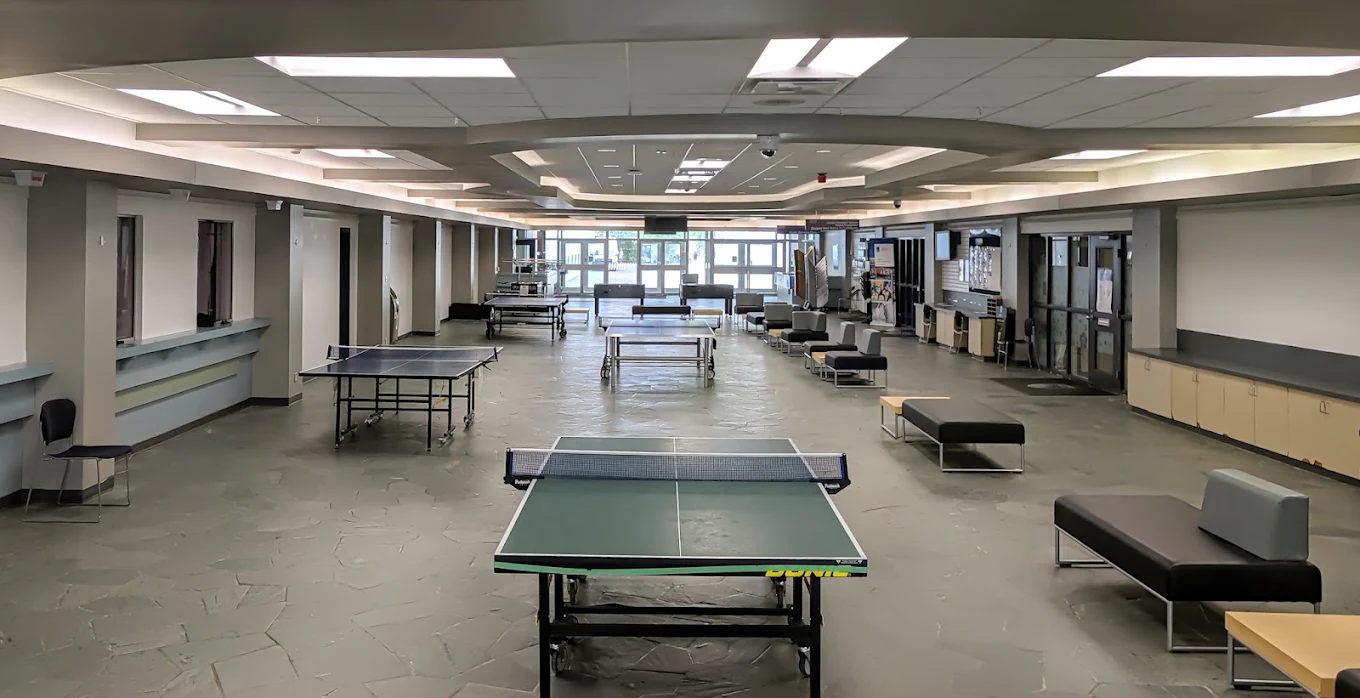
The Alberta government announced plans for an Edmonton apprenticeship and vocational institute in 1959, and NAIT opened in 1962. More than six decades later it remains one of Canada’s largest polytechnics, built around applied training with equipment and workshops that mirror actual industry rather than teaching laboratories.
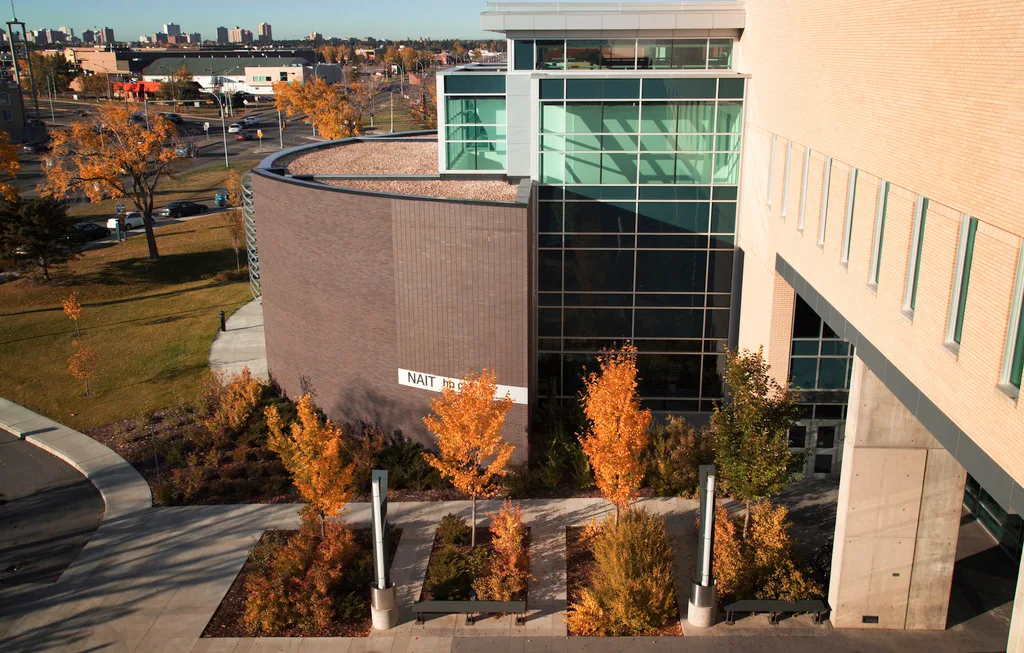
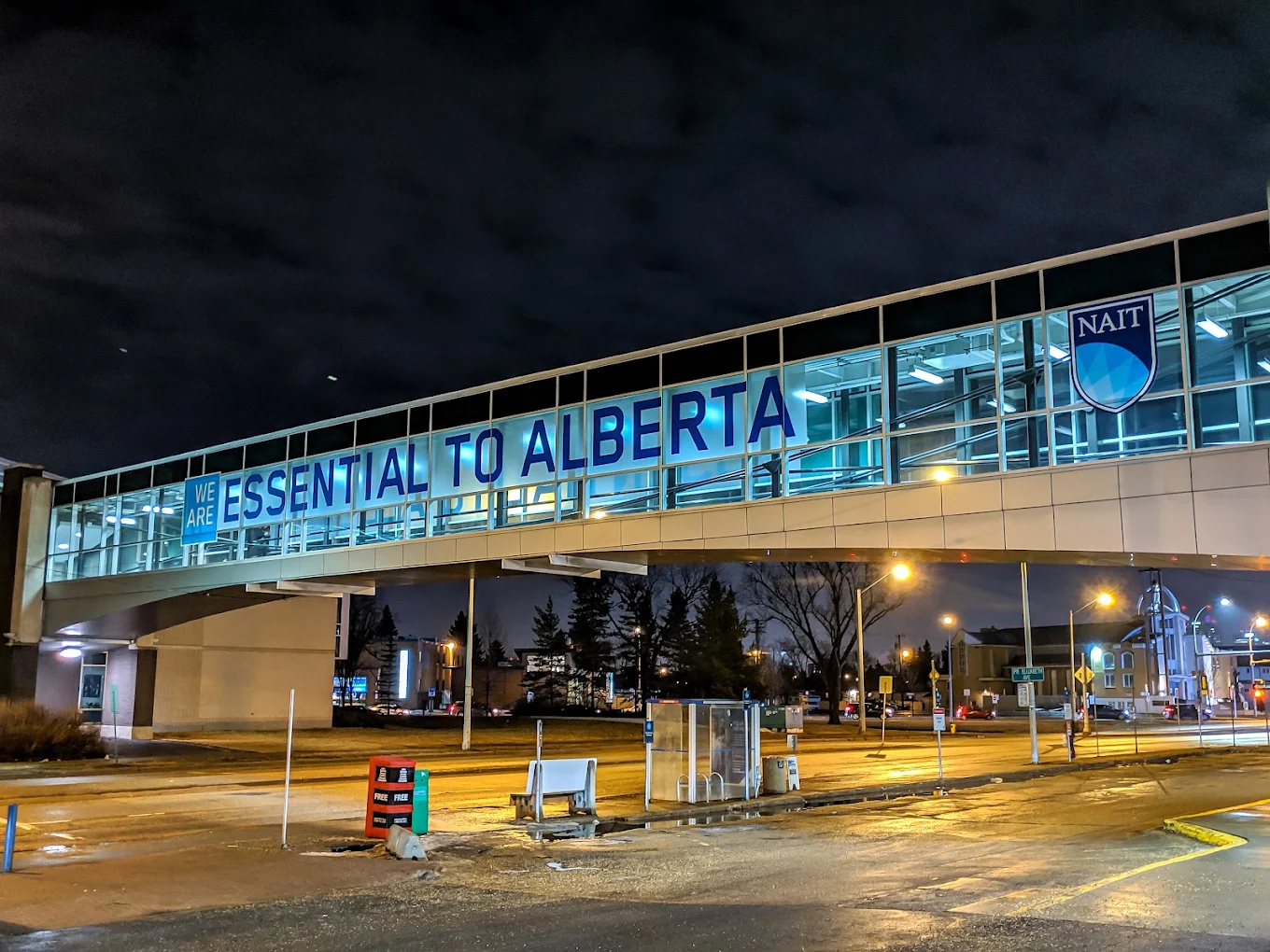
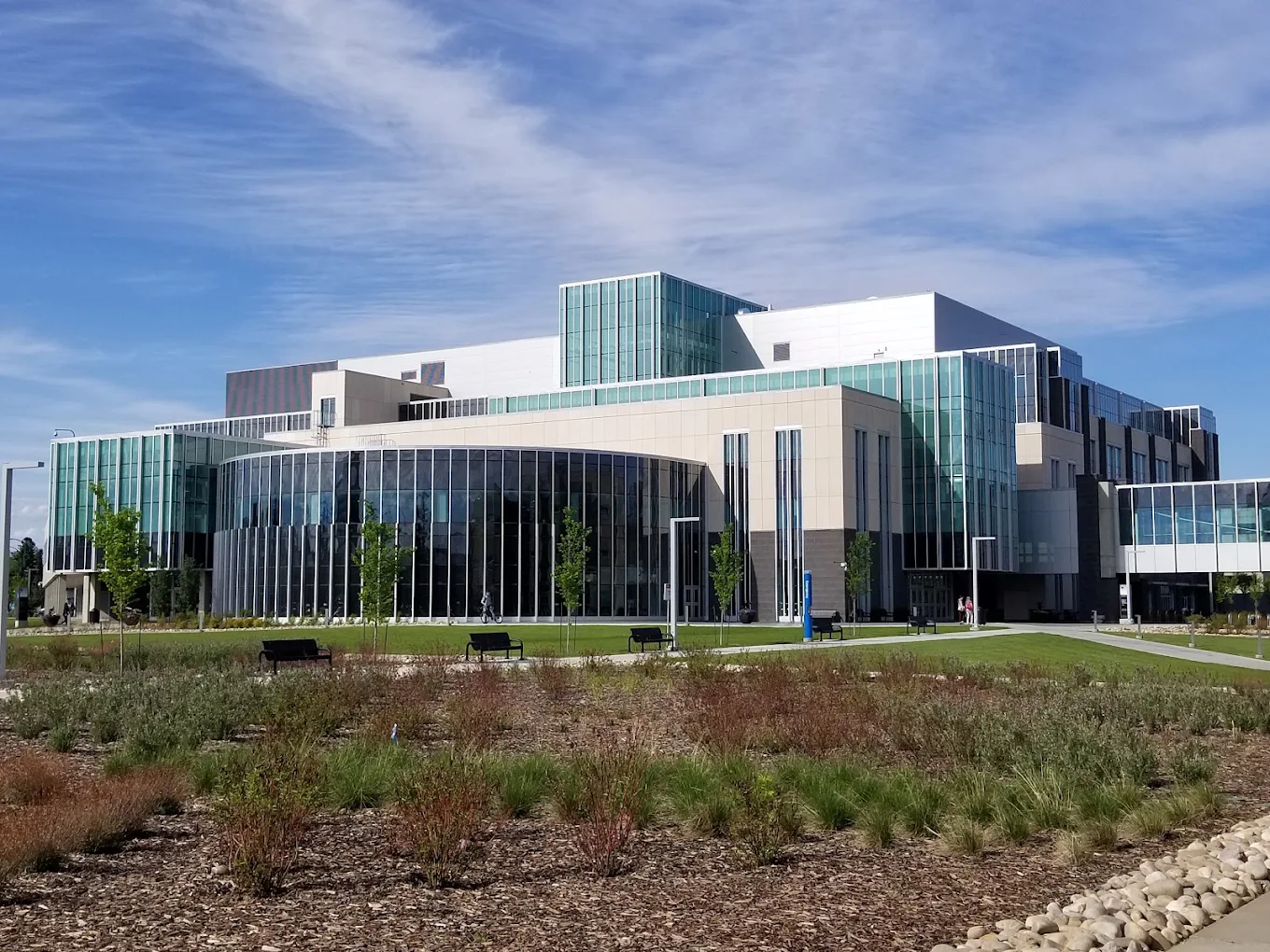
The main campus sits in central Edmonton. NAIT reports an alumni network of over 230,000 and graduate satisfaction of 94 percent, and its programmes run through schools covering applied sciences and technology, business, health and life sciences, and skilled trades.
| Detail | Information |
|---|---|
| Institution name | Northern Alberta Institute of Technology (NAIT) |
| Type | Public polytechnic, not a university. No master degrees |
| Founded | 1962 |
| Location | Edmonton, Alberta |
| DLI number | O18713200642 |
| Programmes open to international students | 86: 12 degrees, 55 diplomas, 15 certificates, 4 English or upgrading routes |
| Tuition | CAD 4,632 to 36,465. CAD 22,050 is the most common figure |
| Application fee | CAD 150 on 79 rows, CAD 0 on 4, CAD 1,025 on 3 |
| Entry bar | 50 percent on 73 of the 86. Highest is 70 percent |
| English | IELTS 6.0 with 6.0 in every band on 77 programmes |
| Official website | www.nait.ca |
2. Is NAIT a University or a College?
Neither exactly. NAIT is a polytechnic, a category that sits between the two: it awards applied degrees, diplomas and certificates, with a heavy emphasis on hands on training and industry partnership rather than academic research.
Critically, it is fully public, funded and governed under the Province of Alberta, and a Designated Learning Institution with the number O18713200642. Public status is what allows its degrees to escape the work permit field of study test entirely.
The catch, and it is the central issue on this page, is that only 12 of the 86 programmes are degrees. Everything else is a diploma or certificate, and those are treated differently. Section 12 sets out what that means in practice.
An Alberta Provincial Attestation Letter is required with your study permit application, and NAIT issues it alongside your letter of acceptance.
3. What Is NAIT Known For?
- Engineering technology. Civil, mechanical, electrical, chemical, petroleum, instrumentation, electronics and nanosystems all run as two year diplomas with industry standard equipment.
- Skilled trades. Carpentry, machining, automotive, heavy equipment, HVAC and refrigeration, taught in workshops rather than classrooms.
- Health credentials. Medical laboratory technology, diagnostic medical sonography, respiratory therapy, paramedicine, dental assisting and veterinary technology, all leading to regulated professions.
- Employment outcomes. NAIT reports 86 percent of graduates employed within nine months, which is the strongest single argument for choosing a polytechnic over a university.
- Digital and creative. Software development, IT systems, game development, web and visual communication design, and narrative cinema production.
- Co-op at scale. Twenty two of the 86 programmes carry optional or structured co-op, and paid work terms matter more in Canadian hiring than marks do.
4. Programmes for International Students
Eighty six programmes are open to international applicants. The credential type is the thing to check first, because it decides your work permit position before the subject does.
| Credential | Count | Typical length | Work permit treatment |
|---|---|---|---|
| Bachelor degrees | 12 | 4 years | Exempt from the field of study test |
| College diplomas | 55 | 2 years | Field of study rules apply |
| College certificates | 10 | 1 year | Field of study rules apply |
| Graduate professional certificates | 5 | 1 year, diploma required | Field of study rules apply |
| English and upgrading routes | 4 | Varies | No work permit at all |
Browse every programme with its exact fee, entry percentage and intake on our NAIT programmes and tuition page.
5. What Is the NAIT Acceptance Rate?
NAIT does not publish one. An independent higher education directory states plainly that NAIT’s acceptance rate is not reported, and that admission is selective on past academic records.
Two figures circulate anyway: 58 percent and 61 percent, and both appear on pages from the same publisher. When one site cannot agree with itself, the number is not a measurement.
6. NAIT Admission Requirements for Indian Students
The academic bar is genuinely low, which is the main reason Indian applicants look at NAIT.
| You need | Rows | Programmes |
|---|---|---|
| 50 percent | 73 | Every diploma and certificate, and all five graduate professional certificates |
| 60 percent | 8 | Most of the Bachelor of Business Administration degrees |
| 63 percent | 1 | A single programme |
| 70 percent | 4 | The Bachelor of Technology in Management degrees, the highest bar at NAIT |
There is no SAT, no GRE and no interview for most programmes. Technical and health programmes expect the matching Class 12 subjects, so mathematics, physics, chemistry or biology prerequisites apply depending on the route.
The five graduate professional certificates require a completed undergraduate diploma rather than Class 12, which makes them a genuine progression route for someone who already holds a diploma from India.
7. NAIT English Language Requirements
NAIT runs six different English bands, and the standard one is meaningfully lower than any university in our catalogue.
| Band | Rows | IELTS | TOEFL | PTE | Duolingo |
|---|---|---|---|---|---|
| Standard | 68 | 6.0, 6.0 every band | 80, 20 each section | 58, no component minimum | 115 |
| Writing focused | 9 | 6.0, 6.0 every band | 83 with 23 in writing | 58 | 115 |
| Graduate certificates | 4 | 6.5, no band below 6.0 | 90, 21 each section | 60, 58 each | 120 |
| Pathway | 1 | 5.5 | 56 | 50 | 100 |
| ESL intensive | 1 | 5.0 | 46 | Not accepted | 90 |
| No test required | 3 | Not required | Not required | Not required | Not required |
8. NAIT Fees for International Students
Tuition across the 86 programmes runs from CAD 4,632 to CAD 36,465, but the spread is misleading because the bottom of the range is English language study. For an actual credential, CAD 22,050 is the most common figure, appearing on 36 programmes.
| Programme group | Tuition (CAD) |
|---|---|
| English as a Second Language, intensive | 4,632, the lowest here |
| Primary Care Paramedic certificate | 12,390, cheapest credential |
| Graduate professional certificates | 18,000 to 18,800 |
| Most diplomas and all business degrees | 22,050, on 36 programmes |
| Engineering technology diplomas | 26,460, on 19 programmes |
| Health diplomas: paramedic, laboratory, X-ray | 36,405 to 36,465, the highest |
Three application fee tiers
| Application fee | Programmes | Which |
|---|---|---|
| CAD 150 | 79 | Every degree, diploma and certificate |
| CAD 0 | 4 | The graduate professional certificates. Free to apply |
| CAD 1,025 | 3 | The English language programmes |
No scholarship is recorded on any of the 86 programmes in our current data. Budget the full tuition.
9. Cost of Living in Edmonton
Edmonton is among the more affordable large Canadian cities, and Alberta charges no provincial sales tax, which takes five to seven percent off most purchases compared with other provinces.
| Item | Approximate monthly cost (CAD) |
|---|---|
| Room in a shared apartment | 550 to 750 |
| On campus residence | 900 to 1,150 |
| Food and groceries | 300 to 450 |
| Transit, phone and miscellaneous | 200 to 300 |
| Realistic annual total | 13,000 to 18,000 |
One genuine Alberta advantage: the province charges no health premiums, and international students holding a study permit valid for twelve months or more are generally eligible for provincial health coverage. Confirm your own eligibility on arrival, but it removes a cost that students in some other provinces carry.
Budget separately for winter clothing. Edmonton is one of Canada’s coldest major cities, and a proper parka and boots are a real several hundred dollar outlay in your first autumn. Trades and technology students should also expect tools, safety boots and personal protective equipment, which are additional to tuition on many programmes.
10. NAIT Scholarships for International Students
NAIT operates awards and bursaries administered through its student awards office, and international students are eligible for a number of them. Awards are applied for separately from admission and assessed competitively.
The bigger lever at NAIT is programme choice. The gap between a CAD 22,050 diploma and a CAD 36,465 health diploma is over CAD 14,000 a year. That single decision moves more money than any award here realistically will.
11. NAIT Intakes and Application Deadlines
NAIT is more flexible on intakes than most Canadian institutions, and that is a genuine advantage if your timeline has slipped.
| Intake pattern | Programmes |
|---|---|
| September only | 38 |
| September, January and May | 25 |
| September and January | 19 |
| Other patterns | 4 |
Thirty nine programmes list five or more entry windows across the coming cycles, which is far more than most universities offer. If a test result arrives late or a permit decision slips, the next NAIT intake is often three or four months away rather than a year.
The caution is capacity rather than deadlines. Workshop, laboratory and clinical seats are finite, and the health and trades programmes fill early. Start eight to twelve months ahead, and hold a second choice.
12. Is NAIT PGWP Eligible?
Yes, but this is the section that matters most at NAIT, because the balance of its catalogue is the opposite of a university’s.
| Tier | Count | Position |
|---|---|---|
| Bachelor degrees | 12 | Exempt. Subject does not matter. A permit of up to three years follows if you meet the other conditions |
| Diplomas and certificates | 70 | Non degree, so the field of study test applies. Eligibility is checked when you apply, not when you enrol, and the list is revised |
| English and upgrading routes | 4 | No work permit, ever. They produce no credential |
Eighty one percent of NAIT’s international catalogue sits in that middle tier. Compare that with Trent Peterborough, where 97 percent of programmes are degrees and the question barely arises. At NAIT the question is unavoidable, and it should shape your programme choice from the start.
NAIT awards no master degrees, so no programme meets the 16 month threshold for a spousal open work permit. If your partner needs to work in Canada, look at institutions with master programmes.
Standing conditions apply on top: full-time study, a programme of at least eight months, and since November 2024 graduates must prove Canadian Language Benchmark 5 for college credentials or 7 for degrees in all four skills when applying. That is a separate test after graduation. Our PGWP and CIP codes guide explains how the field of study list works.
13. Working While Studying and the PR Pathway
Full-time students at a designated learning institution can work off campus under standard study permit conditions, currently up to 24 hours a week in session and full-time during scheduled breaks. That cap has changed twice recently, so confirm the current rule.
Edmonton’s part-time market is more accessible than the saturated southern Ontario one, and NAIT students often find work directly related to their field because the trades and technology sectors hire casually as well as permanently.
After graduation two channels matter. Express Entry rewards Canadian work experience, a strong language score and a credential. The Alberta Advantage Immigration Program runs provincial streams that have specifically favoured skilled trades, health and technology occupations, which maps unusually well onto NAIT’s catalogue. A NAIT trades or health graduate is often better positioned provincially than a general arts graduate from a university.
Two honest caveats. Provincial allocations move with federal levels each year, so nothing is guaranteed. And several NAIT routes lead to regulated occupations where an Alberta regulator, not NAIT, decides whether you may practise. Section 15 lists them.
14. Careers, Co-op and Alberta’s Economy
NAIT reports 86 percent of graduates employed within nine months, and that figure is the institution’s central argument. Polytechnic training is designed backwards from what employers need rather than forwards from an academic discipline.
Twenty two of the 86 programmes carry optional or structured co-op. In Canadian hiring, paid work terms count for more than your final average, so filter for them deliberately.
Alberta’s economy shapes which NAIT credentials do best. Skilled trades and construction hire steadily and cannot be offshored. Health services employ laboratory, imaging, paramedic and dental graduates at scale across the province. Engineering technology serves industrial and infrastructure employers. The honest counterweight is that petroleum and resource-linked programmes move sharply with commodity prices, so a graduating cohort can meet a strong market or a weak one purely on timing.
15. Regulated Professions: Read This Before Applying
A significant number of NAIT programmes lead to occupations where completing the credential is necessary but not sufficient. An Alberta regulator decides whether you can actually work.
| Programme group | What still stands in the way |
|---|---|
| Medical Laboratory Technology, Diagnostic Medical Sonography | National certification examinations, plus clinical placement capacity that limits intake |
| Primary and Advanced Care Paramedic | Alberta paramedic registration, driving licence and medical fitness requirements, and residency conditions at many ambulance services |
| Respiratory Therapy | Provincial registration, decided separately from graduation |
| Dental Assisting, Veterinary Technology | Registration with the relevant Alberta regulator before you may practise |
| The skilled trades: carpentry, electrical, automotive, HVAC, machining | Alberta apprenticeship and journeyperson certification. Confirm how much credit your programme carries and how apprenticeship works on a study or work permit |
| Engineering technology diplomas | These lead to technologist roles. Professional engineer licensure in Alberta requires an accredited engineering degree, which NAIT diplomas are not |
16. What Other NAIT Pages Get Wrong
| Claim you will see | The actual position |
|---|---|
| “Indian students have the option to apply to 3 courses at NAIT” | Eighty six programmes are open to international applicants. That page is listing a fraction of one percent of what NAIT offers |
| “Acceptance rate 58 percent” and “61 percent” | Both appear on pages from the same publisher. An independent directory states NAIT’s acceptance rate is not reported |
| “IELTS 6.5 overall with 6.5 in speaking” | The standard NAIT requirement is IELTS 6.0 with 6.0 in every band, on 77 of the 86 programmes. Quoting 6.5 discourages applicants who would actually qualify |
| “Fees from CAD 13,680 to CAD 87,978” | The highest tuition in our data is CAD 36,465. A figure near CAD 88,000 does not correspond to any NAIT programme open to international students |
| “1,700 international students” and “approximately 5,000” | Two sites, a threefold difference. Country counts of 88, 91 and 94 also circulate. Treat all enrolment figures with caution |
17. How to Apply to NAIT
You can apply directly through NAIT’s online portal. The better route is through the Apply Study Visa portal, where our counsellors review and submit your file free of charge. At NAIT that review earns its place, because three specific mistakes cost real money here.
- Choose your programme on our portal. We confirm whether it is a degree, a diploma or an English route, because at NAIT that single distinction decides your work permit before anything else does.
- Upload your documents online. Transcripts, passport and English results go into your dashboard. We check your band scores, not just your overall, since NAIT requires 6.0 in every band.
- We check the details that decide files. Class 12 subject prerequisites for technical and health routes, programme capacity and timing, and whether your chosen credential carries the field of study risk.
- We submit your application at no cost. The CAD 150 fee is NAIT’s, not ours, and it is worth spending only on a file that can succeed.
- We guide you through the deposit, the Alberta attestation letter, GIC and study permit using DLI O18713200642.
The three costly mistakes at NAIT are paying CAD 1,025 to apply for an English programme that produces no credential, choosing a diploma without checking the work permit position, and missing a capped health or trades intake that filled early. Each is avoidable with one conversation. Check your eligibility for NAIT free, or read our guide to opening a GIC account if funds are your next step.
🛂 Planning a Canadian study permit? The team at ApplyStudyVisa.com handles the full sequence from transcript assessment and offer through the Alberta attestation letter, funds documentation, biometrics and permit decision. Contact our Ludhiana office for a free assessment.
18. Is NAIT Good for International Students?
For a specific kind of applicant, NAIT is one of the strongest options in Canada. If you want employable technical training rather than an academic degree, if your Class 12 percentage is modest, and if your IELTS is a flat 6.0 across all bands, very few Canadian institutions will take you where NAIT will. The 86 percent employment figure is real and it is the point of the place.
The trade off is equally clear. Seventy of the 86 programmes are non degree credentials, so the work permit field of study test applies to most of what NAIT offers. That is manageable if you choose deliberately and confirm eligibility in writing. It is a serious problem if you drift into a programme because it was easy to get into.
It suits you if
- Your Class 12 sits around 50 percent and most Canadian universities are closed to you.
- Your IELTS is a flat 6.0 across all four bands.
- You want trades, engineering technology or health training that leads directly to a job.
- You value employment outcomes over academic prestige.
- You want intake flexibility, with 39 programmes offering five or more entry windows.
- You hold an Indian diploma and want a graduate professional certificate, which is free to apply for.
It does not suit you if
- You want a master degree. NAIT awards none.
- Your spouse needs a work permit. No programme qualifies.
- You want certainty on your work permit without checking. Only 12 of 86 programmes give that.
- You want to become a professional engineer. The engineering technology diplomas lead to technologist roles instead.
- You were steered toward an English programme at a CAD 1,025 application fee.
- You want academic research or a traditional university experience.
19. Frequently Asked Questions (FAQs)
Q: Is NAIT a university or a college?
Neither. NAIT is a public polytechnic, awarding applied degrees, diplomas and certificates with a heavy emphasis on hands on training. It is fully public and a Designated Learning Institution with DLI number O18713200642.
Q: What is the NAIT acceptance rate?
NAIT does not publish one, and an independent directory records it as not reported. Figures of 58 and 61 percent circulate on pages from the same publisher. What actually limits entry is programme capacity, since 73 of the 86 programmes ask only 50 percent.
Q: What are NAIT fees for international students?
Tuition runs from CAD 4,632 to CAD 36,465. The most common figure is CAD 22,050, on 36 programmes. Engineering technology diplomas are typically CAD 26,460 and the health diplomas reach CAD 36,465. No scholarship is recorded on any programme.
Q: What is the NAIT application fee?
There are three tiers. CAD 150 on 79 programmes, CAD 0 on the four graduate professional certificates, and CAD 1,025 on the three English language programmes, which is the highest application fee in our catalogue.
Q: What percentage do I need for NAIT?
Fifty percent on 73 of the 86 programmes, which is the lowest entry bar in our Canadian catalogue. The business degrees ask 60 percent and the Bachelor of Technology in Management degrees ask 70, the highest here.
Q: What IELTS score does NAIT require?
IELTS 6.0 overall with 6.0 in every band on 77 of the 86 programmes. Note the band rule: 6.5 overall with 5.5 in one band does not qualify, while a flat 6.0 does. The graduate certificates need 6.5 with no band below 6.0.
Q: Is NAIT PGWP eligible?
Its 12 bachelor degrees are exempt from the field of study test. Its 70 diplomas and certificates are subject to it, which is 81 percent of the catalogue. Its 4 English and upgrading routes carry no work permit at all.
Q: Does NAIT offer master degrees?
No. NAIT awards applied bachelor degrees, diplomas and certificates only. That also means no programme supports a spousal open work permit, which requires a master programme of 16 months or longer.
Q: How many intakes does NAIT have?
It varies by programme. Twenty five run September, January and May, 19 run September and January, and 38 are September only. Thirty nine programmes list five or more entry windows, which is unusually flexible for a Canadian institution.
Q: Does NAIT have co-op programmes?
Yes, 22 of the 86 programmes carry optional or structured co-op, including business, engineering technology, IT and safety routes. In Canadian graduate hiring those paid work terms count for more than your final average.
Q: Can I become a professional engineer with a NAIT diploma?
No. NAIT’s engineering technology diplomas lead to technologist roles. Professional engineer licensure in Alberta requires an accredited engineering degree plus supervised experience, and a two year technology diploma is not that.
Q: What is the cost of living in Edmonton for NAIT students?
Plan CAD 13,000 to 18,000 a year. A room in a shared apartment runs CAD 550 to 750 a month. Alberta charges no provincial sales tax and no health premiums, and students on a study permit valid twelve months or more are generally eligible for provincial health coverage.
Q: Does NAIT help with PR in Canada?
Indirectly, and arguably better than many universities. A credential plus a work permit plus Canadian work experience strengthens an Express Entry profile, and the Alberta Advantage Immigration Program has favoured skilled trades, health and technology occupations, which is precisely what NAIT trains for. Allocations shift annually.
Q: Does Apply Study Visa charge for NAIT applications?
No. Counselling, application review and submission are free to the student, including the band score check and the work permit assessment on your chosen credential. We are paid by the institutions we work with, which is exactly why we will tell you plainly when a programme carries a risk.
✅ Confirm before you pay. Because 70 of NAIT’s 86 international programmes are non degree credentials, confirm work permit eligibility for your specific programme and intake in writing before paying any deposit. Check the application fee tier before applying, since it ranges from CAD 0 to CAD 1,025. If your programme leads to a regulated profession or a trade, confirm the Alberta registration or apprenticeship pathway separately. Programme details cover all 86 routes open to international applicants and were checked in September 2026. Tuition, fees and the government proof of funds threshold are revised regularly.