
Seneca College is now Seneca Polytechnic, and that rebrand is only the second most confusing thing about researching it right now. The first is that a lot of the information circulating about Seneca is out of date: one campus has closed, the application fee is refundable, there is no tuition deposit in the way most Canadian colleges use the term, and the spouse work permit position has changed in a way that catches applicants out. Seneca is Ontario’s second-largest college, it runs more co-op programs than almost any comparable institution, and it grants bachelor’s degrees and a master’s degree which matters enormously under the Post-Graduation Work Permit rules introduced in November 2024. This guide covers all of it in plain language: campuses, courses, real fees in CAD, English requirements, the DLI number, intakes, scholarships, and an honest look at what Seneca’s enrolment decline means for you.
What this guide covers
- About Seneca Polytechnic
- Seneca College or Seneca Polytechnic?
- Campuses and the one that closed
- What Seneca is known for
- Courses and credentials
- Co-op at Seneca (and a major 2026 rule change)
- Admission requirements
- IELTS and English requirements
- Tuition fees for international students
- Application fee, first-semester fees and your PAL
- Cost of living and proof of funds
- Scholarships and the $5,000 entrance award
- Intakes, deadlines and acceptance rate
- PGWP eligibility read this carefully
- Spouse open work permits: the bad news
- Working while studying and the PR pathway
- Student life, residence and arrival support
- The honest part: enrolment decline
- How to apply
- Is Seneca Polytechnic good?
- FAQs
About Seneca Polytechnic
Seneca opened in 1967 as part of Ontario’s founding wave of public colleges and has grown into one of the largest post-secondary institutions in the province, serving roughly 30,000 full-time and 60,000 part-time learners a year across the Greater Toronto Area. Its legal name remains Seneca College of Applied Arts and Technology; Seneca Polytechnic is the operating brand adopted in 2023. David Agnew is President and CEO.
The polytechnic model is the thing to understand. Seneca was a co-founder of Polytechnics Canada more than two decades ago, and its programs are built around theory taught alongside labs, studios, placements and co-op work terms. It offers the full credential ladder certificates, diplomas, advanced diplomas, bachelor’s degrees, graduate certificates and now a master’s degree which gives students unusual flexibility to enter at one level and move up.
| Institution name | Seneca Polytechnic (formerly Seneca College) |
|---|---|
| Type | Public college / polytechnic (Province of Ontario) |
| Founded | 1967 (rebranded Seneca Polytechnic in 2023) |
| Legal name | Seneca College of Applied Arts and Technology |
| President and CEO | David Agnew |
| Main address | 1750 Finch Avenue East, Toronto, ON M2J 2X5 |
| DLI number | O19395536013 |
| Active campuses | Newnham, Seneca@York, King, Yorkgate (Markham temporarily closed) |
| Programs | 300+, including bachelor’s degrees and one master’s degree |
| PGWP-eligible programs | 85+, published by Seneca with field-of-study detail |
| Intakes | September, January, May |
| Application fee | CAD $90 currently reimbursed after you accept and pay |
Seneca College or Seneca Polytechnic?
Both names refer to the same institution. In early 2023, under a strategic plan called The Next, Seneca College adopted the operating name Seneca Polytechnic, and by the end of that year had migrated its entire digital infrastructure to senecapolytechnic.ca. Staff email addresses changed from senecacollege.ca; student addresses stayed on myseneca.ca.
What this means for applicants:
- Nothing about your application changes. Same public institution, same DLI, same admissions process, same credential recognition.
- The legal name is unchanged. Official documents may still say Seneca College of Applied Arts and Technology. That is correct and not a problem.
- “Polytechnic” is not a university designation. Seneca remains an Ontario college with authority to grant specific approved degrees. The credential type you enrol in not the institution’s brand determines your PGWP treatment.
- Old links still work. senecacollege.ca addresses redirect, but if a website is still using the old name it may also be using old fees and old campus information. Check the date on anything you read.
Campuses and the one that closed
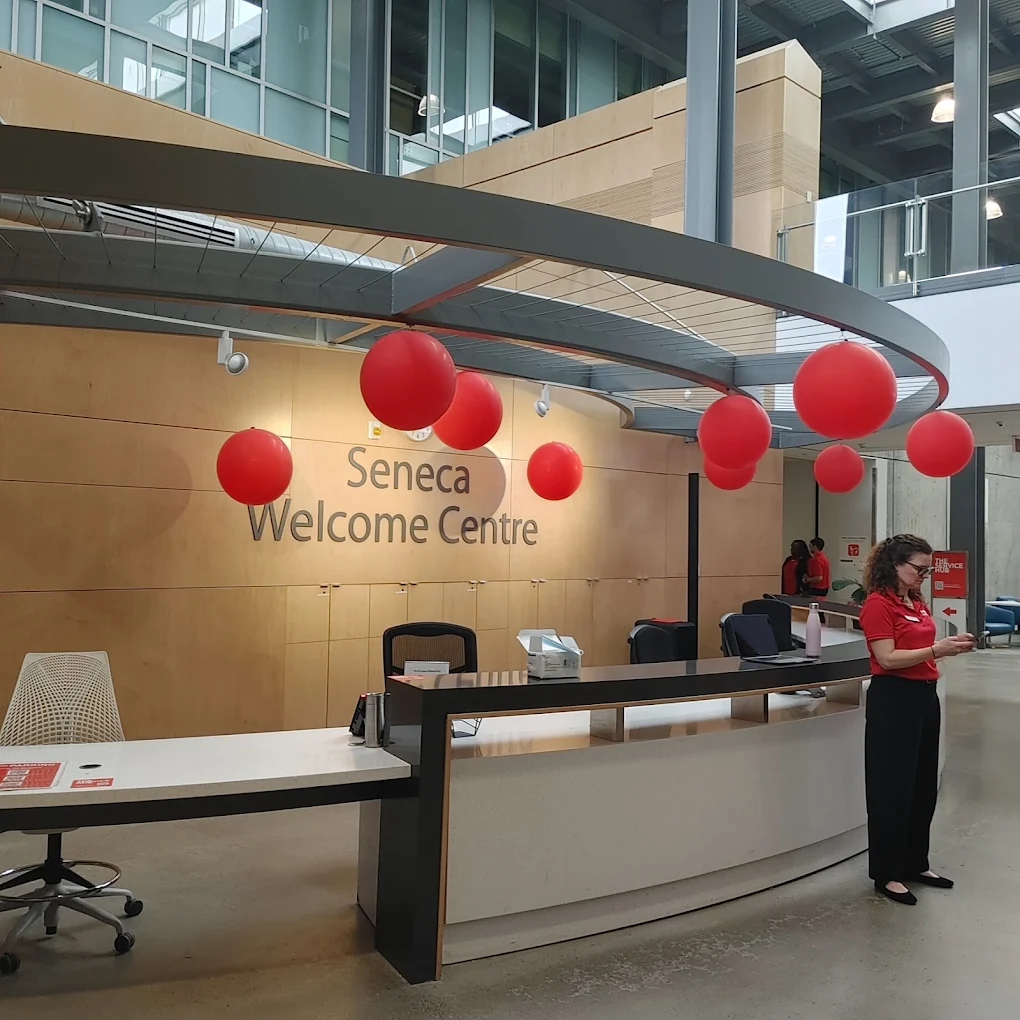
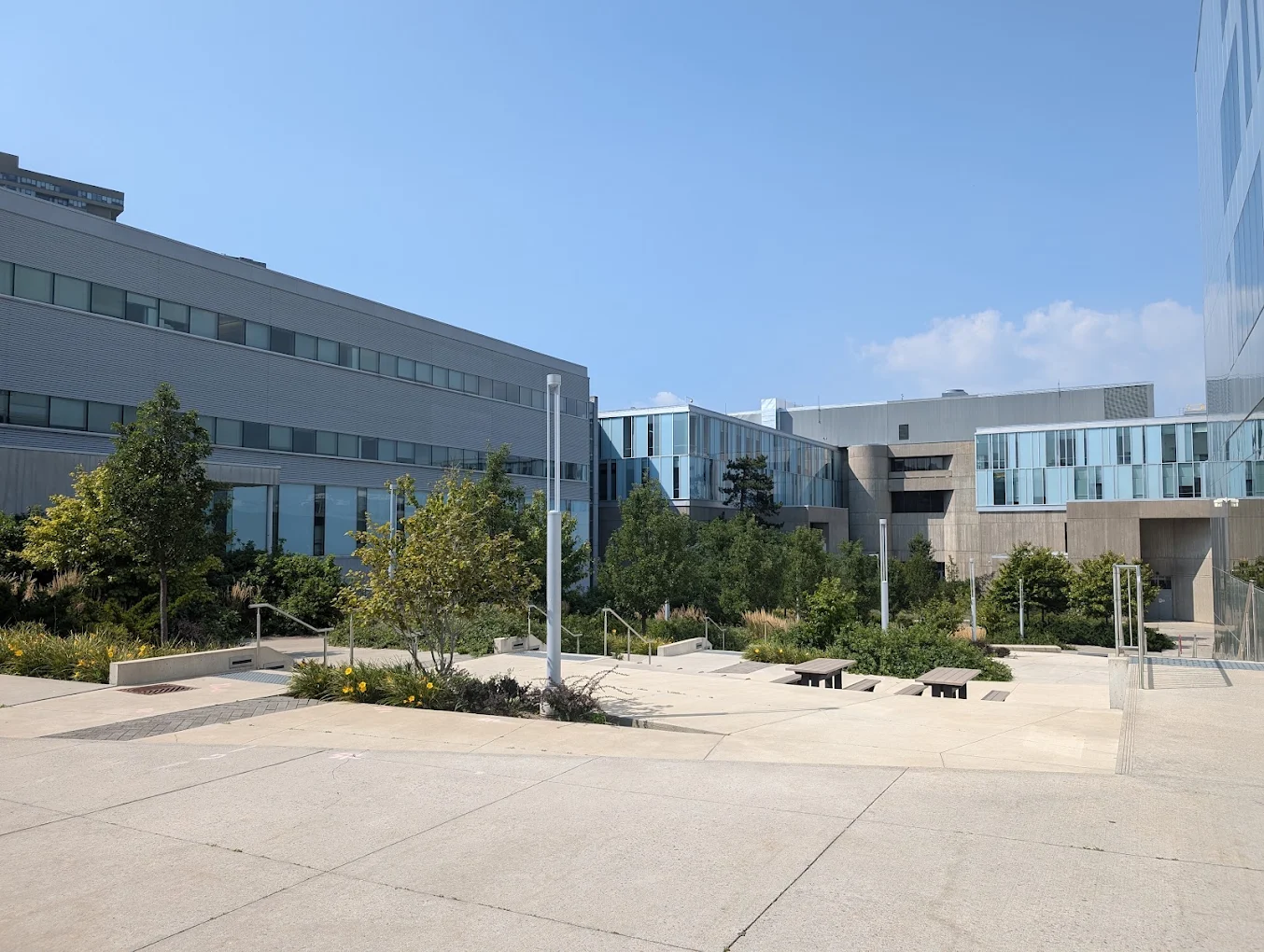
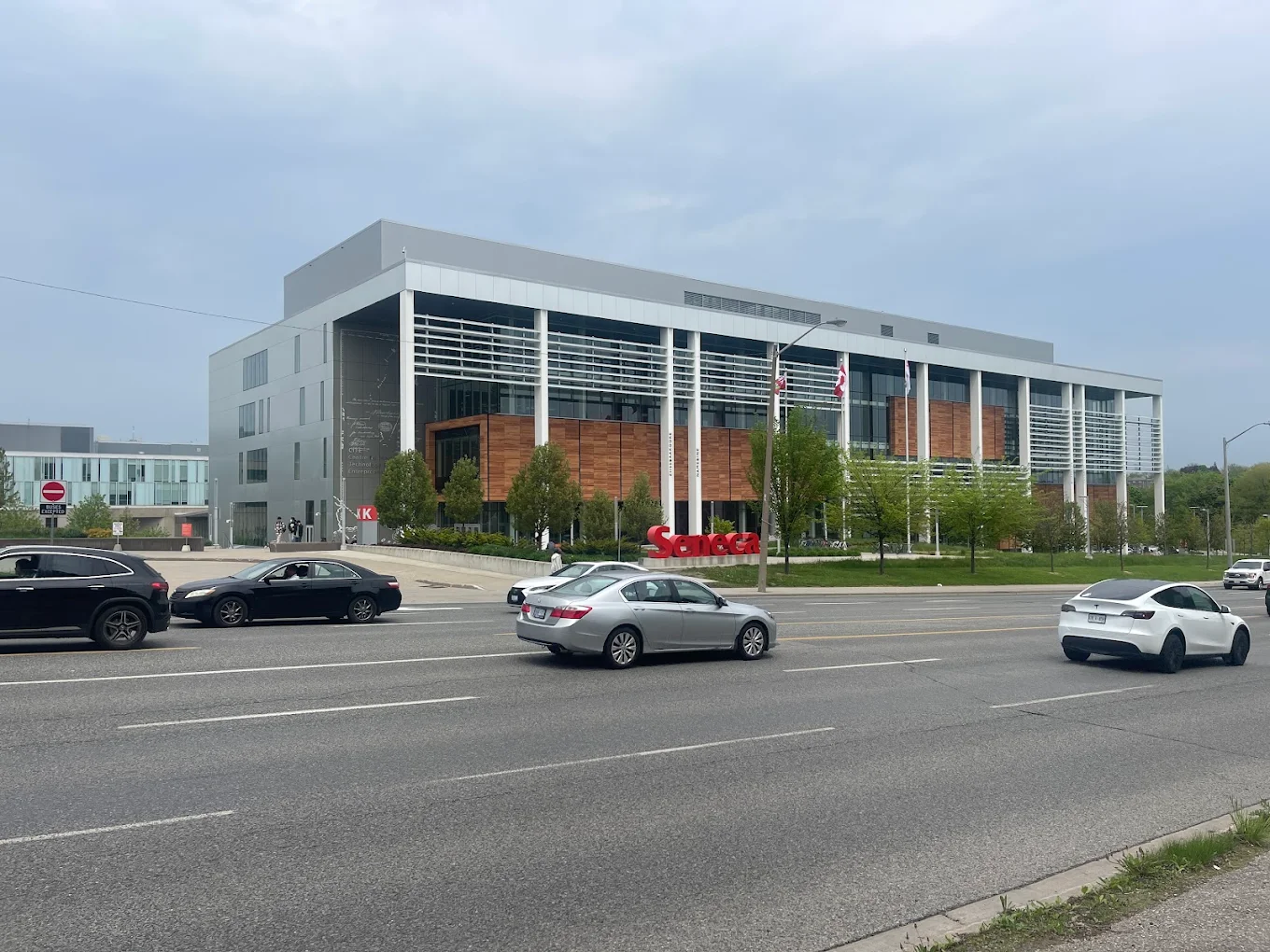
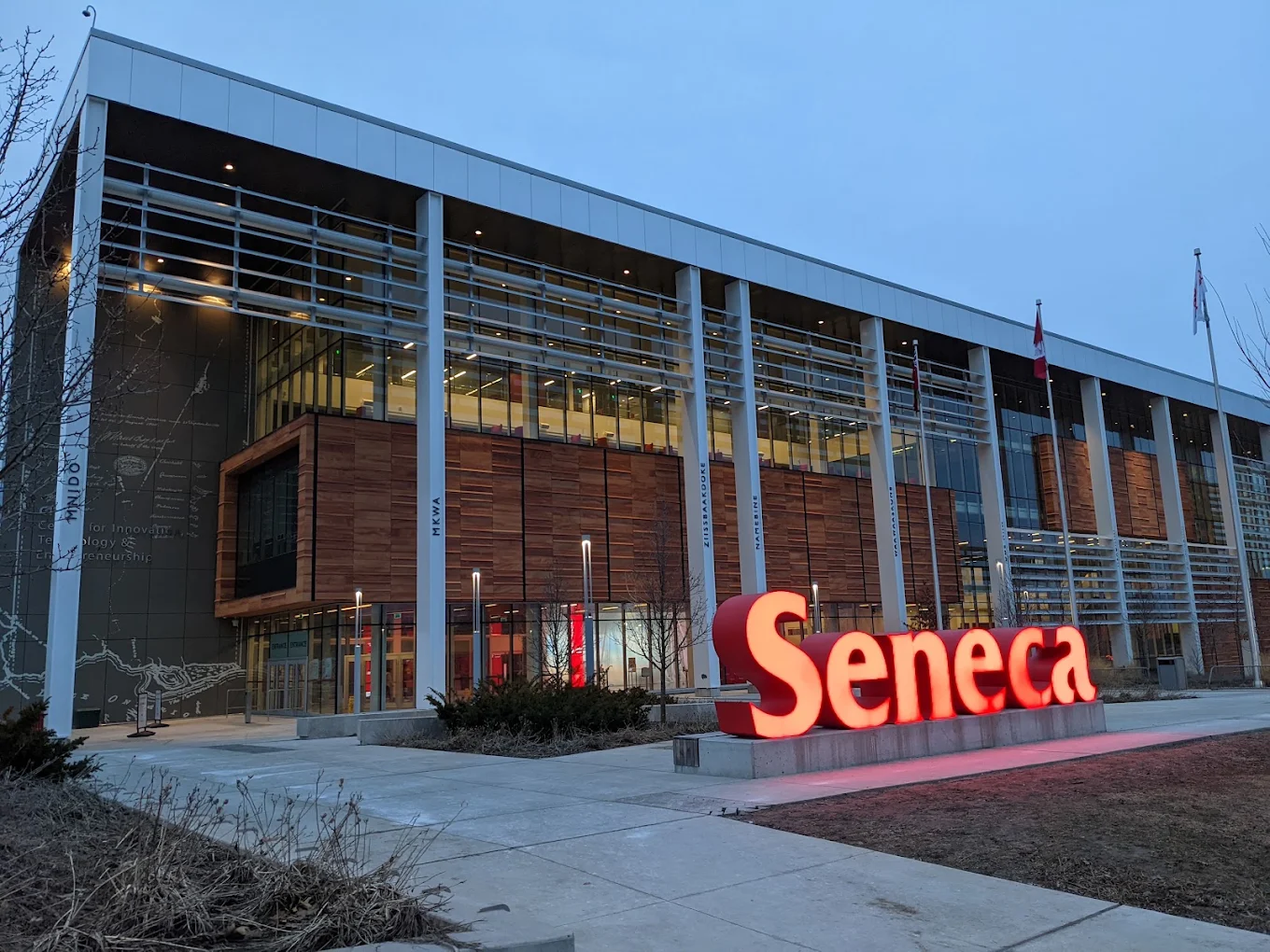
- Newnham (North York) the flagship campus at 1750 Finch Avenue East and by far the largest, carrying most of the business, technology, engineering technology, aviation and applied science catalogue. Has residence, library, athletic centre and the Centre for Innovation, Technology and Entrepreneurship. Well connected by TTC to the subway.
- Seneca@York (North York) shares the York University campus, so students use university-scale facilities alongside Seneca’s own. This is the creative and applied science campus: media, design, animation, performing arts, laboratory science and community services. It sits directly on the TTC Line 1 subway extension, giving it the best transit access of any Seneca site.
- King (King City) a 700-acre conservation property north of Toronto, and Seneca’s health, community services and public safety campus. Nursing, veterinary technician, child and youth care, police foundations and behavioural psychology run here. It has residence and the Magna Hall athletic centre. Be realistic about the location: this is genuinely rural with limited transit, and international students should plan for on-campus residence or a car rather than assuming a commute from Toronto.
- Yorkgate (Jane and Finch, North York) a small community-focused campus inside Yorkgate Mall, running a short list of health and community services programs. Good transit access, but no residence and minimal campus facilities.
Markham campus is closed. In October 2024, Seneca announced the temporary closure of its Markham campus from the end of the Fall 2024 term, moving programs to Newnham and Seneca@York for Winter 2025. President David Agnew attributed it directly to a dramatic drop in the number of international students
following federal study permit caps. If any website is still offering you a program at Markham, that listing is at least a year and a half out of date treat everything else on it with suspicion.
Seneca also operates aviation training facilities at Peterborough Airport, well outside Toronto, for its flight programs.
What is Seneca known for?
- Co-op, at unusual scale. Seneca runs paid co-op work terms across a very large share of its catalogue considerably more than most Ontario colleges. For international students this is the single most valuable structural feature, because it solves the problem every graduate faces: no Canadian work experience.
- Technology and computing. Seneca has a long-standing reputation in software development, computer systems, cybersecurity and data science, spanning diplomas through to degrees and a master’s.
- Aviation. One of very few Canadian colleges with a professional pilot degree, plus aviation operations, safety and flight services programs.
- Health and community services at King. Nursing degrees, practical nursing, veterinary technician, behavioural psychology, therapeutic recreation and child and youth care an unusually deep cluster for a college.
- Creative arts at Seneca@York. Animation, game art, graphic design, broadcasting, illustration and acting, taught in production facilities.
- Degree-granting authority. Around twenty honours bachelor’s degrees plus a Master of Artificial Intelligence. Under current PGWP rules, degrees are exempt from the field-of-study restriction making this Seneca’s most consequential advantage for immigration-minded students.
Courses and credentials
Seneca offers 300+ programs. The credential type is the most important decision you will make, because it determines PGWP treatment:
| Credential | Length | PGWP treatment | Best for |
|---|---|---|---|
| Master’s degree | 2 years | Exempt from field-of-study rules | The strongest immigration position Seneca offers |
| Honours bachelor’s degree | 4 years (usually co-op) | Exempt from field-of-study rules | Students entering from Class 12 who want maximum PGWP safety |
| Bachelor’s degree (BBA) | 3 years | Exempt from field-of-study rules | A faster, cheaper route to a degree |
| Advanced diploma | 3 years | Field-of-study rules apply | Deeper technical training at lower cost |
| Diploma | 2 years | Field-of-study rules apply | Faster entry; ladders into degrees |
| Graduate certificate | 8 months – 2 years | Field-of-study rules apply | Graduates wanting a targeted Canadian credential |
| Certificate | 8 months – 1 year | Field-of-study rules apply | Specific skills or bridging into a longer program |
Popular fields for international applicants: business and accounting, computer programming and IT, cybersecurity, data science and AI, engineering technology, aviation, nursing and health sciences, early childhood education, social service work, animation and design, marketing, and supply chain.
One structural feature worth asking about is bundled graduate certificates Seneca’s “1+1” combinations where two one-year graduate certificates are taken back to back. Under current rules a bundled pair can support a PGWP of up to three years, but both programs must be PGWP-eligible if you applied for your study permit on or after 1 November 2024. If only one qualifies, your permit is based on that program alone.
Co-op at Seneca and a major 2026 rule change
Co-op is Seneca’s defining feature and deserves its own section. Paid work terms are built into most degrees and offered as an option across a large number of diplomas and advanced diplomas. For international students the value is concrete: you graduate with Canadian employer references, a Canadian salary history and often a job offer from your placement host.
The rule change matters. As of 1 April 2026, a separate co-op work permit is no longer required for student work placements in Canada, whether paid or unpaid. Students can now use the on-campus work authorisation printed on their study permit to participate in placements essential to their program, including at locations off campus. Two conditions still apply: you must maintain full-time status unless you are in your final term, and the placement must be 50% or less of your program.
This removes a real administrative barrier that used to delay placements. If you already applied for a co-op work permit before that date, it is no longer necessary. One thing to arrange early: students completing placements in vulnerable sectors childcare, healthcare and senior services need an immigration medical exam, and Seneca advises completing it before submitting your study permit application so the correct authorisations appear on the permit.
Admission requirements
Requirements vary by program, but the general framework for international applicants:
- Diplomas, advanced diplomas and certificates: completed Class 12 / 10+2 or equivalent. Most programs look for around 50–60% overall, with specific Grade 12 subjects for technical and health programs Mathematics is common, and Biology and Chemistry for health sciences.
- Bachelor’s degrees: a stronger Class 12 average, commonly 65%, plus required senior subjects. Some programs go higher: Software Engineering asks around 70% with Advanced Functions and Physics, and the Nursing degree is the most demanding admission at roughly 75%.
- Graduate certificates: a completed diploma, advanced diploma or bachelor’s degree depending on the program. Several of Seneca’s graduate certificates require an advanced diploma or degree rather than a two-year diploma, so check the specific program rather than assuming.
- Master of Artificial Intelligence: a completed four-year bachelor’s degree with a computing or quantitative background.
- No GRE or GMAT is required for any Seneca program.
- Health and community placements require a police vulnerable sector check, immunisation records and CPR certification before you can be placed.
IELTS and English requirements
Seneca sets English requirements by credential level, and the pattern across its catalogue is consistent:
| Credential level | IELTS Academic | TOEFL iBT | PTE | Duolingo |
|---|---|---|---|---|
| Most diplomas, advanced diplomas and certificates | 6.0 (no band below 5.5) | 80 | 58 | 105 |
| Bachelor’s degrees | 6.5 (no band below 6.0) | 84 | 60 | 115 |
| Graduate certificates and master’s | 6.5 (no band below 6.0) | 88 | 60 | 120 |
Two practical notes. First, the same program can have different English requirements at different campuses Practical Nursing requires IELTS 6.5 at King but 6.0 at Newnham. If your score sits between the two, the campus you choose decides whether you get in. Second, applicants from certain English-speaking countries are exempt from submitting test scores, and Seneca publishes the list. Its English Language Institute also provides a pathway for applicants who fall short.
Seneca states that it requires the equivalent of CLB 6 to 7 in all skills for admission. That is worth knowing because the PGWP language requirement introduced in November 2024 asks for CLB 5 for certificate, diploma and advanced diploma graduates and CLB 7 for degree graduates so Seneca’s admission bar already puts most students in range.
Tuition fees for international students
Seneca prices per program and the spread is wide. Indicative annual figures for international students:
| Credential | Typical annual tuition (CAD) |
|---|---|
| Diplomas and advanced diplomas | $14,000 – $18,000 |
| Certificates | $14,500 – $17,000 |
| Graduate certificates | $15,000 – $24,500 |
| Bachelor’s degrees | $16,500 – $24,000 |
| Master of Artificial Intelligence | around $30,000 |
| Honours Bachelor of Aviation Technology | around $81,700 |
Three things stand out and you should understand all of them before comparing Seneca with other colleges.
The aviation degree really does cost about $81,700 a year. That is not an error it reflects aircraft, fuel, instructor and simulator costs, and it is normal for a professional pilot qualification anywhere in the world. It is roughly four times any other Seneca program.
Accelerated programs cost more, not less. Seneca compresses several diplomas into shorter formats, and because you pay the full program cost over a shorter period the annual figure jumps sharply. Law Clerk is $17,234 in its standard format but $25,166 accelerated. Office Administration – Health Services runs about $33,361 in its twelve-month form. Worse, a shorter program means a shorter Post-Graduation Work Permit. For most international students the standard-length version is both cheaper and better for immigration.
The same program can cost different amounts at different campuses. Personal Support Worker is $15,022 at Newnham and Yorkgate but $16,478 at King. Social Service Worker ranges from $14,932 at King to $16,675 at Seneca@York. Always check the fee for the specific campus your intake runs at.
Application fee, first-semester fees and your PAL
This is where Seneca differs from most Canadian colleges, and getting it wrong will derail your timeline.
The application fee is CAD $90 and it is currently being reimbursed. Seneca states that applicants to full-time programs through its international web application for the May 2026, September 2026 and January 2027 terms will have the $90 credited back to their student account after they are accepted and pay their first semester fees.
There is no small deposit. You pay your first semester fees. Most Ontario colleges ask for a partial tuition deposit of $2,000–$3,000 to confirm a seat. Seneca requires you to pay the full first semester fees before it will issue your Provincial Attestation Letter and Letter of Acceptance. That is a materially larger upfront amount, and it is the single most common budgeting surprise for applicants who assumed Seneca worked like Humber or Conestoga.
The sequence runs: confirm your program → receive a Fee Notice → pay first semester fees → Seneca requests your PAL from Ontario → PAL and Letter of Acceptance arrive by email, typically within four to six business days → you apply to IRCC. Because no study permit application can be submitted without a PAL, the date you pay drives everything downstream.
If IRCC refuses your permit, Seneca’s stated policy is a refund less a $100 administrative fee, with the request submitted within 14 days of refusal. Refunds take six to eight weeks. Note also that a PAL can only be used once a refusal means requesting a new one before you reapply.
Cost of living and proof of funds
For study permit purposes, a single applicant currently needs to demonstrate cost-of-living funds of CAD $22,895 for the first year, on top of tuition and travel. Higher amounts apply for accompanying family members.
Treat that as a floor rather than a realistic budget. Shared accommodation in North York commonly runs CAD $700–$1,200 per month, and King City has limited rental stock, which pushes many students into residence. Add groceries, a transit pass, phone and personal costs and a realistic annual living budget in the GTA is $16,000–$20,000.
The offsetting advantage is that Newnham, Seneca@York and Yorkgate all sit in well-connected parts of Toronto with the deepest part-time job market in Canada. King is the exception, and students choosing it should budget for transport or accept a more isolated year.
Scholarships and the $5,000 entrance award
Seneca currently promotes an entrance scholarship worth up to CAD $5,000 off international tuition for students starting a new program, alongside the application fee credit described above. Terms and conditions apply and the amount varies, so confirm what you personally qualify for rather than assuming the headline figure.
That is a considerably larger entrance award than most Ontario colleges offer several comparable institutions cap their international entrance scholarship at $2,000 and it materially changes the cost comparison. Seneca also offers in-course awards and bursaries once you have an academic record.
Set expectations honestly, though: awards reduce your bill, they do not fund your studies. OSAP and Canadian government student loans are for domestic students only. Budget on the assumption you receive nothing and treat any award as a reduction rather than a plan.
Intakes, deadlines and acceptance rate
Seneca runs three intakes: September, January and May. September has the widest program selection. January is strong for business and technology. May is the most limited many programs simply do not run a summer start, though some certificates and graduate certificates do.
International admissions run on a rolling basis, and popular programs fill months ahead under Canada’s international seat caps. Apply six to nine months before your intended start. That is not agent pressure it is what the combination of capped seats, first-semester fee payment and PAL processing genuinely requires.
On acceptance rate: third-party sites cite figures around 70–80%, but the number is close to meaningless. Seneca is not academically selective the way a research university is. The real constraint is seat availability, and a well-qualified applicant can be refused simply because a program is full. Keep a realistic second-choice program ready, and note that Seneca states it has no fee for requesting a program change before you start.
PGWP eligibility read this carefully
This section should drive your program choice more than any other.
Since 1 November 2024, IRCC applies a field-of-study requirement to PGWP applicants graduating from college certificates, diplomas, advanced diplomas and graduate certificates. Your program’s field must appear on IRCC’s eligible list at the time you apply.
All Seneca degree programs are PGWP-eligible and exempt from the field-of-study requirement. Seneca states this directly. That exemption covering the bachelor’s degrees and the Master of Artificial Intelligence is the strongest single argument for choosing a Seneca degree over a diploma if a work permit is central to your plan.
For non-degree programs, Seneca publishes a list of 85+ PGWP-eligible programs which it updates as IRCC’s list changes. Check it against your specific program before you pay anything. Two reassuring details from Seneca’s own guidance: IRCC assesses eligibility at the time of your study permit application or your PGWP application, so a program on the list at either point qualifies; and IRCC has confirmed there will be no changes to the eligible fields of study list in 2026.
Other conditions apply regardless of credential, and these catch people out:
- Language proof is now mandatory. CLB 5 for certificate, diploma and advanced diploma graduates; CLB 7 for degree graduates. Results must be under two years old at application. Note the test versions: IELTS General Training, PTE Core or CELPIP-General not the Academic versions you used for admission.
- You must be in Canada for the whole program. Time studying from outside Canada from September 2024 onwards is deducted from your PGWP length.
- At least 50% of your program must be in class. In-person, hybrid and flexible courses count; fully online study does not.
- Program length sets permit length. Programs of two years or more support a PGWP of up to three years.
The DLI number for all Seneca campuses is O19395536013. Use exactly that on your study permit application.
Spouse open work permits: the bad news
This is the section most guides skip and the one that causes the most distress after arrival.
Since 21 January 2025, spouse open work permits are limited to spouses of students enrolled in master’s programs of 16 months or longer, doctoral programs, or selected professional programs. Seneca states plainly on its own website that Seneca degree programs are no longer eligible for the spouse open work permit.
In practice that means: if you are enrolling in a Seneca diploma, advanced diploma, graduate certificate or bachelor’s degree, do not plan on your partner being able to work. Seneca’s Master of Artificial Intelligence is a two-year master’s degree and may fall within the master’s exception, but given Seneca’s own blanket wording this is exactly the kind of detail to confirm in writing with Seneca and IRCC before making family plans not to assume from a guide, including this one.
There is a separate route worth knowing. Once you hold a PGWP, your spouse may become eligible if you are employed in a TEER 0 or 1 occupation, or selected TEER 2 or 3 occupations in priority sectors, and you have at least 16 months remaining on your work permit when they apply. That effectively requires graduating from a program of 16 months or longer and meeting the in-class study requirements to receive full PGWP duration.
Working while studying and the PR pathway
Full-time students at Seneca with a valid study permit may work on campus, or off campus up to 24 hours per week, and full-time during scheduled breaks. That limit has changed more than once, so confirm the current figure with IRCC rather than relying on any article.
The permanent residence route generally runs: study → graduate → PGWP → skilled Canadian work experience → Express Entry, potentially supported by an Ontario Immigrant Nominee Program nomination. Seneca’s co-op emphasis genuinely helps here, since Canadian work experience is what Express Entry and OINP both reward.
Seneca also provides something unusual: free access to BorderPass, a service connecting students with Canadian immigration lawyers who review and submit study permit applications, plus in-house immigration specialists offering one-on-one advisement on study permits, PGWPs, permanent residence and citizenship planning at all campuses. Few colleges provide legal-grade immigration support at no cost, and it is a legitimate reason to rate Seneca well on student support.
Student life, residence and arrival support
Seneca operates residences at Newnham and King. Seneca@York and Yorkgate students use the private rental market, and King’s rural location makes residence there close to essential for students without a car. Apply for housing the day you accept your offer rooms are limited and not guaranteed to international students.
Two arrival supports are worth naming because they are genuinely uncommon. Seneca provides free private taxi transport from Toronto Pearson or Billy Bishop airport to your GTA destination, booked through the Seneca Mobile app before you travel. And mandatory health insurance through Morcare is bundled into your ancillary fees, so you are covered from arrival rather than scrambling for private cover.
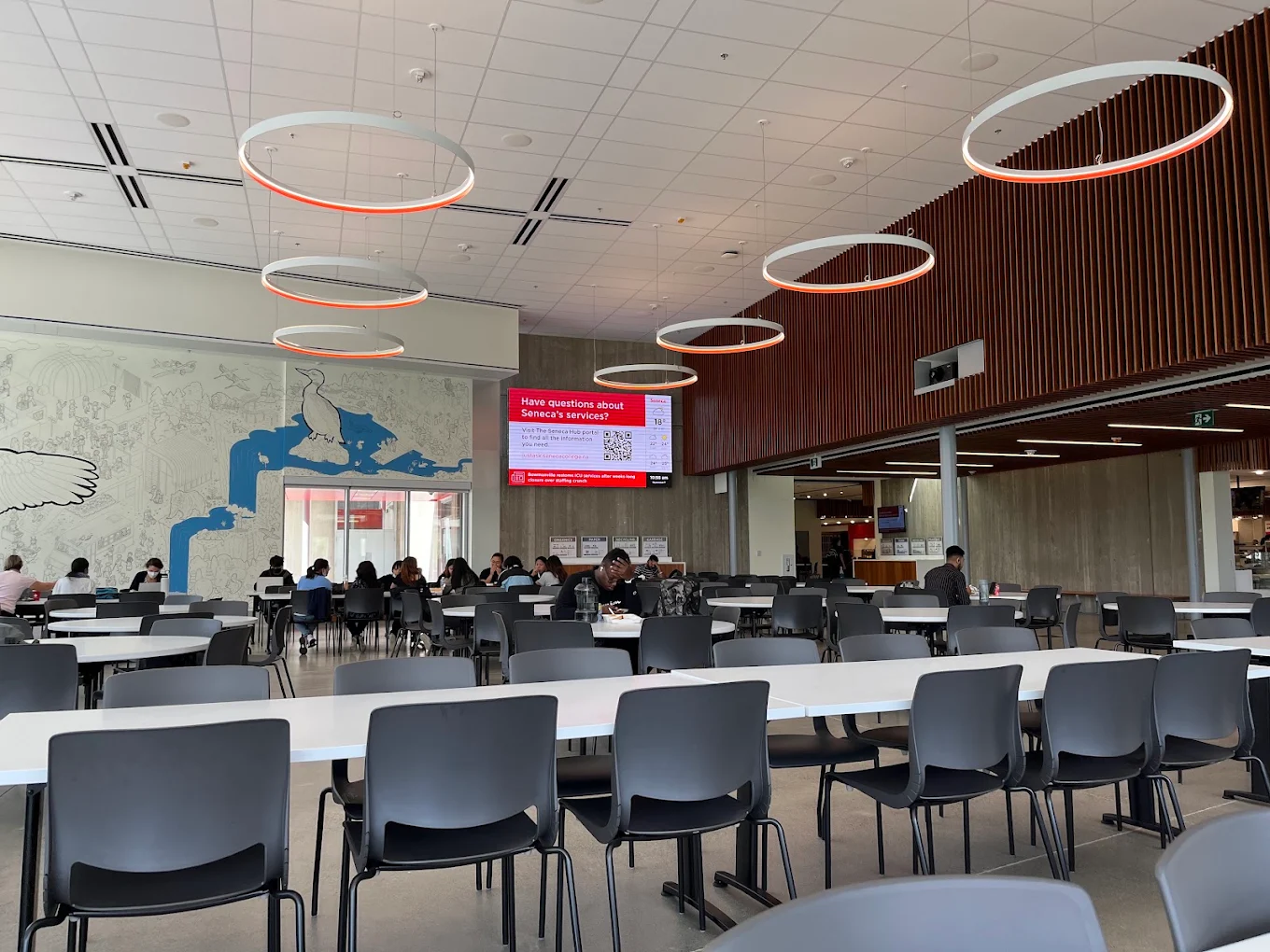
Campus life runs across student clubs, the Seneca Sting athletics teams, multi-faith space, counselling and 24/7 mental health support through WeConnect in multiple languages. International student services cover orientation, immigration advisement, academic support and career development.
The honest part: enrolment decline
You should know this before committing tens of thousands of dollars.
Canada’s international student caps hit Seneca hard. The federal government cut new study permits by 35% for 2024 and a further 10% for 2025 and 2026. Seneca’s response was to close the Markham campus a site that primarily served international students from the end of Fall 2024, consolidating programs into Newnham and Seneca@York. Full-time equivalent enrolment has fallen substantially from its peak.
What this means for you, practically:
- Confirm your specific program and campus are running for your intake. Get it in writing before you pay first-semester fees, which at Seneca is a large sum.
- Seneca is not at risk of closing. It is one of Ontario’s largest public colleges with substantial domestic enrolment and provincial funding. This is contraction, not failure.
- Expect leaner services. Fewer sections, larger classes and slower administration are realistic in a cost-cutting cycle.
- This is sector-wide. Colleges across Ontario have closed campuses, cut programs and reduced staff. Seneca is not an outlier; it was simply early and public about it.
- There is an upside. Reduced demand is precisely why Seneca is offering a $5,000 entrance scholarship and refunding application fees. Competition for seats is lower than it was two years ago.
How to apply
- Choose your program and verify PGWP status against Seneca’s published list of 85+ eligible programs. If it is a degree, you are exempt from the field-of-study rule.
- Check the English requirement for that specific program and campus they differ.
- Apply through Seneca’s international web application and pay the CAD $90 fee, which is currently reimbursed later. Prepare transcripts, passport and English test results.
- Receive your offer and confirm it.
- Pay your first semester fees not a small deposit. This triggers your PAL request.
- Receive your PAL and Letter of Acceptance by email, typically within four to six business days.
- Apply for your study permit using DLI O19395536013, with your GIC and proof of funds of at least $22,895 for living costs.
- Book your free airport pickup through the Seneca Mobile app and arrange residence or housing.
Is Seneca Polytechnic good for international students?
Yes and it is currently better value than it was two years ago. Seneca combines Ontario’s deepest co-op offering, degree-granting authority that sidesteps the PGWP field-of-study restriction, free immigration legal support, a $5,000 entrance scholarship and a refunded application fee. The enrolment decline that forced Markham’s closure has also made seats easier to get and the institution more generous.
Choose it deliberately, though. A Seneca degree is a structurally safe immigration pathway. A Seneca diploma or graduate certificate is cheaper and faster but only works if the field appears on IRCC’s eligible list, which you must verify yourself. And take co-op wherever it is offered it is the single feature that most improves your position on graduation.
Seneca is the wrong choice if your plan depends on a spouse open work permit, which most Seneca programs will not support; if you want a research university experience with academic supervision and thesis work; or if you are drawn to an accelerated program purely for speed, since those cost more and yield a shorter work permit.
Frequently asked questions
Is Seneca College the same as Seneca Polytechnic?
Yes. Seneca College adopted the operating name Seneca Polytechnic in 2023 under its strategic plan. The legal name remains Seneca College of Applied Arts and Technology. Same institution, same DLI, same credential recognition.
What is Seneca’s DLI number?
O19395536013, covering all Seneca campuses. Use exactly this on your study permit application.
Is the Markham campus still open?
No. Seneca temporarily closed Markham from the end of the Fall 2024 term after federal study permit caps caused a sharp fall in international enrolment. Programs moved to Newnham and Seneca@York. Any site still advertising Markham programs is badly out of date.
Are Seneca programs PGWP-eligible?
All Seneca degree programs are, with no field-of-study requirement. Certificates, diplomas, advanced diplomas and graduate certificates must be on IRCC’s eligible-fields list Seneca publishes 85+ eligible programs and updates the list. You also need CLB 5 language proof for college credentials or CLB 7 for degrees.
What IELTS score do I need for Seneca?
Generally IELTS 6.0 with no band below 5.5 for diplomas and certificates, and 6.5 with no band below 6.0 for degrees and graduate certificates. Requirements can differ by campus Practical Nursing needs 6.5 at King but 6.0 at Newnham.
How much are Seneca’s fees for international students?
Roughly $14,000–$18,000 a year for diplomas, $15,000–$24,500 for graduate certificates and $16,500–$24,000 for degrees. The Master of AI is around $30,000 and the Aviation Technology degree around $81,700. Verify the figure for your specific program and campus.
Does Seneca charge an application fee?
CAD $90, and Seneca is currently reimbursing it. Applicants to full-time programs through the international web application for May 2026, September 2026 or January 2027 receive the $90 back after acceptance and payment of first semester fees.
How much deposit does Seneca require?
Seneca does not use a small deposit. You must pay your full first semester fees before receiving your PAL and Letter of Acceptance. This is a much larger upfront amount than the $2,000–$3,000 deposits common at other Ontario colleges, and it is the most common budgeting surprise for applicants.
What scholarships does Seneca offer international students?
An entrance scholarship of up to CAD $5,000 off tuition for students starting a new program, plus the application fee credit. Terms apply and amounts vary, so confirm what you qualify for. In-course awards and bursaries are available once you have an academic record.
Does Seneca offer co-op?
Extensively more than most Ontario colleges. Paid co-op is built into most degrees and offered as an option on many diplomas. As of 1 April 2026 a separate co-op work permit is no longer required; your study permit authorisation now covers placements, provided you maintain full-time status and the placement is 50% or less of your program.
Can my spouse work while I study at Seneca?
Usually not. Since January 2025 spouse open work permits are limited mainly to master’s, doctoral and selected professional programs, and Seneca states that its degree programs are no longer eligible. Confirm your specific situation with Seneca and IRCC in writing before making family plans.
How many hours can I work while studying at Seneca?
Full-time students with a valid study permit may work on campus, or off campus up to 24 hours per week, and full-time during scheduled breaks. Confirm the current limit with IRCC.
Which Seneca campus should I choose?
Newnham for business, technology, engineering and aviation; Seneca@York for media, design, animation and applied science, with the best subway access; King for nursing, health and community services, but note it is rural with limited transit; Yorkgate for a short list of community programs.
Does Seneca help with the study permit application?
Yes, and unusually well. Seneca provides free access to BorderPass, where Canadian immigration lawyers review and submit your application, plus in-house immigration specialists offering one-on-one advisement at all campuses. It also provides free airport pickup by private taxi on arrival.
Is Seneca affected by the international student caps?
Yes. Seneca closed its Markham campus from the end of Fall 2024 and enrolment has fallen substantially. Seneca remains financially stable as one of Ontario’s largest public colleges, but confirm in writing that your program and campus are running for your intake before paying first semester fees.
Seneca or Humber which is better?
Both are large public Toronto polytechnics with strong reputations. Seneca’s edge is its co-op depth, its aviation and technology programs and its larger entrance scholarship; Humber has a wider range of bachelor’s degrees and a downtown graduate campus. Compare your specific program, campus location, fee and PGWP eligibility rather than the institution’s overall name.
How do I apply to Seneca Polytechnic?
The easiest route is through the Apply Study Visa portal: we check your program’s credential type and PGWP status for your intake first, then our certified counsellors review and submit your file for free and guide you through the first-semester fee payment, the Ontario PAL, your GIC and your study permit (DLI O19395536013).
Does Apply Study Visa charge for Seneca applications?
No application review and submission through Apply Study Visa is free, including the PGWP eligibility check, with the same team supporting your visa, GIC and travel afterwards.