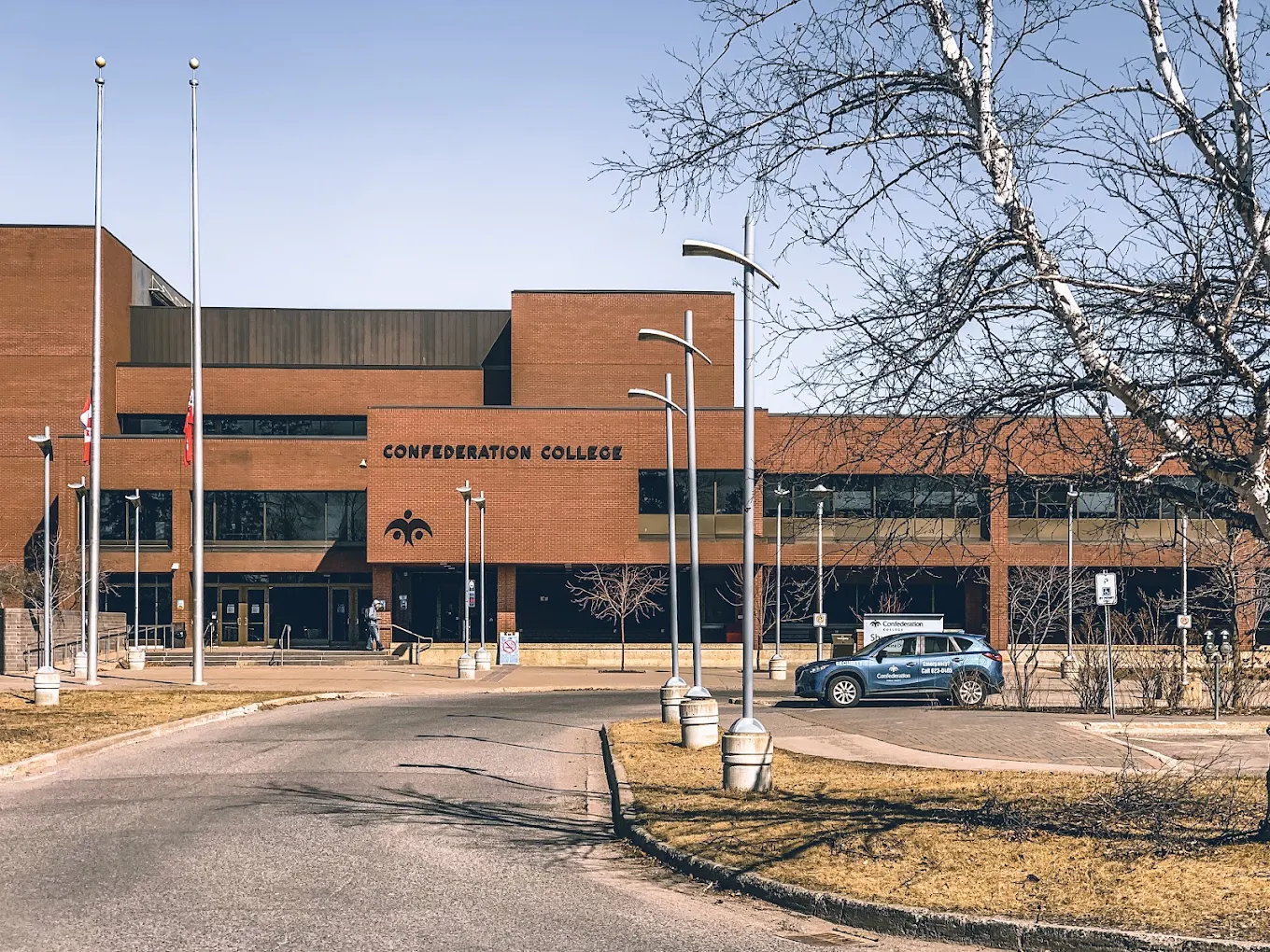

Most students researching Confederation College are really asking one question, even if they phrase it differently: is a small college in Northwestern Ontario a smarter bet than a big one in Toronto? The honest answer depends entirely on what you are optimising for. If you want the largest part-time job market in Canada and the biggest South Asian community, Toronto wins and it is not close. If you want lower total cost, smaller classes, and a permanent residence route that most applicants have never heard of, Thunder Bay has a genuine structural advantage that Toronto simply cannot offer.
That advantage is the Rural Community Immigration Pilot, and it is covered in full below. This guide walks through everything else too: campuses, programs, real fee ranges in CAD, IELTS by credential, the DLI number, intakes, PGWP and CIP-code rules, residence, and an honest look at the program suspensions Confederation announced after Canada's international student caps hit.
About Confederation College
Confederation College opened in 1967 as a trade school, in the same wave that created Ontario's public college system. It has since become the only public college serving Northwestern Ontario, covering a service area of roughly 550,000 square kilometres a territory larger than most European countries, served by one institution.
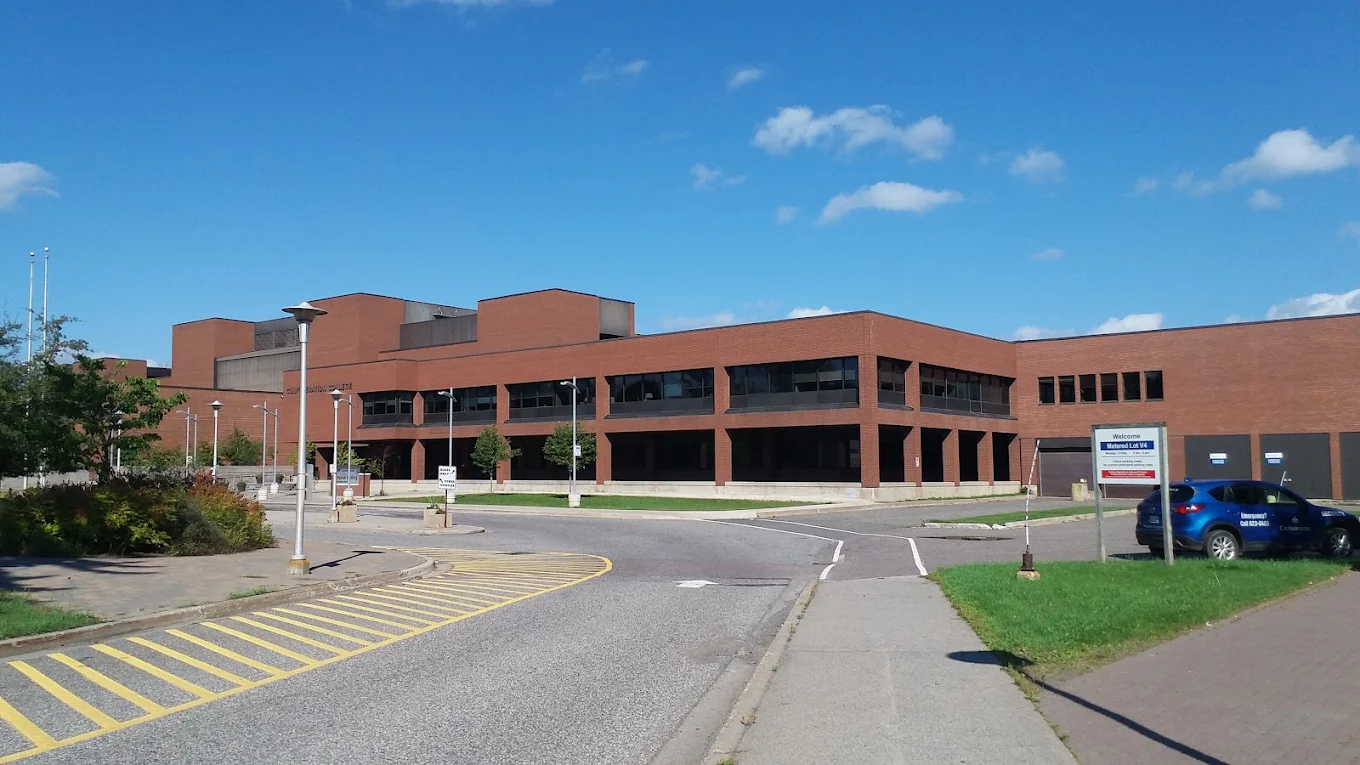
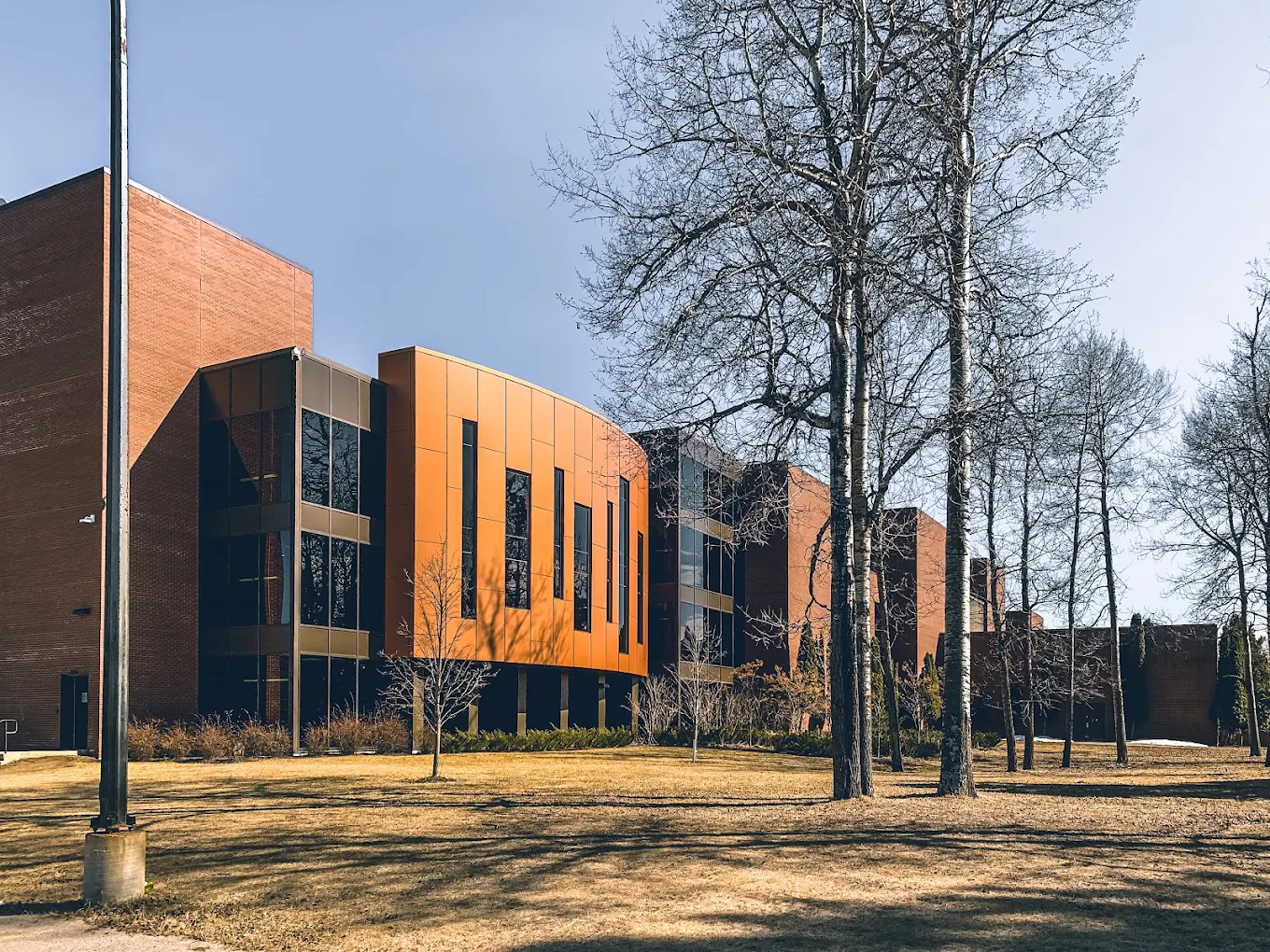
The main campus sits on around 130 acres of parkland inside Thunder Bay itself, built around four academic buildings: Shuniah, Dorion, Neebing and McIntyre. The college serves roughly 7,000 to 7,600 full-time and part-time learners, including around 1,600 to 1,750 international students from more than 46 countries.
Scale is the thing to understand here. Confederation is not a small version of Humber or Seneca it is a different proposition entirely. Class sizes are smaller, faculty are more accessible, and the college's programs are built around the actual labour needs of Northwestern Ontario: healthcare, aviation, natural resources, skilled trades, business and community services. For a student who would struggle in a 300-seat lecture hall in Toronto, that difference is not marketing.
| Institution name | Confederation College of Applied Arts and Technology |
|---|---|
| Type | Public college (Province of Ontario) |
| Founded | 1967 |
| President | Michelle Salo |
| Main campus | 1450 Nakina Drive, Thunder Bay, ON P7C 4W1 |
| Regional campuses | Dryden, Fort Frances, Kenora, Greenstone (Longlac), Marathon, Red Lake, Sioux Lookout |
| Aviation campus | Aviation Centre of Excellence, Thunder Bay International Airport |
| DLI number | O19376986752 |
| Programs | 60+ full-time programs across 11 areas of study |
| Students | ~7,000+, including ~1,600 international |
| Intakes | September (Fall), January (Winter), May (Spring) |
| Application fee | CAD $125 (non-refundable) |
| Decision time | Around 5 business days in normal periods |
Campuses: Thunder Bay and the regional network
Thunder Bay (main campus) 1450 Nakina Drive, on 130 acres in the middle of the city. Four academic buildings, on-campus residences, athletics facilities, and the Thunder Bay Art Gallery sitting on college grounds. This is where almost all international students study, and where the full program range runs.
Aviation Centre of Excellence a purpose-built 59,000 sq ft facility at Thunder Bay International Airport, with two hangars, workshops, labs and classrooms serving the college's aviation programs. Very few Canadian colleges own infrastructure like this.
Regional campuses Dryden, Fort Frances, Kenora (Lake of the Woods), Greenstone/Longlac, Marathon (Northshore), Red Lake and Sioux Lookout. These are small community sites delivering a limited program list to local learners.
One important warning for international applicants: regional campus programs are frequently not open to international students, and their program lists are far narrower than Thunder Bay's. If an agent or listing offers you a seat at Dryden or Kenora, verify directly with the college before paying anything. Your study permit, your PGWP planning and your RCIP eligibility are all tied to where you actually study and the Thunder Bay Census Metropolitan Area is the geography that matters for the immigration pilot discussed below.
What is Confederation College known for?
Aviation. The School of Aviation and its Aviation Centre of Excellence are the college's flagship. Aviation Flight Management, aircraft maintenance and related programs are taught in a real hangar facility at a working airport training infrastructure that most colleges cannot replicate at any price.
Health sciences. Practical nursing, health informatics, dental and community health programs feed directly into the Thunder Bay Regional Health Sciences Centre and St. Joseph's Care Group, which are among the region's largest employers.
Natural resources and environmental programs. Forestry, mining-adjacent technology and environmental technician programs make obvious sense in a region built on those industries.
Skilled trades and engineering technology. Long-standing provision with strong regional employer relationships.
Negahneewin College. Confederation's Indigenous education division and research centre, one of the most developed Indigenous education partnerships in the Ontario college system.
Graduate outcomes. Confederation reports graduate employment figures around the high 80s to low 90s in percentage terms under Ontario's KPI framework. Treat marketed percentages as marketing but the underlying employer relationships in a region with genuine labour shortages are real.
Courses and programs for international students
Confederation offers 60+ full-time programs across 11 areas of study. The credential type not the subject is the most consequential choice you will make, because it drives your work permit outcome.
| Credential | Typical length | PGWP treatment | Best suited to |
|---|---|---|---|
| Ontario graduate certificate | 8–16 months | Field-of-study (CIP) rules apply | Bachelor's holders wanting a fast, targeted Canadian credential |
| Diploma | 2 years | Field-of-study (CIP) rules apply | Class 12 students; the standard RCIP-eligible length |
| Advanced diploma | 3 years | Field-of-study (CIP) rules apply | Deeper technical training, strongest employability |
| Certificate | Up to 1 year | CIP rules apply; under 8 months is not PGWP-eligible at all | Specific skills only rarely a sound study-permit strategy alone |
Popular fields for international applicants: business administration and accounting, human resources management, health informatics, practical nursing and health sciences, computer and information technology, digital marketing, international business management, engineering technology, natural resources, hospitality and aviation.
A critical structural point that separates Confederation from Humber and Seneca: Confederation is a diploma and certificate college, not a broad degree-granting one. Ontario colleges with bachelor's degree authority can offer programs that are exempt from the PGWP field-of-study rules. Confederation's catalogue is built around certificates, diplomas, advanced diplomas and graduate certificates which means the CIP-code check is not optional for you, it is the entire decision. Do that check before you pay an application fee, not after you get an offer.
Admission requirements
Requirements vary by program, but the general framework for international applicants:
Certificates and diplomas: completed Class 12 / 10+2 or equivalent, commonly around 50–60% depending on the program. Technical and health programs specify senior Mathematics, Biology or Chemistry.
Advanced diplomas: completed Class 12 with a stronger average and any required subject prerequisites.
Ontario graduate certificates: a completed bachelor's degree, or in some cases a three-year advanced diploma. Around 55% is a common benchmark; competitive programs may also ask for a resume or statement of interest.
Age: applicants must be 18 by the start of the program.
Transcripts: originals from your last institution, with certified English translations where applicable. A credential evaluation (WES, IQAS or ICAS) may be requested.
No GRE or GMAT is required for any Confederation program.
Backlogs: Confederation has historically been reasonable about backlogs relative to some Ontario colleges, but this is assessed case by case do not assume.
Two Ontario-specific items catch international applicants out. First, the Provincial Attestation Letter (PAL), required under Canada's federal cap; the college arranges it as part of admission, and it is generally triggered by your tuition deposit clearing. Second, that deposit timing drives your entire visa timeline a delayed payment does not delay by a week, it can push you an entire intake. Confirm the exact international deposit amount on your offer letter, since it differs from the domestic figure published on the college's fees page.
IELTS and English requirements
There is no single Confederation IELTS score, and applying on a number you found in a forum is the most common avoidable mistake we see.
| Credential level | Typical IELTS Academic |
|---|---|
| Most certificates and diplomas | 6.0 overall, no band below 5.5 |
| Advanced diplomas | 6.0 overall, no band below 5.5 |
| Ontario graduate certificates | 6.5 overall, no band below 6.0 |
| Selected health and nursing programs | Higher verify per program |
TOEFL iBT, PTE Academic, Duolingo and CAEL are also accepted at published equivalents. Applicants who fall short may have an English pathway option through the college's language provision, which can satisfy the requirement without re-sitting a test.
Check the requirement on your specific program page before booking a test date. A 6.0 opens a large slice of the diploma catalogue and closes most graduate certificates.
Tuition fees for international students
Confederation prices per program. Indicative 2026-27 ranges for international students, per year:
| Item | Approximate cost (CAD) |
|---|---|
| Certificates and diplomas | $14,000 – $18,500 |
| Advanced diplomas | $15,000 – $19,000 |
| Ontario graduate certificates | $15,500 – $19,500 |
| Specialised programs (aviation, some health) | Substantially higher confirm per program |
| Application fee | $125 (one-time, non-refundable) |
| Tuition deposit | Confirm on offer letter; required before PAL issuance |
These figures generally include mandatory ancillary fees and health insurance but exclude books, uniforms, supplies and program-specific costs such as flight hours in aviation programs which can be very substantial and are the single biggest budgeting trap at this college.
For context, Confederation's tuition sits meaningfully below Toronto-area colleges for comparable credentials. Combined with Thunder Bay's living costs, the total cost difference over a two-year diploma is commonly in the range of CAD $15,000–$25,000 versus a GTA equivalent. That is the core financial argument for studying here.
Cost of living in Thunder Bay
This is where Confederation wins decisively, and where families should focus.
| Expense | Monthly (approx. CAD) |
|---|---|
| Shared off-campus accommodation | $500 – $800 |
| On-campus residence (Sibley Hall / Spruce & Cedar) | ~$500 – $900, meal plan mandatory in Sibley Hall |
| Groceries | $300 – $400 |
| Transport (student bus pass via Student Union) | Included / minimal |
| Utilities, phone, personal | $200 – $300 |
| Realistic total | $1,200 – $1,800 |
A realistic annual living budget is roughly CAD $14,000–$20,000 against $20,000–$25,000+ for the same lifestyle in Toronto. Over a two-year program, that gap alone can fund most of a year's tuition.
The trade-off is honest and should be stated: Thunder Bay's part-time job market is a fraction of Toronto's. There is work retail, hospitality, healthcare support, campus roles but you will not find the volume or the wage competition of the GTA. Students who plan to fund a large share of their living costs through part-time work should think carefully. Students whose funding is already arranged get far better value here.
Residence note: on-campus rooms are limited, fill early, and Sibley Hall is typically not available for the January intake. Apply for housing the day you accept your offer.
Scholarships and awards
Confederation offers entrance awards, in-program scholarships and bursaries, generally administered through the Student Finance Office. International entrance awards typically fall in the CAD $500–$2,000 band, with additional in-course awards, competitions and program-specific bursaries the aviation programs in particular have a dedicated awards list.
Set expectations properly: these reduce your bill, they do not fund your studies. OSAP and Canadian government student loans are for domestic students only. Budget on the assumption you receive nothing and treat any award as a bonus.
Intakes, deadlines and acceptance rate
Confederation runs three intakes: September (Fall), January (Winter) and May (Spring). September is the largest with the widest program selection; January is solid for business and IT; May is the most limited.
Applications generally close around six weeks before the semester begins, but that is a hard backstop, not a target. Popular programs fill months earlier, and the deposit-to-PAL-to-study-permit chain needs runway. Apply six to nine months ahead.
On acceptance rate: third-party sites commonly publish around 80%, and Confederation does not publish an official figure. The number is also misleading in the same way it is for every Ontario college the real constraint is not academic selectivity, it is seat availability under Canada's international student cap. A qualified applicant can be refused because the program is full. Keep a realistic second choice ready.
PGWP eligibility: the honest answer
Read this section twice before choosing a program.
Since 1 November 2024, international students who apply for a study permit on or after that date must graduate from a program whose CIP code appears on IRCC's eligible field-of-study list in order to qualify for a Post-Graduation Work Permit. This applies to college certificates, diplomas, advanced diplomas and graduate certificates which, at Confederation, is effectively the whole catalogue.
There is one piece of genuinely good news for 2026 applicants. In January 2026, IRCC froze the eligible field-of-study list for the calendar year no programs added, none removed, with 1,107 CIP codes remaining eligible. The 178 fields previously flagged for possible removal stayed eligible. That gives students applying in 2026 unusual certainty, which the last two years did not offer.
What you must actually do:
- Find the CIP code on your specific Confederation program page the college publishes it.
- Check that code against IRCC's current field-of-study list yourself.
- Confirm the program is at least eight months long (shorter programs are never PGWP-eligible).
- Plan to study full-time, graduate, and apply within the permitted window after receiving your final documents.
- Meet the CLB 5 language requirement in all four skills at PGWP application stage this is a separate requirement from your admission English score, and it catches people out.
PGWP length follows program length, up to three years. IRCC makes every final decision. Confederation states this on its own immigration pages and so do we: no college, and no consultancy, can guarantee a work permit.
Confederation's DLI number is O19376986752. Use it exactly on your study permit application.
The Thunder Bay RCIP: the PR route most students miss
This is the section that makes Confederation genuinely different from a Toronto college, and almost nobody explains it properly.
Thunder Bay is one of the 14 participating communities in Canada's Rural Community Immigration Pilot (RCIP) a permanent residence pathway launched in 2025 and administered locally by the Thunder Bay Community Economic Development Commission (CEDC). By June 2026, over 440 local businesses had achieved Designated Employer status under the pilot.
Here is the part that matters to you. The RCIP normally requires at least one year (1,560 hours) of relevant work experience in the past three years. But international graduates of a public post-secondary institution in the community may be exempt from that work-experience requirement entirely provided the credential is from a program of two years or more, studied in the community, and provided the program was not majority language study, not majority distance learning, and not funded by a scholarship requiring you to return home.
Read that again in plain terms: a two-year diploma completed at Confederation College in Thunder Bay can remove the work-experience barrier that most PR applicants spend years clearing.
The conditions that still apply, honestly stated:
- The pilot is employer-driven. You cannot apply directly to the CEDC or IRCC. You need a genuine, full-time, permanent job offer from a designated Thunder Bay employer, who then submits a recommendation application on your behalf.
- Applications are ranked. The CEDC scores candidates on a points grid with a minimum threshold, and selects the highest scorers in periodic draws. A job offer alone guarantees nothing.
- The 2026 stream differs from 2025. Priority sectors changed, several NOC codes now carry caps, and compliance checks tightened. Check the current sector and occupation list before choosing a program.
- Language and settlement funds requirements apply, tied to the TEER level of the job.
- You must hold valid status throughout the CEDC no longer accepts candidates on maintained status.
How to use this strategically: choose a two-year or longer Confederation program, in a field that maps to Thunder Bay's current RCIP priority sectors, with a PGWP-eligible CIP code. That single combination PGWP eligibility plus RCIP work-experience exemption plus a local employer relationship built during study is the most efficient study-to-PR structure available at any Ontario college right now. It is also why choosing a one-year certificate here can quietly cost you the whole advantage.
Working while studying and the spouse permit question
Full-time students at Confederation can work off campus under standard study-permit conditions, plus full-time during scheduled breaks. Off-campus hour limits have changed more than once recently confirm the current cap with IRCC rather than relying on any article, this one included.
Two honest caveats:
- Thunder Bay's job market is small. Roughly 110,000 people live in the metropolitan area. Jobs exist, competition among students is real, and the pay ceiling is lower than the GTA. The offsetting benefit is that a local employer relationship, once built, is far more likely to lead to the permanent job offer that the RCIP requires.
- Spouse open work permits are now restricted mainly to students in master's, doctoral and certain professional programs. Most Confederation programs will not carry spouse work eligibility. If your financial plan assumed a partner could work while you study, verify that against current IRCC rules before committing any money.
Student life, residence and the Thunder Bay winter
The Thunder Bay campus offers Sibley Hall (traditional dorm rooms, mandatory meal plan) and Spruce and Cedar Houses (apartment-style). Rooms are limited, fill quickly, and residence is generally unavailable for January entrants. Off-campus rentals in Thunder Bay are comparatively affordable and comparatively easy to find a genuine relief after Toronto horror stories.
Campus facilities include athletics and fitness provision, the Thunder Bay Art Gallery on college grounds, and the Confederation College Student Union, which provides a bus pass, health and dental insurance and event programming. The Thunderhawks compete in Ontario college athletics.
On the winter: do not skip this paragraph. Thunder Bay is a genuinely cold northern city, with long winters, heavy snowfall and sustained sub-zero temperatures. Students from Punjab, Gujarat or South India routinely underestimate it. Budget CAD $300–$500 for proper winter clothing before you arrive, and understand that daily life adjusts around it. Students who prepare adapt quickly; students who arrive in a hoodie in November have a miserable first semester.
The compensations are real: Lake Superior, Sleeping Giant Provincial Park, skiing, hiking and one of the safest, most manageable student cities in Ontario. It suits students who want community and quiet. It does not suit students who want a metropolis.
The honest part: program suspensions and enrolment decline
Most agent pages will not tell you this. You should know it before you commit CAD $40,000.
Canada's international student caps and the November 2024 PGWP changes hit Northern Ontario colleges hard. Confederation's leadership publicly warned that international enrolment could fall by as much as 69%, and first-year international enrolment dropped by close to 40% in the year following the cap. In March 2025, the Board of Governors approved the suspension of 11 academic programs effective September 2025, for an indefinite period.
What this means for you, practically:
- Confirm in writing that your specific program is running for your intake. Do not rely on a listing, an agent's PDF or an old program page. Get it confirmed before you pay a deposit.
- Confederation is not at risk of closing. It is a provincially funded public college and the only one serving Northwestern Ontario a regional necessity, not a marginal operator.
- Expect leaner services. Fewer program options and slower administration are realistic during a restructuring cycle.
- This is sector-wide. Colleges across Ontario including much larger ones made similar cuts in the same period. Confederation is not an outlier.
- There is a rational counter-argument worth stating too: programs that survived the review are the ones aligned to genuine Northwestern Ontario labour shortages, and those are precisely the fields where PGWP eligibility and RCIP priority sectors overlap. A leaner catalogue is, in immigration terms, a better-targeted one.
How to apply
- Choose your program and check the CIP code against IRCC's field-of-study list. At this college, that check comes first before anything else.
- Check the length. For the RCIP work-experience exemption, you want two years or more.
- Check your English score against that specific program, not a general figure.
- Apply online through our portal and pay after eligibility check so your application fee money is safe.
- Receive your decision typically around five business days outside peak periods.
- Pay your tuition deposit to confirm your seat and trigger your PAL.
- Receive your PAL and Letter of Acceptance, then apply for your study permit using DLI O19376986752.
- Arrange your GIC, funds proof and travel, then register and secure housing.
Is Confederation College good for international students?
Yes for a specific type of student, and the fit matters more here than at a large urban college.
Confederation makes sense if your priority is total cost, smaller classes, a safe and manageable city, and above all a deliberate route to permanent residence through a two-year-plus credential, a PGWP-eligible CIP code and the Thunder Bay RCIP's work-experience exemption. Used properly, that combination is one of the most efficient study-to-PR structures in Ontario.
Confederation is the wrong choice if you need a large part-time job market to fund your studies; if your plan depends on a spouse open work permit, which most programs here will not support; if you want the social scale and diaspora networks of the GTA; or if you cannot handle a serious northern winter.
The single biggest mistake we see is students choosing a one-year certificate here to save money and forfeiting both PGWP length and the RCIP graduate exemption in the process. If immigration is part of your plan, the two-year diploma is not the expensive option. It is the correct one.
Frequently asked questions
Where is Confederation College located?
The main campus is at 1450 Nakina Drive, Thunder Bay, Ontario, in Northwestern Ontario. There are seven regional campuses across the region plus the Aviation Centre of Excellence at Thunder Bay International Airport.
What is Confederation College's DLI number?
O19376986752. Use it exactly as written on your study permit application.
Is Confederation College a public or private college?
Public. It is a provincially funded Ontario college of applied arts and technology, established in 1967, and the only public college serving Northwestern Ontario.
What is the Confederation College acceptance rate?
Third-party sites commonly cite around 80%, but the college does not publish an official figure. Admission depends on your program, academic percentage, English score and more than anything seat availability under Canada's international student cap.
How much are Confederation College fees for international students?
Roughly CAD $14,000–$19,500 per year for most certificates, diplomas and graduate certificates, plus a $125 application fee. Aviation and some health programs cost considerably more because of supplies and flight hours. Confirm the exact figure on your program page.
What IELTS score do I need for Confederation College?
Generally 6.0 overall with no band below 5.5 for certificates and diplomas, and 6.5 overall with no band below 6.0 for graduate certificates. Health programs may require more. TOEFL, PTE, Duolingo and CAEL are also accepted.
Are Confederation College programs PGWP-eligible?
Some are. Because Confederation is a diploma and certificate college, the IRCC field-of-study rule applies to its programs your program's CIP code must be on IRCC's eligible list. IRCC froze that list for all of 2026, which gives current applicants unusual certainty. Always verify the CIP code yourself before applying.
What are the intakes at Confederation College?
September, January and May. September has the widest selection. Applications generally close about six weeks before the semester starts, but apply six to nine months ahead.
What is the Thunder Bay RCIP and how does it help Confederation students?
The Rural Community Immigration Pilot is an employer-driven permanent residence pathway for which Thunder Bay is a designated community. International graduates of a two-year-or-longer program at a public institution in the community may be exempt from the pilot's one-year work-experience requirement. You still need a job offer from a designated employer, and applications are ranked competitively.
Does Confederation College offer bachelor's degrees?
Its catalogue is built around certificates, diplomas, advanced diplomas and graduate certificates rather than a broad range of bachelor's degrees. That matters, because degree programs are exempt from PGWP field-of-study rules and college credentials are not so the CIP check is essential here.
Is Confederation College affected by the college funding cuts?
Yes. After Canada's caps cut first-year international enrolment by close to 40%, the college suspended 11 programs from September 2025. It remains a financially supported public institution and the only college serving its region, but confirm in writing that your program is running for your intake.
Can my spouse work while I study at Confederation College?
Usually not. Spouse open work permits are now limited mainly to master's, doctoral and certain professional-degree students, and most Confederation programs fall outside that. Verify against current IRCC rules before making financial plans.
Is Thunder Bay a good place for Indian students?
It is safe, affordable and welcoming, with a small but established South Asian community, and it offers an immigration advantage large cities cannot. It is not Toronto the job market is smaller and the winter is serious. Students who want value and a PR route do well here; students who want a big-city experience should look at the GTA.
Confederation College or a Toronto college which is better?
It depends on your objective. Toronto offers the job market and the community scale. Confederation offers lower cost, smaller classes and the RCIP graduate exemption. Compare your specific program's CIP code, length and cost rather than the city's reputation.