
Humber College is now Humber Polytechnic and that single change explains most of the confusion international students run into when researching it. It is the same institution, the same public funding, the same Toronto campuses and the same DLI number. What changed in August 2024 was the name and the positioning. For students planning a study permit, a Post-Graduation Work Permit and eventually permanent residence, what actually matters is something else entirely: Humber is one of the few Ontario colleges that grants bachelor’s degrees, and degrees are exempt from the PGWP field-of-study rules that now restrict diploma graduates. This guide covers everything in plain language campuses, courses, fees in CAD, the real IELTS requirements by credential, the DLI number, intakes, scholarships, residence, and an honest look at Humber’s current financial situation.
What this guide covers
- About Humber Polytechnic
- Humber College or Humber Polytechnic? The name change explained
- Campuses: North, Lakeshore and the International Graduate School
- What Humber is famous for
- Courses and programs for international students
- Admission requirements
- IELTS and English requirements by credential
- Tuition fees for international students
- Cost of living in Toronto
- Scholarships and awards
- Intakes, deadlines and acceptance rate
- PGWP eligibility (the honest answer)
- Work while studying, OINP and the PR pathway
- University of Guelph-Humber explained
- Student life and residence
- The honest part: Humber’s budget cuts
- How to apply
- Is Humber Polytechnic good?
- FAQs
About Humber Polytechnic
Humber opened in 1967 as one of Ontario’s founding public colleges and has grown into the largest in the province. It teaches more than 200 programs across six faculties, from one-year certificates through to four-year honours bachelor’s degrees, and serves tens of thousands of learners across full-time, part-time and continuing education. Its legal name is still Humber College Institute of Technology & Advanced Learning; Humber Polytechnic is the operating brand.
The simplest way to understand Humber is through the word polytechnic itself. It is not a university and it is not a traditional community college. It sits in between: theory taught alongside labs, studios, placements, co-ops and capstone projects, with programs designed around what employers in the Greater Toronto Area are hiring for. For international students, that model has a practical consequence you graduate with demonstrable Canadian work output, not just a transcript.
| Institution name | Humber Polytechnic (formerly Humber College) |
|---|---|
| Type | Public polytechnic / college (Province of Ontario) |
| Founded | 1967 (renamed Humber Polytechnic in August 2024) |
| Legal name | Humber College Institute of Technology & Advanced Learning |
| President and CEO | Dr. Ann Marie Vaughan |
| North campus | 205 Humber College Blvd., Toronto, ON M9W 5L7 |
| Lakeshore campus | 3199 Lake Shore Blvd. West, Toronto, ON M8V 1K8 |
| Downtown campus (IGS) | 59 Hayden Street, Unit 400, Toronto, ON M4Y 2P2 |
| DLI number | O19376943122 (covers North, Lakeshore and IGS) |
| Programs | 200+, including roughly 23 bachelor’s degrees |
| Intakes | September (Fall), January (Winter), May (Summer) |
| Application fee | CAD $100 (international) |
| Tuition deposit | CAD $3,000 required before your PAL is issued |
Humber College or Humber Polytechnic? The name change explained
On 29 August 2024, Humber College Institute of Technology & Advanced Learning announced it would operate as Humber Polytechnic, under a new brand line, Builders of Brilliance. The stated reasoning was Canada’s productivity problem: the institution argued that polytechnic education theory plus applied practice converts training into workplace capability faster than either a pure university or a pure vocational route, and it pointed to comparable models in Germany, the Netherlands, Ireland and Finland.
Here is what students actually need to take from this:
- Nothing about your application changes. Same institution, same public status, same DLI, same admissions process.
- Your credential is unaffected. A Humber diploma or degree earned before, during or after the rebrand carries identical recognition.
- “Polytechnic” is not a university designation. Humber is still an Ontario college with degree-granting authority for specific approved programs. Do not assume every Humber program is a degree the credential type is what determines your PGWP treatment, and we cover that below.
- Search results are still catching up. Most third-party sites, agent listings and older articles still say “Humber College”. Both names refer to the same place.
Campuses: North, Lakeshore and the International Graduate School
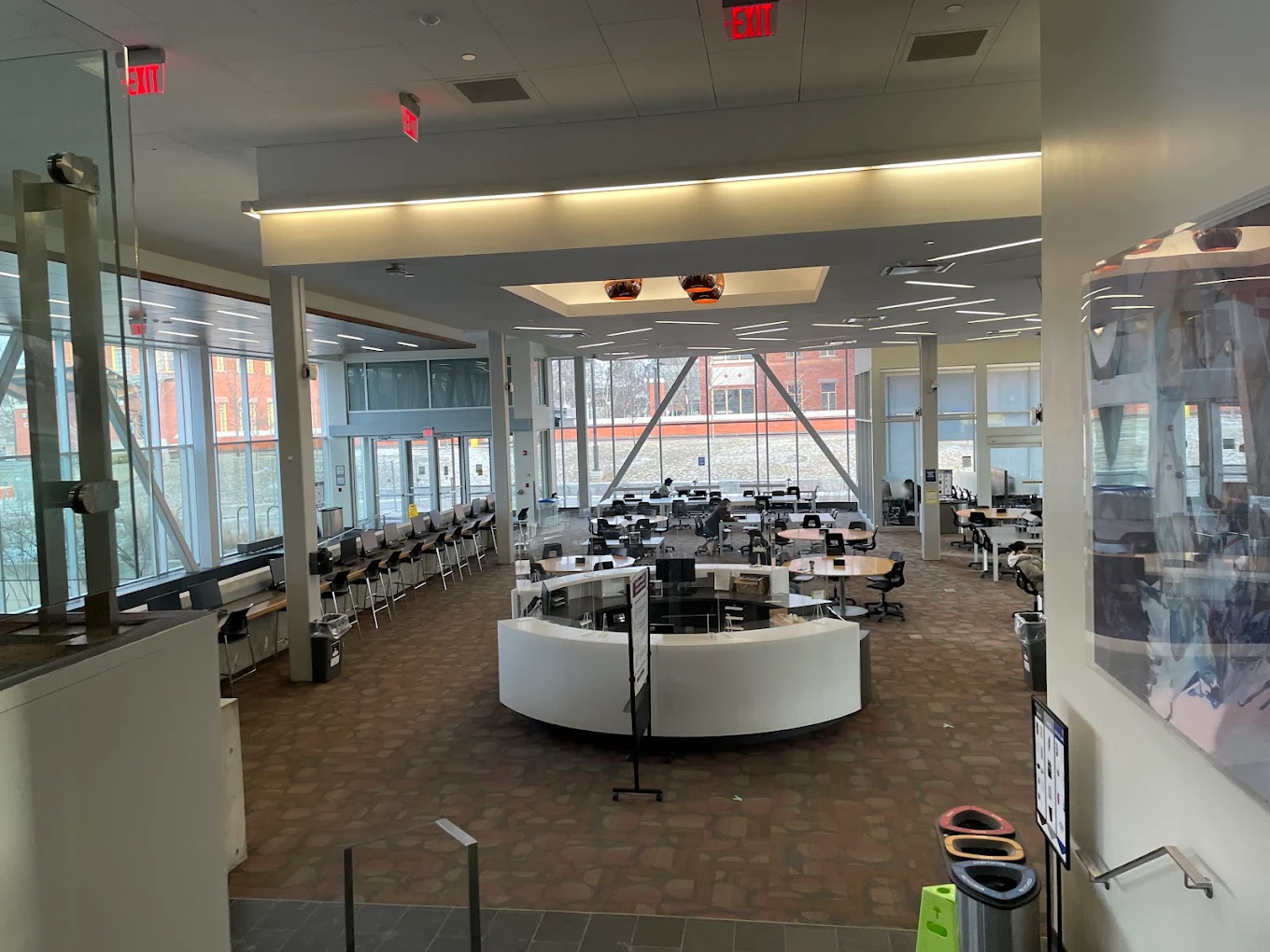
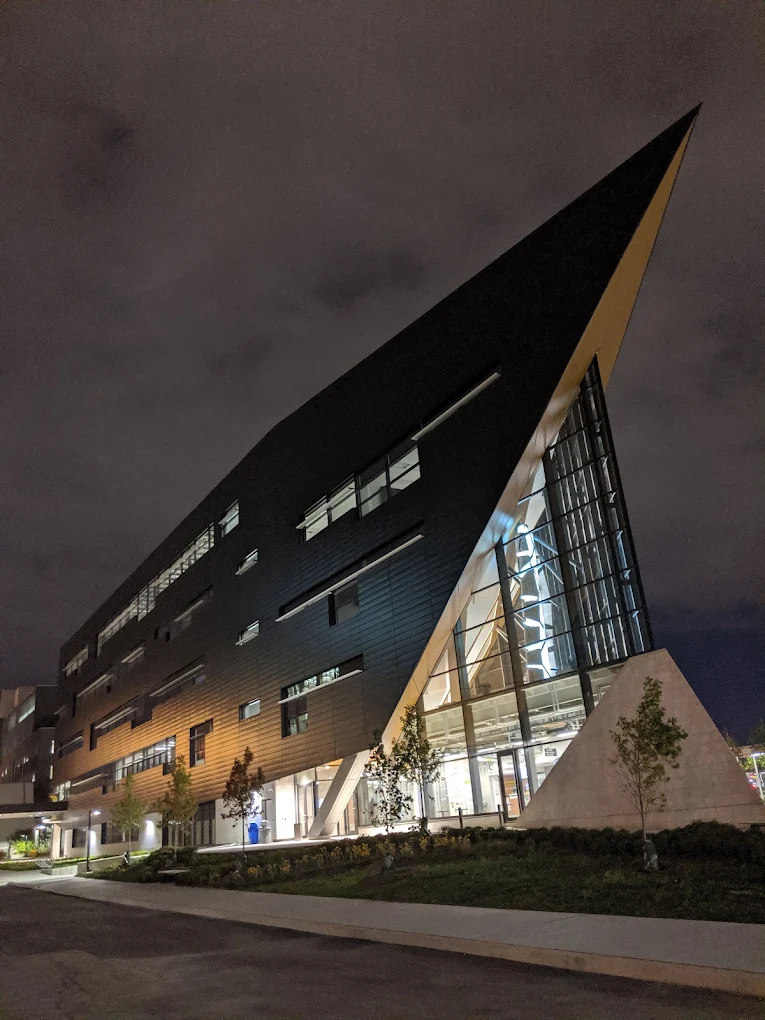
- North campus (Etobicoke) the largest site and the main hub, on Humber College Boulevard in northwest Toronto, backing onto the Humber Arboretum. This is where technology, applied science, health science, business and most trades programs run, along with the Barrett Centre for Technology Innovation. It is also home to the University of Guelph-Humber. Well served by TTC buses connecting to the subway.
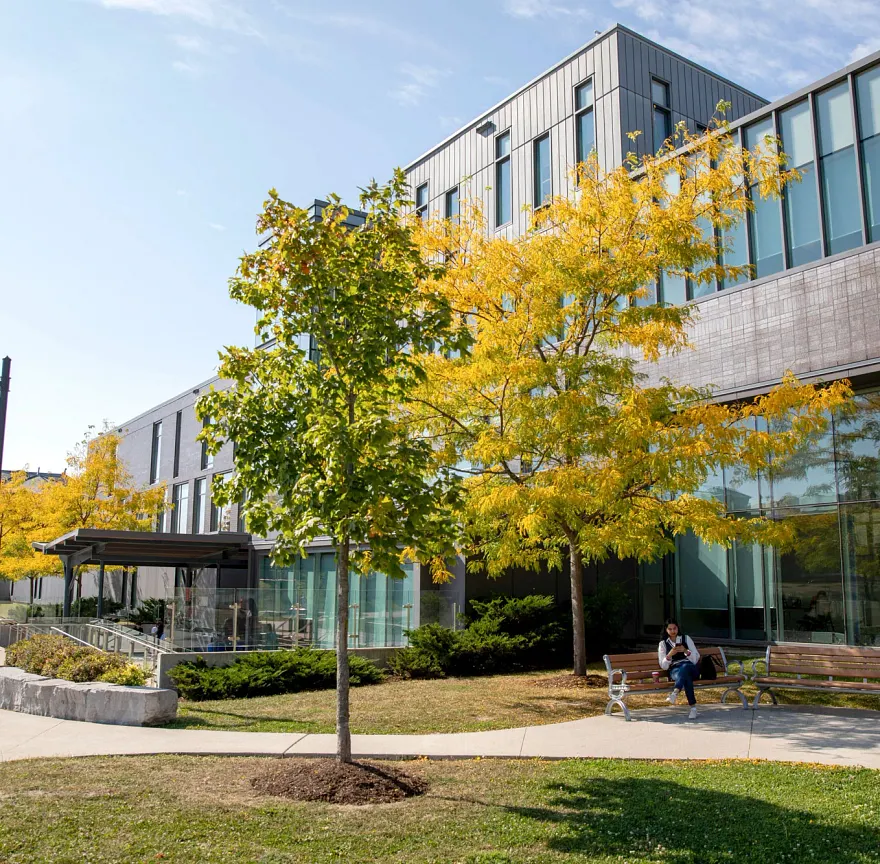
- Lakeshore campus (New Toronto) on Lake Shore Boulevard West, directly beside Lake Ontario and Colonel Samuel Smith Park. This is the creative and social sciences campus: media, music, performing arts, design, community services and much of the liberal arts offering. Heritage buildings, a genuinely attractive waterfront setting, and a new residence opened in 2024.
- International Graduate School IGS (downtown) at 59 Hayden Street near Bloor-Yonge, opened in 2021 and focused on Ontario graduate certificates with a business orientation. The appeal is location: you are in the middle of Canada’s financial district and its largest part-time job market, on the subway rather than a bus route.
- Carrier Drive a smaller North-area site used for selected trades and apprenticeship training.
One correction worth making, because a surprising number of agent websites still get it wrong: Humber’s Orangeville campus closed permanently in June 2021. If a listing offers you a program at Orangeville, that listing is at least five years out of date treat everything else on it with suspicion too.
A free shuttle runs between North and Lakeshore, and all campuses sit on Toronto’s TTC network. Many programs are offered at more than one campus, so check which site your specific intake runs at before you sign a lease North to Lakeshore is roughly 45 minutes by transit, which is not a commute you want to discover after moving in.
What is Humber famous for?
- Degree-granting authority. Roughly 23 four-year honours bachelor’s degrees Bachelor of Commerce in nine or more specialisations, Bachelor of Nursing, Creative Advertising, Paralegal Studies, Interior Design, Criminal Justice, Music, Engineering Technology streams and more. Very few Ontario colleges offer this range, and post-2024 it is Humber’s single biggest structural advantage for international students.
- The Longo Faculty of Business. Humber’s largest draw for Indian and South Asian students, spanning diplomas, degrees and the graduate certificates that dominate the IGS Global Business Management, Business Insights and Analytics, Human Resources Management, Supply Chain, Project Management.
- Media, creative arts and design. The Lakeshore cluster covers film and television production, journalism, advertising, animation, game design, music and theatre performance, taught in production facilities rather than lecture rooms.
- Applied research and Centres of Innovation. Humber runs dedicated applied-research space where students work on live industry problems unusual at college level and genuinely useful on a resume.
- Employment outcomes. Humber markets itself on graduate employment and employer satisfaction rates drawn from Ontario’s KPI Graduate Survey, and consistently ranks among the strongest in the GTA on those measures. Treat marketed percentages as marketing, but the underlying employer relationships are real.
- Scale in the right city. Ontario’s largest college, in Canada’s largest job market, with the deepest South Asian diaspora networks in the country. For students who value being able to find familiar food, community and part-time work in week one, that matters more than most rankings do.
Courses and programs for international students
Humber offers 200+ programs. The credential type not the subject is the most important decision you will make, because it determines your work permit treatment. Here is the map:
| Credential | Length | PGWP treatment | Best for |
|---|---|---|---|
| Bachelor’s degree (honours) | 4 years | Exempt from field-of-study rules | The safest work-permit route; students coming straight from Class 12 |
| Advanced diploma | 3 years | Field-of-study rules apply | Deeper technical training at lower cost than a degree |
| Diploma | 2 years | Field-of-study rules apply | Faster, cheaper entry; ladders into degrees |
| Ontario graduate certificate | 8–16 months | Field-of-study rules apply | Graduates wanting a fast, targeted Canadian credential |
| Certificate | Up to 1 year | Field-of-study rules apply; under 8 months is not PGWP-eligible at all | Specific skills; generally not a study-permit strategy on its own |
Popular fields for international applicants: business and management, accounting and finance, supply chain and logistics, computer programming and IT, cybersecurity, engineering technology, health sciences and nursing, early childhood education, hospitality and tourism, media and creative arts, paralegal and criminal justice, and design.
The pathway structure is worth understanding because it is one of Humber’s real strengths. Diploma graduates can often ladder into a related Humber degree with block transfer credit, finishing a bachelor’s in less than the standard four years. If your budget rules out a degree today but your immigration plan wants one eventually, this is the route to ask about at application stage not after you arrive.
Admission requirements
Requirements vary by program, but the general framework for international applicants is:
- Diplomas and advanced diplomas: completed Class 12 / 10+2 or equivalent. Most programs look for roughly 60–65% overall, with specific Grade 12 subjects for technical and health programs (Mathematics is common; Biology and Chemistry for health sciences).
- Bachelor’s degrees: completed Class 12 with a stronger average typically 65–70%+ plus required senior subjects. Grade 12 Mathematics at 60% or better is standard for Bachelor of Commerce entry, and degree programs carry additional subject prerequisites depending on field.
- Ontario graduate certificates: a completed bachelor’s degree or a three-year advanced diploma. Some competitive programs also ask for a resume, statement of interest or relevant work experience.
- Credential assessment: applicants with education outside Canada may be asked for a WES or ICAS evaluation. Check before you assume.
- No GRE or GMAT is required for any Humber program.
Two Ontario-specific items international applicants often miss. First, the CAD $3,000 tuition deposit you pay this to confirm your seat, and Humber will not request your Provincial Attestation Letter until it clears. No PAL means no study permit application, so deposit timing genuinely drives your visa timeline. Second, the PAL itself, which Ontario issues under the federal cap and which Humber arranges as part of admission.
IELTS and English requirements by credential
This is the single most-searched Humber question and the one most often answered wrongly, because there is no single score. Humber sets English requirements by program level:
| Credential level | Typical IELTS Academic |
|---|---|
| Most diplomas and certificates | 6.0 overall, no band below 5.5 |
| Bachelor’s degrees | 6.5 overall, no band below 6.0 |
| Ontario graduate certificates | 6.5 overall, no band below 6.0 |
| Nursing and selected health programs | 7.0 overall |
Humber also accepts TOEFL iBT, PTE Academic, Duolingo, CAEL and CanTEST, with equivalent thresholds published per program. Applicants who fall short have a genuine route in: Humber’s English for Academic Purposes (EAP) program can satisfy the language requirement on successful completion, letting you progress into your main program without re-sitting a test. Students whose prior education was fully in English may qualify for a testing waiver ask, because it is assessed case by case.
The practical advice: never search “Humber IELTS requirement” and apply on the number you find. A 6.0 opens a meaningful set of diplomas but closes every degree and graduate certificate. Check the exact requirement on your specific program before booking a test date.
Tuition fees for international students
Humber prices per program, and the spread is wide. Broad 2026 ranges for international students, expressed per year:
| Credential | Approximate annual tuition (CAD) |
|---|---|
| Diplomas and advanced diplomas | $17,000 – $22,000 |
| Bachelor’s degrees | $19,000 – $29,000 |
| Ontario graduate certificates | $17,000 – $24,000 |
| Application fee | $100 (one-time) |
| Tuition deposit | $3,000 (credited against first semester) |
Studio, laboratory and health programs sit at the top of these ranges; classroom-based business and social science programs sit at the bottom. Published fees generally cover two semesters and bundle mandatory ancillary fees and health insurance, which is worth noting when comparing against institutions that quote tuition alone.
Two things to plan around. Humber offers a per-term payment plan in instalments for a small administrative fee, which helps with cash flow but does not reduce the total. And the deposit is only partially refundable under defined withdrawal conditions read those conditions before you pay, not after. Always confirm the exact figure on your program page or offer letter; ranges like these are for planning, not budgeting.
Cost of living in Toronto
Be realistic here, because Toronto is expensive and this is where student budgets break. Off-campus shared accommodation in Etobicoke or near Lakeshore commonly runs CAD $700–$1,200 per month for a shared room, and considerably more downtown near the IGS. Add groceries, a TTC pass, phone and personal costs and a realistic annual living budget is roughly CAD $15,000–$20,000 above the federal cost-of-living proof threshold, and above what many agent estimates suggest.
The offsetting advantage is the job market. Toronto has the deepest part-time employment pool in Canada, and both North and Lakeshore sit in well-connected, established residential areas rather than isolated campuses. Students who need to work while studying will find more opportunity here than almost anywhere else in the country.
Scholarships and awards
Humber awards thousands of scholarships, bursaries and awards annually. The ones that matter to new international students:
- International Entrance Scholarships CAD $2,000 for incoming diploma, advanced diploma and graduate certificate students, applied as $1,000 per semester across the first two semesters.
- Bachelor’s degree entrance scholarships larger awards of $3,000 and $5,000, with a limited number available each Fall intake on a first-confirmed basis, generally for students entering directly from secondary school as non-transfer applicants.
- International Onshore Scholarship a one-time CAD $1,000 award for applicants already living in Canada, who may also qualify for an application-fee waiver and faster offer processing.
- In-course awards and bursaries available once you have a Humber academic record.
Set expectations honestly: these awards reduce your bill, they do not fund your degree. OSAP and Canadian government student loans are for domestic students only. Plan your finances on the assumption you receive nothing, and treat any award as a bonus.
Intakes, deadlines and acceptance rate
Humber runs three intakes: September (Fall), January (Winter) and May (Summer). September is the largest by a wide margin and offers the fullest program selection. January is solid for business and IT. May is the most limited many programs simply do not run a Summer start.
Ontario colleges use an equal consideration deadline of 1 February for Fall entry, after which admission moves to first-come, first-served on remaining seats. In practice, Humber operates rolling admissions for international applicants with no hard cut-off, and popular programs fill months ahead. Apply six to nine months before your intended start. That is not agent advice designed to rush you it is what the combination of seat caps, deposit timing and PAL processing genuinely requires.
On acceptance rate: third-party sites commonly cite around 70–80%, but that number is close to meaningless. Humber is not academically selective in the way a research university is; the real constraint is seat availability under Canada’s international student cap. A qualified applicant with a strong file can be refused simply because the program is full. Keep a realistic second-choice program ready.
PGWP eligibility: the honest answer
This is the section that should decide your program choice, so read it carefully.
Since November 2024, IRCC applies a field-of-study requirement to PGWP applicants who graduate from college diplomas, certificates and graduate certificates. Your program’s CIP code must appear on IRCC’s eligible-fields list at the time you apply. Programs outside those fields do not qualify, however good the college is.
Bachelor’s degree programs are exempt from that requirement entirely. Humber states this directly on its own program pages: there is no field-of-study requirement for degrees, and all Humber degree programs are PGWP-eligible. That exemption is the strongest single argument for choosing a Humber degree over a Humber diploma if a work permit is central to your plan.
For non-degree programs, Humber publishes a list of PGWP-eligible programs with the CIP code for each one, which is more transparency than most Ontario colleges offer. Use it and then verify the CIP against IRCC’s current list yourself, because the list changes and the college explicitly notes it provides the information on a best-efforts basis.
Other conditions that still apply regardless of credential: your program must be at least eight months long, you must study full-time, you must graduate, and you must apply within the permitted window after receiving your final documents. PGWP length follows program length, up to a maximum of three years. IRCC makes every final decision.
Note the DLI number carefully, because Humber has two. O19376943122 covers Humber North, Lakeshore and the International Graduate School. The University of Guelph-Humber uses the University of Guelph’s DLI, O19305391192. Using the wrong one on a study permit form causes avoidable delays.
Work while studying, OINP and the PR pathway
Full-time students at Humber can work off campus under standard study-permit conditions, plus full-time during scheduled breaks. Off-campus hour limits have changed more than once in recent years, so confirm the current cap with IRCC rather than relying on any article, including this one.
The permanent residence route generally runs: study → graduate → PGWP → skilled Canadian work experience → Express Entry, potentially supported by an Ontario Immigrant Nominee Program (OINP) nomination. Ontario operates employer job offer and international student streams that can add substantial points to an Express Entry profile.
Two honest caveats. Toronto is Canada’s most competitive graduate labour market more opportunity, but also more applicants per role than smaller provinces. And spouse open work permits are now restricted mainly to students in master’s, doctoral and certain professional programs, which means most Humber programs do not carry spouse work eligibility. If your plan assumed a partner could work while you study, verify that assumption against current IRCC rules before you commit financially.
University of Guelph-Humber explained
The University of Guelph-Humber operates on Humber’s North campus and confuses a lot of applicants, so here is the distinction. It is a joint venture between the University of Guelph and Humber, in which students earn both an honours university degree from Guelph and a Humber diploma in four years. Programs include Business, Media Studies, Kinesiology, Psychology, Justice Studies, Early Childhood Studies and Family and Community Social Services.
It is a separate admission process with university-level entry requirements, separate fees, and critically for your study permit a separate DLI number (O19305391192). If a dual university-degree-plus-diploma credential appeals to you, apply to Guelph-Humber directly rather than assuming a Humber application covers it.
Student life and residence
Humber operates residences at both North and Lakeshore, including a new Lakeshore building opened in 2024. Rooms are limited relative to demand and international students are not guaranteed placement, so apply for housing the day you accept your offer. Most students end up in the private rental market in Etobicoke, Rexdale, Mimico or along the Lakeshore corridor.
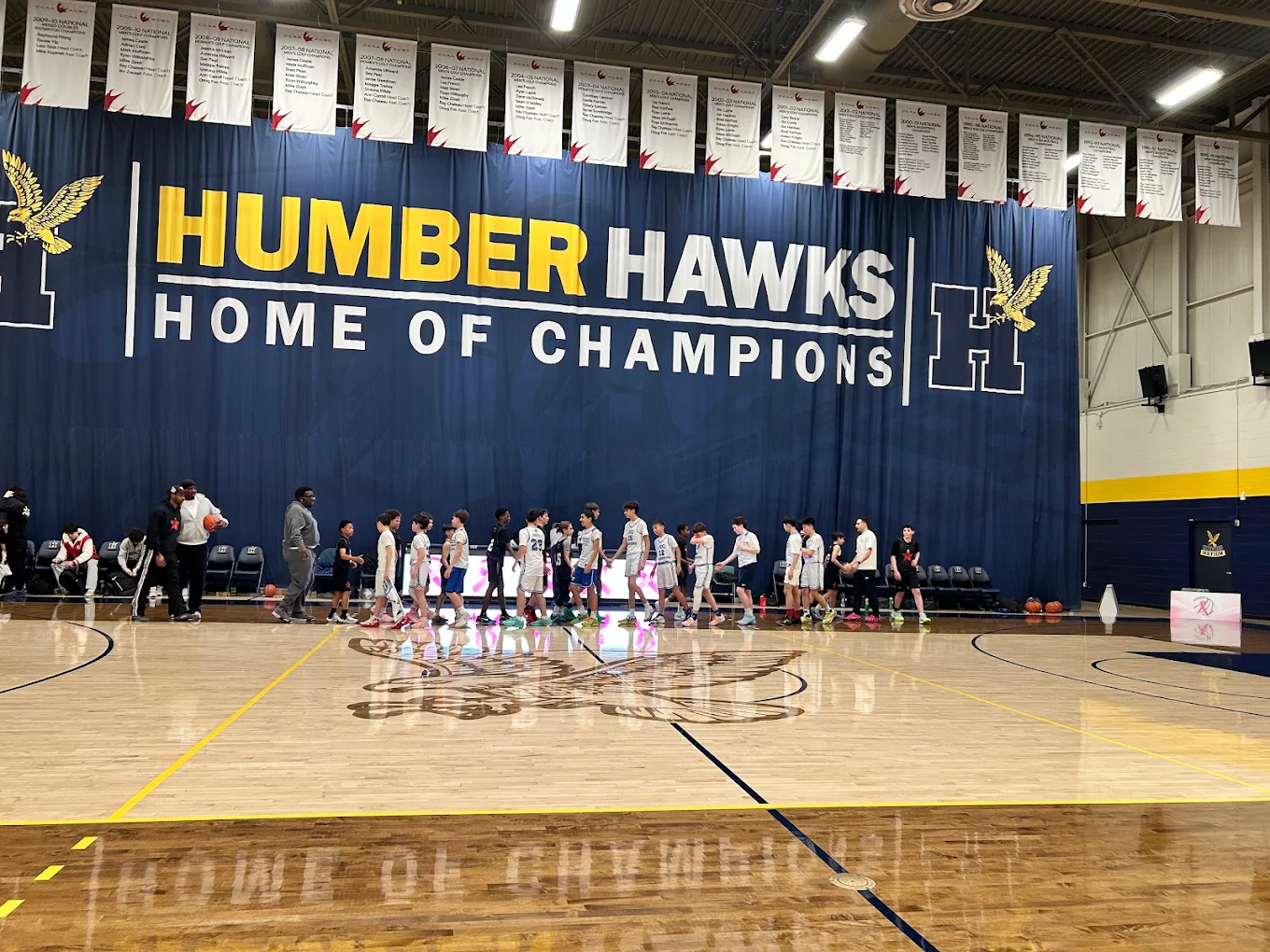
Campus life is genuinely active. IGNITE, the student union, runs clubs, events and advocacy across all campuses. The Humber Hawks compete in provincial and national college athletics. There are multi-faith facilities, an athletics centre at each main campus, and dedicated international student services covering orientation, immigration advising, academic support and career development. Cultural programming reflects the student body Diwali, Lunar New Year and multicultural weeks are part of the calendar, not an afterthought.
The honest part: Humber’s budget cuts
Most guides skip this. You should know it before you spend CAD $80,000.
Canada’s international student caps and the 2024 PGWP changes cut deeply into college revenue across Ontario, and Humber has not been exempt. Through 2025 and into 2026 the institution ran a voluntary employee exit program and then, in March 2026, confirmed it would proceed with involuntary staff reductions to close a projected gap for the 2026–27 year. Several senior executives departed and an interim leadership structure took effect. Individual programs have been suspended the International Development graduate program among them.
What this means for you, practically:
- Confirm your specific program is running for your intake. Do not rely on a program page alone; get it confirmed in writing before you pay a deposit.
- Humber is not at risk of closing. It is Ontario’s largest public college with strong domestic enrolment and provincial funding. This is budget restructuring, not institutional failure.
- Expect leaner services. Larger classes and slower administrative response are realistic in a cost-cutting cycle.
- This is sector-wide. Colleges and universities across Ontario are making similar cuts. Humber is not an outlier it is simply large enough that its cuts made the news.
How to apply
- Choose your program and verify PGWP status check the credential type first, then the CIP code against IRCC’s current list if it is not a degree.
- Check your English score against that specific program, not against a general figure.
- Apply online and pay the CAD $100 application fee. Prepare transcripts, passport, English test results and any credential evaluation.
- Receive your offer conditional or full, depending on your documents.
- Pay the CAD $3,000 tuition deposit to confirm your seat and trigger your PAL request.
- Receive your PAL and Letter of Acceptance, then apply for your study permit with DLI O19376943122.
- Arrange your GIC, funds proof and travel, then register for courses and book residence or housing.
Is Humber Polytechnic good for international students?
Yes with one condition attached. Humber is Ontario’s largest public college, in Canada’s largest job market, with strong industry relationships, real applied facilities and something most colleges cannot offer: degree-granting authority that sidesteps the PGWP field-of-study restriction entirely.
The condition is that you choose your credential deliberately. A Humber degree is a structurally safe immigration pathway. A Humber diploma or graduate certificate is cheaper and faster, but only works if its CIP code sits on IRCC’s eligible list and that list can change between the day you apply and the day you graduate.
Humber is the wrong choice if you need the lowest possible total cost, since Toronto living expenses will exceed tuition savings anywhere else in Canada; if your plan depends on a spouse open work permit, which most Humber programs will not support; or if you want a research university experience with academic supervision and thesis work, which is not what a polytechnic is built to deliver.
Frequently asked questions
Is Humber College the same as Humber Polytechnic?
Yes. Humber College Institute of Technology & Advanced Learning began operating as Humber Polytechnic in August 2024. Same public institution, same campuses, same DLI, same credential recognition only the name and brand changed.
Is Humber a college or a university?
A public Ontario college operating under the polytechnic model, with provincial authority to grant honours bachelor’s degrees in around 23 approved programs. It is not a university, but its degrees are recognised degrees.
What is Humber’s DLI number?
O19376943122, covering North campus, Lakeshore campus and the International Graduate School. The University of Guelph-Humber uses a different DLI, O19305391192.
Are Humber programs PGWP-eligible?
All Humber bachelor’s degree programs are, with no field-of-study requirement. Diplomas, advanced diplomas and graduate certificates must have a CIP code on IRCC’s eligible-fields list Humber publishes a program list with CIP codes to check against, and IRCC makes the final decision.
What IELTS score do I need for Humber?
Generally 6.0 overall with no band below 5.5 for most diplomas, and 6.5 overall with no band below 6.0 for degrees and graduate certificates. Nursing and selected health programs require 7.0. TOEFL, PTE, Duolingo and CAEL are also accepted, and the EAP program can satisfy the requirement.
How much are Humber’s fees for international students?
Roughly CAD $17,000–$22,000 per year for diplomas, $17,000–$24,000 for graduate certificates and $19,000–$29,000 for degrees, plus a $100 application fee and a $3,000 tuition deposit. Verify the exact figure on your program page.
What are Humber’s intakes?
September, January and May. September has the widest selection, January is limited and May is the most restricted. Apply six to nine months ahead capped seats, not academic selectivity, are the real constraint.
What is Humber’s acceptance rate?
Commonly estimated at 70–80%, but the figure is misleading. Humber is not highly selective academically; qualified applicants are refused when programs fill under Canada’s international seat caps. Apply early and keep a backup program.
Does Humber have on-campus residence?
Yes, at both North and Lakeshore, including a Lakeshore residence opened in 2024. Rooms are limited and not guaranteed to international students apply the day you accept your offer.
Which Humber campus is best?
Your program decides. North for business, technology, health science and trades; Lakeshore for media, creative arts and social sciences; the downtown IGS for business-focused graduate certificates with the best transit and job-market access.
Is the Orangeville campus still open?
No. It closed permanently in June 2021. Any site still advertising Orangeville programs is badly out of date.
Can my spouse work while I study at Humber?
Usually not. Spouse open work permits are now limited mainly to master’s, doctoral and certain professional-degree students, and most Humber programs fall outside that. Verify against current IRCC rules before making financial plans.
Is Humber affected by the college funding cuts?
Yes. Humber confirmed workforce reductions in March 2026 after a voluntary exit program fell short of its target, and some programs have been suspended. Humber remains financially stable as Ontario’s largest college, but confirm in writing that your specific program is running for your intake.
Humber or Seneca which is better?
Both are large public Toronto-area polytechnics with strong reputations. Humber’s edge is its breadth of bachelor’s degrees and its downtown graduate school; Seneca has particular strength in aviation and IT. Compare your specific program, campus location and PGWP eligibility rather than the institution’s overall name.
How do I apply to Humber Polytechnic?
The easiest route is through the Apply Study Visa portal: we check your program’s credential type, CIP code and PGWP status for your intake first, then our certified counsellors review and submit your file for free and guide you through the $3,000 deposit timing, the Ontario PAL, your GIC and your study permit (DLI O19376943122).
Does Apply Study Visa charge for Humber applications?
No application review and submission through Apply Study Visa is free, including the PGWP and CIP-code check, with the same team supporting your visa, GIC and travel afterwards.